
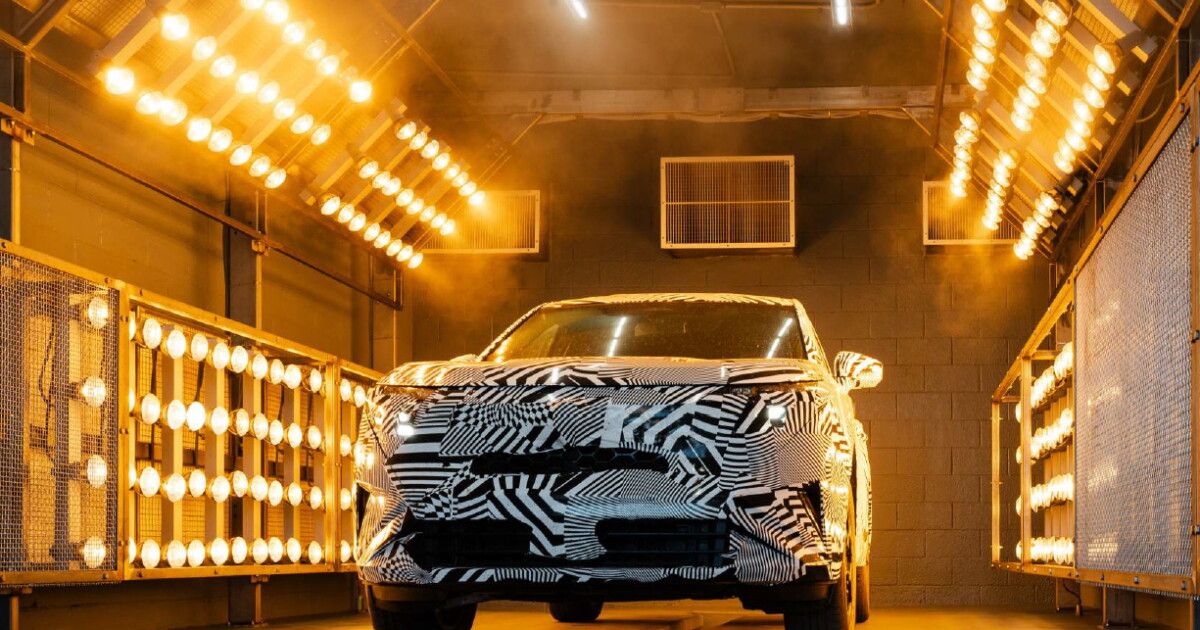
Automakers are spending billions perfecting solid-state batteries, autonomous sensors and over-the-air software updates – yet simple iron oxide still sends millions of American vehicles to the scrapyard every year.This week Nissan has revealed its plan to tackle the stubborn reality of rusting – with a high-tech accelerated corrosion chamber.The rapid-rust reactor is based at Nissan’s huge Arizona Testing Center. The chamber allows engineers at the arid Sonoran Desert facility to simulate up to 15 years of brutal North American rust exposure… in a few weeks. The unassuming block at Nissan’s huge Testing Center in Arizona's Sonoran Desert is a precision-controlled high-humidity salt-spray bunker to simulate rapid rustingNissan The irony of building a high-humidity salt-spray bunker in one of the driest states in the US shows how modern vehicle research has shifted away from local geography.Nissan revealed the extraordinary rapid-rust facility in a behind-the-scenes technical announcement featuring a 2027 Rogue Hybrid undergoing multi-angle chemical blasts before baking in an automated heat and humidity sauna.Nissan claims the process replicates 15 years risk in under four months, mimicking environmental conditions that exist across 99.5% of North America with the exact chloride cocktails that plague drivers from the Great Lakes Rust Belt to the Florida coast.The rapid-rust chamber involves high-pressure nozzles inside an enclosed bay. These coat prototypes in chemicals behind much of modern rusting: sodium chloride, magnesium chloride and calcium chloride solutions. Those last two (from common de-icers) stay active at much lower temperatures than traditional rock salt and eat through exposed metal far faster.The chamber then switches into a high-heat, high-humidity oven cycle. Scientists know that this accelerates oxidation, particularly across metallic seams and fasteners. Nissan’s technical update revealed a 2027 Rogue Hybrid undergoing multi-angle chemical blasts before baking in an automated heat and humidity saunaNissan Nissan has integrated an Italian-engineered water filtration system into the latest upgrade. That closed-loop hardware strips out contaminants and maintains exact chemical salinity across repeated cycles (and cuts water waste).The salt bath alone does not mimic the full grim realities of real life on America’s roads, so Nissan pairs the chamber with punishing physical courses across its 34 miles (55 km) of proving ground tracks. Test drivers run prototypes over rough gravel surfaces, deep mud baths, water fording pits and undulating frame-twisting courses. The importance of this is that stone chips strip away factory paint, while chassis flex opens microscopic gaps in body seams so brine penetrates deep into structural cavities.This heavy technical investment reveals that something unexpected is happening behind the scenes in the auto industry.The good context is that Nissan is rebuilding its reputation for long-term durability and the latest figures show American motorists keep vehicles longer than ever. Average US passenger cars now last 14.5 years and retired vehicles average roughly 160,000 miles (257,500 kilometers) at the scrapyard.But at the same time, there’s bad news. Manufacturers are just discovering that electrification has turned corrosion from a cosmetic annoyance into an existential structural problem. A recent study showed that modern EV batteries degrade at just 2.3% per year, meaning electric drivetrains routinely outlast traditional combustion engines. Instead, underbody rust now acts as the primary bottleneck deciding when an aging electric vehicle gets scrapped.Today it’s floorpans supporting heavy battery packs and battery trays that are the vital bits. If they rust, an EV is probably doomed, however much life is left in the battery. Vehicles, like this disguised Nissan Rogue, can be blasted with precise chemical cocktails… then baked by heat and humidityNissan Engineers are finding modern EVs and hybrids face unique electrochemical hazards that internal combustion cars never encountered.For example, if you bolt lightweight aluminum battery trays to high-strength steel frames to offset heavy cell packs, road salt and slush bridges those different metals to create miniature galvanic batteries that dissolve those structural joints.Cool-running EVs also lack engine heat that dries out the damp nether regions of gas cars and those flat aerodynamic belly pans trap salty grit against integrated liquid cooling plates. Corrosion on a battery enclosure can trigger a five-figure estimate that totals an older EV.A little probing finds that most automakers are racing to counter the rust threat with both physical labs and advanced materials science. It turns out General Motors, Ford and Stellantis are running serious corrosion and environmental research at their own proving grounds, testing live battery packs down to -40 °F (-40 °C) alongside gravel blasts. Suppliers are working on thermoplastic composite battery housings to eliminate metal-on-metal galvanic reactions altogether.Technical research laboratories are also attacking rust at the molecular level. Scientists have developed a self-healing anti-corrosion polymer that highlights scratches and automatically patches breaks when exposed to salt, alongside a flexible steel alloy coating capable of repairing physical pinholes under mild heat.Automakers meanwhile are still relying on brutal environmental torture until those laboratory breakthroughs reach assembly lines. Nissan’s desert weather machine proves that survival on American roads still comes down to winning a war against salt and water, even in the era of artificial intelligence and electric propulsion.Source: Nissan
Nissan's corrosion chamber mimics 15 years of car rust in four months
Full Article
Original Source
Read the full article at Newatlas →KhanList aggregates and links to publicly available news content. We do not host full articles from third-party sources. Always verify important information with original sources.