
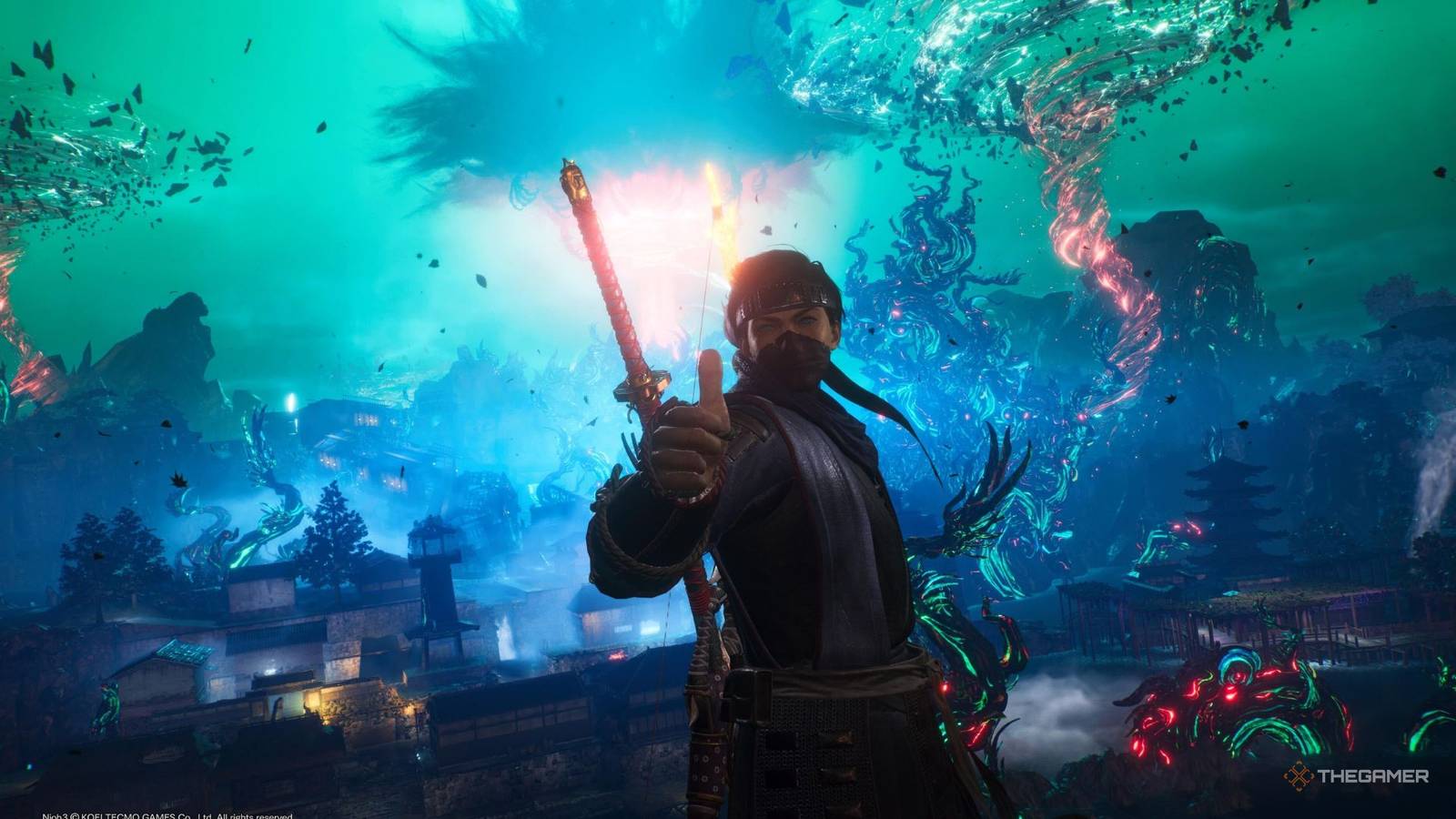
Nioh 3’s Hell Rising DLC Is Mostly More Of The Same, But That’s Not A Bad Thing Published Aug 25, 2026, 7:00 AM EDT George is the Lead News Editor for TheGamer, and has been working in the industry since 2021 after graduating from the University of South Wales with a bachelor's degree in Journalism. He has also previously written for RPG Site, WhatCulture, and PlayStation Lifestyle. George is an expert on platformers, action games, and fighters, but tends to play as many releases as possible. This hands-on experience lets him dive into gaming communities and follow the latest trends. Some of the games George has extensively covered first-hand include Dead Rising, Dragon Ball: Sparking Zero, Assassin's Creed Shadows, and Ninja Gaiden 4. Back when Nioh 3 released near the start of the year (yes, it’s really been that long), working on the review and guides basically subsumed my life for a solid few weeks. I spent over 90 hours working my way through its tough-as-nails boss battles, mastering the new Ninja form, and exploring every nook and cranny of its dense open-zone maps. I had an absolute blast with Nioh 3 and consider it the best of the trilogy, but I’d be lying if I said I was desperate to jump back in. The previous two games might generally be harder, but my time 100 percenting Nioh 3 was still incredibly stressful. Thoroughly burned out, I’ve not touched Nioh 3 since it first launched seven months ago, which made its first proper expansion, Hell Rising, my big chance to dive back in. In the end, I’m glad I did. Hell Rising isn’t the most complex, nuanced, or expansive DLC out there, but everything it does bring to the table, like the new location and weapon(s), is more than worthwhile. It’s basically just more Nioh 3, but slightly expanded, and even if that’s not exactly revolutionary, it did serve as a nice reminder of why I sunk so many hours in the first place. Hell Rising's Setting And Time Period Carry Its Story Hell Rising takes place after the events of the main game (although noticeably without committing to either ending) and sees Takechiyo trying to find a Yokai that’s been coming to him in a dream. It’s not long before our hero is once again sent hurtling into another period, although, interestingly, this time it’s slightly into the future Keian Era in 1651, a few decades past the main game's timeline. Nioh’s story has never massively gripped me, but going forward instead of back is an interesting spin on the main game’s formula and gives Hell Rising a bit more identity. As ever, Nioh’s charming and bizarre characters (as well as Guardian Spirits, of course) are the highlight of the story as a whole, especially with some of them knowing an older Takechiyo and having some unique interactions. The best part of this Nioh story, though, is the setting. 1651 Keian is easily the most visually unique location in the game with its stunning blue and red colour palette and variety of new locations, like a ship graveyard, training grounds, and Yokai-ridden caves. Like the rest of Hell Rising, it’s not exactly groundbreaking for Nioh, but it’s still a good addition that builds on the artistic strengths of the base game. Nioh 3's Structure Is Here To Stay, But The Hoko And Shield Feel Fresh Image provided by Koei Tecmo and Team Ninja. If you’ve played Nioh 3, then you will absolutely know what to expect when it comes to how Hell Rising plays and what you’ll find in 1651 Keian. You’ll start the time period in an area with low-level enemies, explore and complete the same selection of side activities to get strong enough to carry on, complete story missions that host the skill-check bosses, and then finish it all off with a trip to the dreaded Crucible. Hell Rising is set up with the same structure as the base game and largely has you doing the same things, but around the new map. This retreading is a little bit disappointing considering the formulaic nature of the base game and how many times you’ve had to track down Kodama, clear enemy bases, and destroy Crucible Spikes. Just like in Nioh 3 proper, it’s all good content that gives you more reason to explore and keep playing, but it’s just a bit of a shame not to see anything new to do in the world itself. That’s not to say that Hell Rising doesn’t introduce anything new, though. Without a doubt, the biggest and best part of the DLC is the Hoko and Shield, which is easily the most unique weapon in all of Nioh. As the name implies, the Hoko and Shield is the first weapon type with an active defence option when you use the shield as the heavy attack option. The Hoko and Shield can be used by both forms, and actually change up a bit depending on whether you use it in Ninja or Samurai. Image provided by Koei Tecmo and Team Ninja. It took me some time to get used to the Hoko and Shield (especially with all the Nioh 3 rust I’ve gathered in half a year), but I eventually found them to be a new firm favourite of the series as a whole. Once you figure out how to effectively use the shield to push enemies around before finishing them off with the sword, the pairing becomes incredibly effective and easily one of the most unique in the series to date. Honestly, depending on your affinity for Nioh, it might be worth the price of admission alone. The rest of the new additions in Hell Rising aren’t quite as noteworthy as the standout new weapon, but are still good to have. New cat-like Guardian Spirit Tora Gozen is one of the expansion’s more charming characters and has a tricky counter ability that pairs well with the more defensive focus of the Hoko and Shield. Parries already felt great to pull off in Nioh 3, and that playstyle is now being encouraged even more. If the base game wasn’t hard enough for you, a new difficulty level has been added in the DLC. I personally think Nioh is challenging enough already, but to each their own. Hell Rising’s final notable addition is the Hundred Demon Realm Picture Scroll, which is basically an improved version of the Demon Parade Picture Scroll in Nioh 2. It works in a similar way to that game but is a bit more interesting overall, thanks to its procedurally generated battles. I never dove into this too much in the last game, so it’s not really for me, even if it’s good to see more replay value added. The Hundred Demon Realm Picture Scroll exemplifies Hell Rising’s overall vibe. Everything that the expansion adds is great, but it doesn’t really do much to push Nioh 3 forward, and it certainly won’t change anyone’s mind about the base game. As you've hopefully figured out by now, Hell Rising is basically more of the same Nioh goodness, but slightly improved. As someone who adored Nioh 3 at launch, that didn’t bother me one bit, but it might be a letdown for anyone wanting a little bit more. Nioh 3 Systems Released February 6, 2026 ESRB Mature 17+ / Blood and Gore, Suggestive Themes, Violence, In-Game Purchases, Users Interact Developer(s) Koei Tecmo Publisher(s) Koei Tecmo Genre(s) Action, RPG, Soulslike, Open-World
Nioh 3 Hell Rising Review - Familiar, But Still A Hell Of A Time
Full Article
Original Source
Read the full article at Thegamer →KhanList aggregates and links to publicly available news content. We do not host full articles from third-party sources. Always verify important information with original sources.