
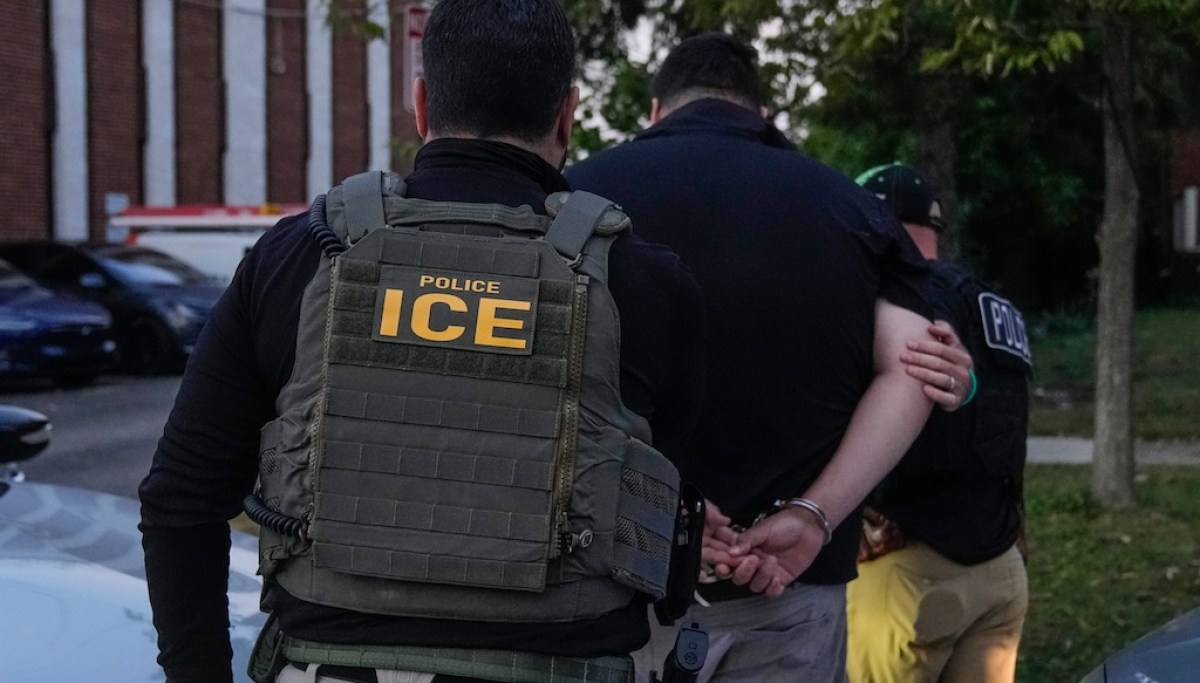
A federal appeals court grilled the Trump administration on Thursday over the legality of “knock-and-talk” tactics by federal immigration officers, in the latest legal challenge to ICE’s operations under President Donald Trump.A three-judge panel on the U.S. Court of Appeals for the Ninth Circuit grilled the Department of Justice and lawyers for the immigration activists over whether the policy violates the Fourth Amendment’s protections against warrantless arrests and if the immigration groups can sue over the policy.The knock-and-talk deals with immigration officials arriving at a residence of an immigration enforcement target, walking up to the door, and asking to speak with the resident of the home. The tactic can be used to verify a person’s identity before attempting to detain a person, and activists claim it amounts to a warrantless arrest if the immigration officer lacks a judicial warrant. A federal district court judge sided with the activists, leading the DOJ to appeal to the Ninth Circuit. The DOJ claimed in its filing to the appeals court that the ruling blocking the policy “directly impedes mission-critical civil immigration enforcement practices that the Executive Branch has deemed vital to law enforcement and national security.” The immigration activists claim that the policy amounts to “entering into a person’s home property, without a judicial warrant, for the purpose of carrying out an immigration arrest,” which they claim violates Supreme Court precedent.The panel appeared skeptical of the DOJ’s arguments defending the policy. The judges questioned if the knock-and-talk procedure should be available if they intend to arrest the subject, or if a warrant should be required before they arrive to pursue the illegal immigrant target. DOJ Lawyer Drew Ensign pushed back on the assertion that the knock-and-talk qualifies as a warrantless arrest, claiming it is not part of the Fourth Amendment requirement for a warrant, but the judges also appeared unconvinced by his argument.The judges also grilled lawyers for the immigration activists, questioning what standing they had to pursue the lawsuit over the “knock-and-talk” policy.The three-judge panel on the Ninth Circuit included U.S. Circuit Judges Johnnie Rawlinson, an appointee of former President Bill Clinton; Milan Smith, an appointee of former President George W. Bush; and Danielle Forrest, an appointee of President Donald Trump. The panel did not indicate how or when it would rule.APPEALS COURT HALTS BID TO REVIVE VENEZUELAN TEMPORARY PROTECTED STATUS AFTER TRUMP GOES TO SUPREME COURTThe Trump administration’s aggressive immigration enforcement agenda has been one of the most hotly contested issues in federal courts throughout the country since the president returned to the White House early last year. Immigration enforcement operations in Los Angeles have been met with pushback, both through protests and lawsuits, but the administration has generally prevailed in immigration cases as they reach higher federal courts.Last year, the Supreme Court lifted a district court’s restrictions on federal authorities’ conduct of immigration operations in Southern California on its emergency docket. The order, which the Supreme Court lifted in September 2025, had barred officials from relying on apparent race, language spoken, location, or job as sole reasons to inquire about a person’s immigration status in the Los Angeles area.
Ninth Circuit grills Trump administration over legality of ICE’s ‘knock-and-talk’ arrest tactic
Full Article
Original Source
Read the full article at Washingtonexaminer →KhanList aggregates and links to publicly available news content. We do not host full articles from third-party sources. Always verify important information with original sources.