
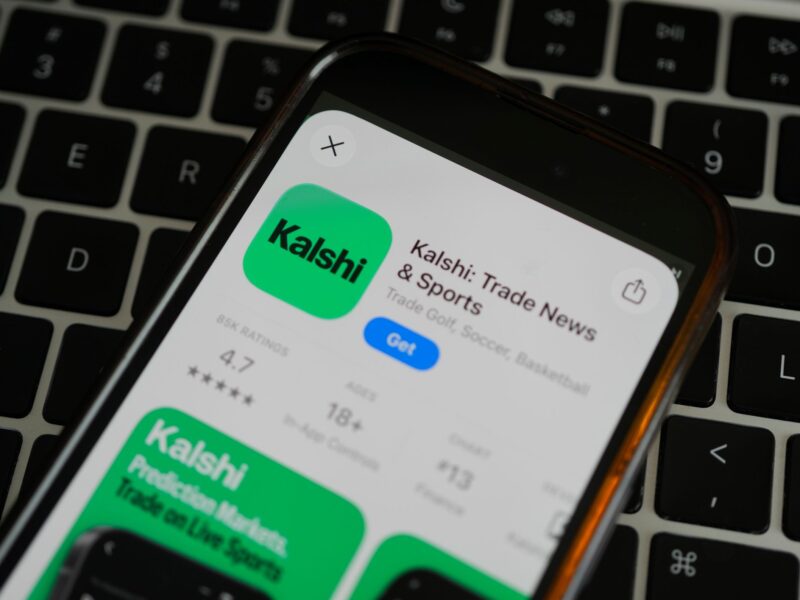
"What Kalshi and Robinhood have been doing is immoral," said an attorney for two tribes suing the prediction markets.(CN) — The Ninth Circuit ruled Wednesday that prediction markets such as Kalshi are likely violating California law by allowing users to wager on sporting events on tribal land.Though sports betting is legal in 38 states, it remains illegal in California — although such bets can be placed at Native American casinos. Prediction market apps like Kalshi let people bet on anything from the winner of a Grammy award to what President Donald Trump will say in a speech. They also allow people to bet on sporting events — though it calls these bets “event contracts,” arguing this loophole makes them legal. But the Ninth Circuit disagrees.“Imagine a user standing on the floor of the Blue Lake Casino Hotel who downloads Kalshi and DraftKings, a classic online sports betting app,” wrote U.S. Circuit Judge M. Margaret McKeown in Wednesday’s unanimous opinion. “On Kalshi, she buys a $100 contract that pays if the San Francisco Giants win. On DraftKings, she wagers $100 on the same outcome. The bettor, the place, the stake, and the contingency remain the same. The only thing that changes is Kalshi’s vocabulary. Kalshi may reshuffle the cards, but it cannot change the hand: Its sports event contracts are class III gaming.”Les Marsten, an attorney representing the two tribes suing Kalshi and Robinhood, called the ruling “a great victory for the tribes,” one that “upheld the tribes’ ability to govern themselves.”“What Kalshi and Robinhood have been doing is immoral,” Marsten said in a phone interview. “It’s wrong. Kalshi is a $44 billion company. For a couple of million, they could have geofenced around the tribes’ reservations. But they refused to do that, because they’re greedy corporations that are only interested in the almighty dollar.” He added the betting apps are draining money from the tribes, which they need to “fund essential government services.”Kalshi attorney Joshua Sterling declined to comment on the ruling.The two tribes — Blue Lake Rancheria and Chicken Ranch Rancheria of Me-Wuk Indians — sued Kalshi and Robinhood over violations of the tribes’ exclusive rights to manage sports betting on their lands. They also claim the company’s advertisement stating, “Sports Betting: Legal in all 50 States on Kalshi” was false or misleading.A federal judge denied the tribes’ motion for a preliminary injunction, finding Kalshi was not bound by the tribal compact because the transactions don’t actually occur on tribal land. But the three-judge Ninth Circuit panel disagreed.“Kalshi may be headquartered in New York, and its back-end infrastructure may sit off Indian lands, but a Kalshi consumer can still enter an event contract on Indian lands if she purchases one while on a reservation,” McKeown wrote. “It follows that at least some of the ‘gaming activity’ challenged here occurs on Indian lands.”The panel found the tribes were likely to succeed on the merits of the case, and ordered the trial judge to reconsider their motion for a preliminary injunction — but only on the first claim. The panel agreed with the lower court that the Kalshi advertisement was “a nonactionable opinion about legality.”In April, the Third Circuit determined states cannot regulate prediction markets because that authority lies exclusively with the feds and their Commodity Futures Trading Commission.“If I was gonna put out a futures contract, my bet would be that I’ll be in the U.S. Supreme Court before February of next year,” Marsten said. “I think the Supreme Court will hear this case.”Marsten also called on California Attorney General Rob Bonta to crack down on Kalshi for allowing sports betting.“Where’s Bonta?” Marsten asked. “These companies target young males. And they’re unregulated. They don’t have any gambling addiction programs like the tribes do. The attorney general has stood idly by and allowed them to violate law. He’s allowing them to advertise and lead the public into believing this is legal, when it’s not. And he’s allowed Kalshi and Robinhood to violate the Constitution.”Subscribe to our free newslettersOur weekly newsletter Closing Arguments offers the latest about ongoing trials, major litigation and rulings in courthouses around the U.S. and the world, while the monthly Under the Lights dishes the legal dirt from Hollywood, sports, Big Tech and the arts.Additional Reads
Ninth Circuit deals blow to Kalshi on tribal land
Full Article
Original Source
Read the full article at Courthousenews →KhanList aggregates and links to publicly available news content. We do not host full articles from third-party sources. Always verify important information with original sources.