
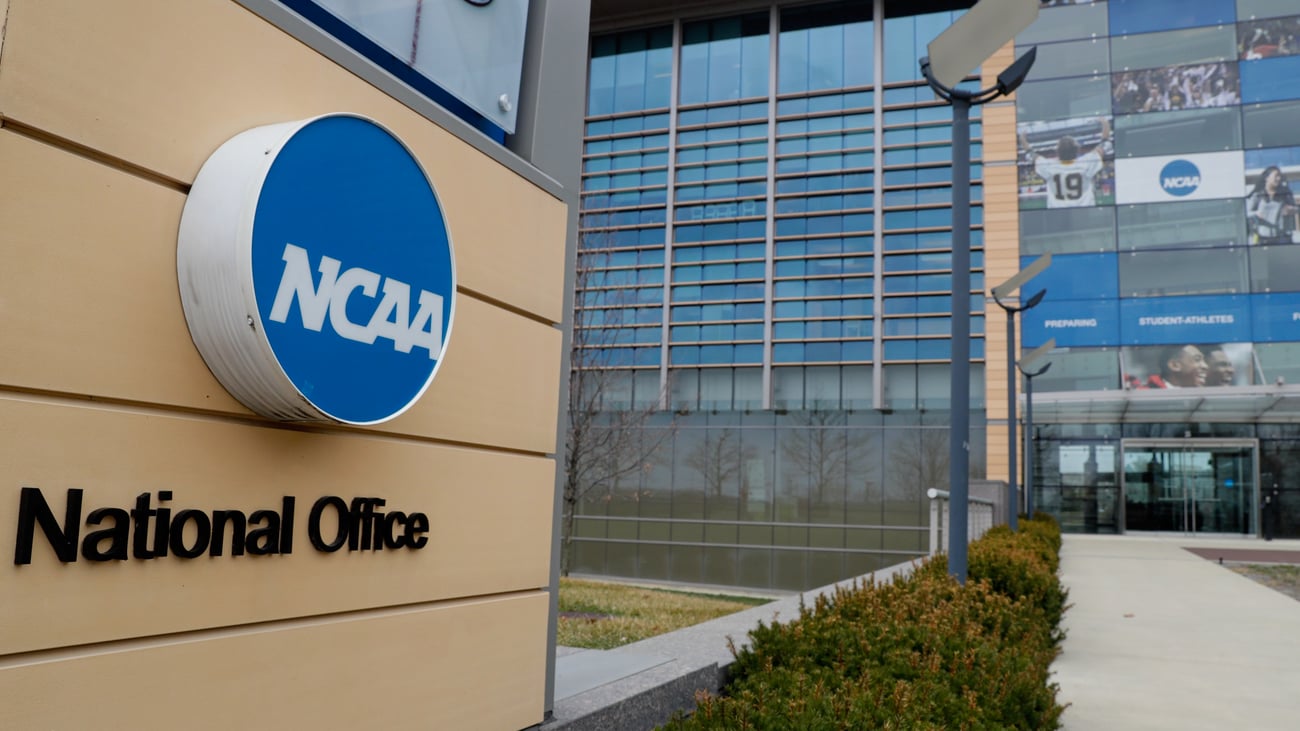
A Ninth Circuit pair of opinions reviews antitrust claims of the NCAA's five-year rule, saying a lower court erred in issuing a preliminary injunction stopping enforcement of the rule, in one opinion.(CN) — A Ninth Circuit panel resolved a pair of appeals regarding eligibility rules under the NCAA Wednesday, dismissing one as moot and vacating a lower court’s preliminary injunction stopping the association from enforcing its five-year rule for a college baseball player in the other.In U.S. Circuit Judge Gabriel Sanchez’s 12-page opinion for Braham v. NCAA, the panel concluded a consolidated appeal for two college football players was moot because the injunctions stopping enforcement of the rule already expired, and the players’ collegiate careers are over.“Famously, in sports, ‘it ain’t over ‘til it’s over,’” the Joe Biden appointee wrote. “But, in this case, it’s over. The game clock has run out on the 2025 college football season.”The two plaintiffs-appellees, Cortez Braham and Tatuo Martinson, began their collegiate careers in 2019 at junior colleges but subsequently transferred to and played for NCAA Division I colleges. The plaintiffs each completed their five years of collegiate enrollment eligibility as maximally permitted under the NCAA’s rules, Sanchez wrote.The football players’ cases challenged the NCAA’s five-year rule, which limits collegiate athletes to only four seasons of eligibility within five years of college enrollment under Sherman Act antitrust claims. Oral arguments for the appeal occurred March 13.“We appreciate the Ninth Circuit closely reviewing the record and agreeing that these cases are moot,” attorney Gregg Clifton, who argued in front of the panel for the players, told Courthouse News on Wednesday.Other cases challenging the rule brought by NCAA players from football and other sports remain live on appeal, Sanchez wrote, but in many cases, the players hadn’t won a preliminary injunction stopping enforcement of the rule.“Moreover, under the same five-year rule theory that plaintiffs are pursuing here, other plaintiffs can and have sought multiple seasons of additional collegiate eligibility,” wrote Sanchez.In a 22-page opinion for Blythe v. NCAA, Sanchez wrote the lower court erred several times: first, in finding that college baseball player Noah Blythe established a likelihood of success on the merits of his Sherman Act claim, due to sparse evidentiary support for his motion for a preliminary injunction; second, in defining the relevant market of the antitrust claim as the Division I collegiate baseball labor market; and third, in finding Blythe met his burden to prove a substantial anticompetitive effect in that market.“Given the dearth of evidence of anticompetitive effects offered by Blythe, the district court erred in finding that he showed a likelihood that the five-year rule constitutes an unreasonable restraint on trade or commerce,” Sanchez wrote.When Blythe filed his initial complaint and sought injunctive relief, he had completed his five years of collegiate enrollment eligibility as maximally permitted under the NCAA’s rules, Sanchez wrote.Blythe played baseball for a few years at Hawaii Pacific University in NCAA Division II and played three years at the University of Antelope Valley, a California Pacific Conference college baseball school associated with the National Association of Intercollegiate Athletics, not the NCAA. Blythe transferred to the University of Nevada, Reno, an NCAA Division I baseball school, and the university applied for a waiver of the five-year rule on Blythe’s behalf in hopes he could compete in the 2026 collegiate baseball season.The conference denied the request, as did the NCAA on appeal. When the Ninth Circuit panel heard oral arguments on March 13, Blythe was playing in the 2026 season due to the lower court’s injunction that stopped enforcement of the NCAA’s rule. The Ninth Circuit panel vacated the injunction on April 8.Sanchez wrote that the lower court erred in relying on other lower court rulings to define the relevant market as the “Division I collegiate baseball labor market,” using the same definitions as college football or basketball labor markets in those cases.“These markets are not interchangeable,” he wrote.Furthermore, Sanchez wrote, Blythe did not provide any evidence beyond his personal exclusion in the market to prove an anticompetitive effect.“We join our sister circuits which have unanimously held that the Five-Year Rule is a commercial restraint subject to the Sherman Act,” wrote Sanchez. “In finding that the District Courts had abused their discretion, our sister circuits explained that ‘[r]eliance on a previously accepted market, without inspection of current market realities, is antithetical to antitrust legal principles.”U.S. Circuit Judge Mark Bennett, a Donald Trump appointee, and U.S. District Judge David Ezra, a Ronald Reagan appointee, sitting by designation, rounded out the panel.Attorneys representing Blythe and the NCAA did not immediately respond to requests for comment.Subscribe to our free newslettersOur weekly newsletter Closing Arguments offers the latest about ongoing trials, major litigation and rulings in courthouses around the U.S. and the world, while the monthly Under the Lights dishes the legal dirt from Hollywood, sports, Big Tech and the arts.Additional Reads
Ninth Circuit chimes in on pair of appeals over NCAA eligibility rules
Full Article
Original Source
Read the full article at Courthousenews →KhanList aggregates and links to publicly available news content. We do not host full articles from third-party sources. Always verify important information with original sources.