
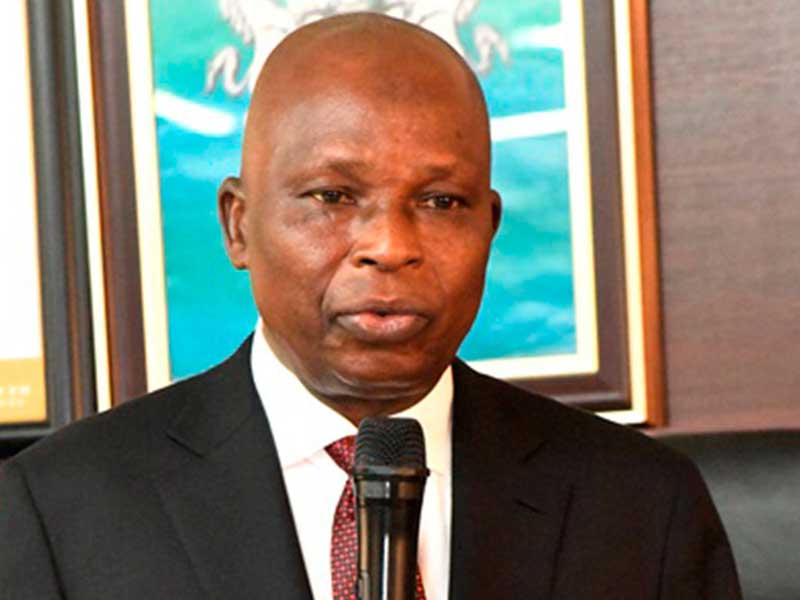
Follow THISDAYLIVE on GoogleAdd us as a preferred source to see more of our stories in Google Follow us on Google • Hosts maiden assembly of AARP-F The federal government has reiterated its commitment towards the eradication of corruption and illicit financial flows from the African continent. Attorney-General of the Federation (AGF) and Minister of Justice, Prince Lateef Fagbemi, SAN, gave the reassurance yesterday at the opening of the maiden General Assembly of African Assets Recovery Practitioners’ Forum (AARP-F), being hosted by Nigeria in Abuja. Welcoming the 55 member states of African Union, and other international partners, to the pivotal event, the AGF pointed out, “Hosting this gathering in Abuja reaffirms Nigeria’s commitment to regional and continental efforts that uphold the rule of law, promote accountability, and combat corruption and illicit financial flows across Africa.” The minister challenged participants to see the conference beyond recovery of stolen assets discussion, but proceed to confront the question of justice, wondering how a continent so richly endowed continues to be deprived of resources that should educate its children, equip its hospitals, build its infrastructure and secure its future. He stated, “There is an African saying that when the roots of a tree are being eaten away, its leaves cannot remain green for long. Illicit financial flows eat away at the roots of our development. “Asset recovery is therefore not simply a technical exercise in tracing bank accounts or securing forfeiture orders. It is a struggle for accountability, economic sovereignty and the restoration of public trust.” According to Fagbemi, effective asset recovery goes far beyond the identification, seizure, and forfeiture of the proceeds of crime, it equally encompasses the preservation, management, disposal, and transparent utilization of recovered assets. He stated, “Indeed, the success of our asset recovery efforts must not be measured solely by the monetary value of assets recovered, but by the transparency of the process, effective asset management, accountability, and the ultimate developmental benefit to our citizens. “Recovered assets must be rigorously protected against dissipation, mismanagement, and re-entry into illicit financial channels—a standard that demands professionalism, institutional capacity, integrity, and strict adherence to the rule of law.” The AGF disclosed that Nigeria, in its pursuit of the recovery and return of illicitly acquired assets across multiple jurisdictions, had reinforced the necessity of relentless legal rigour, inter-agency synergy, and strict statutory accountability under the country’s Proceeds of Crime (Recovery and Management) framework. He called for a coordinated continental response, against the backdrop that no country can effectively address the challenges of corruption and illicit financial flows in isolation. Fagbemi stated, “We must strengthen cooperation, facilitate seamless information exchange, improve mutual legal assistance, and promote collaboration among relevant national and international institutions. “I, therefore, applaud the Forum’s deliberate effort during this Assembly to broaden its collaborative reach to include Ministries of Finance, tax authorities, and revenue agencies, alongside our traditional law enforcement and anti-corruption institutions, and I encourage you to prioritise capacity building, the adoption of international best practices, and practical strategies for overcoming cross-border complexities.” The minister declared, “Distinguished delegates, I, therefore, propose that this Forum prioritise the development of a harmonised continental Standard Operating Procedure for asset tracing, freezing, seizure, confiscation, repatriation, management and disposal. Such a framework should respect the domestic laws and sovereignty of Member States while establishing common minimum standards, clear channels for timely mutual legal assistance, secure information-sharing protocols and safeguards for due process and third-party rights.” He said, “We should also strengthen beneficial ownership transparency, digital asset-tracing capabilities, professional training and independent reporting on the use of recovered assets. “Our objective must be simple: to make cooperation faster, recovery more effective, and the management of recovered wealth more transparent and accountable to the African people.” Earlier, Chairman of Independent Corrupt Practices and other related offences Commission (ICPC), Dr Musa Adamu Aliyu, SAN, described the assembly as an important milestone in the institutional development of AARP-F. Aliyu said the forum was established in Nairobi, Kenya, in April 2025 to, among others, strengthen professional relationships, facilitate the exchange of expertise, and deepen cooperation among African asset recovery institutions, and their international counterparts. He said, “Its establishment reflects a fundamental reality: corruption and illicit financial flows transcend national borders, and our response must be equally coordinated and international in scope. “Assets stolen from one country can be concealed, transferred or invested across several jurisdictions through complex financial arrangements designed to frustrate investigation and recovery.” While stating that no country or institution could effectively confront the challenges in isolation, Aliyu, pointed out that effective asset recovery required more than robust national legislation and capable institutions, adding that: it depends on mutual trust, sustained cooperation, timely exchange of information, specialised expertise and the willingness of jurisdictions to work together across legal and institutional boundaries. Speaking on the importance of asset recovery to Africa’s development, Aliyu stated that every resource lost through corruption represented more than a financial loss. He said it was an opportunity denied to the people in terms of resources that could otherwise support education, healthcare, infrastructure, security, employment, and other essential public services. He stated that behind every successfully recovered asset was an opportunity to restore public value, strengthen institutions, advance justice and rebuild confidence in governance. Aliyu said, “Asset recovery must, therefore, be understood not merely as an enforcement or financial investigation activity, but also as an essential instrument of accountability, national development and the protection of public resources. “Our responsibility does not end with identifying and recovering stolen assets. “We must also ensure that the proceeds of crime are effectively returned and managed in accordance with applicable laws and procedures, so that they can ultimately serve the public interest.” While acknowledging progress made by African countries in strengthening their anti-corruption and asset recovery frameworks, Aliyu observed that significant challenges remained, such as the increasing complexity of cross-border financial transactions, difficulties in identifying beneficial ownership, differences in national legal systems, delays in international cooperation, limited technical capacity, and the substantial costs associated with pursuing assets across multiple jurisdictions. He stated that the challenges underscore the need for stronger institutional partnerships, more effective international cooperation and a coordinated continental response. “Above all, they reinforce the imperative of moving beyond policy declarations and translating our commitments into practical cooperation and measurable outcomes,” the ICPC boss added. In his remarks, former Nigerian Ambassador to Russia, Professor Abdullahi Shehu, stated that Africa lost an estimated $150 billion annually to illicit financial flows, a development that deprived the continent of resources needed for infrastructure, healthcare, education, and other critical sectors. Shehu, a former Director-General of Inter-Governmental Action Group against Money Laundering in West Africa (GIABA), said the scale of the financial losses underscored the urgent need for African countries to strengthen asset recovery mechanisms and move beyond political commitments to concrete action. The former envoy, who stated that Africa lost about $1.8 trillion between 1970 and 2008, observed that illicit financial flows continued to undermine the continent’s development and weaken its capacity to finance critical public services. The theme of the assembly was, “From Commitment to Action: Enhancing Africa’s Asset Recovery Architecture through Effective Implementation of the Common African Position on Asset Recovery (CAPAR).”
Nigeria Reaffirms Commitment to Africa’s Fight Against Corruption, Illicit Financial Flows
Full Article
Original Source
Read the full article at Thisdaylive →KhanList aggregates and links to publicly available news content. We do not host full articles from third-party sources. Always verify important information with original sources.