
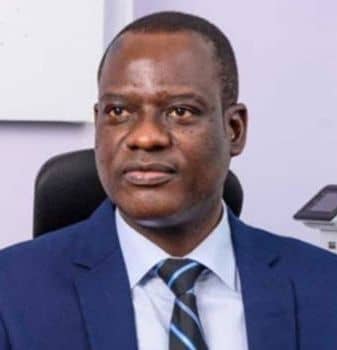
Follow THISDAYLIVE on GoogleAdd us as a preferred source to see more of our stories in Google Follow us on Google • Finance minister says 65 projects could generate 366,000 Jobs, seeks polish participation •Poland commits over $150m to Lagos ports modernisation, pledges over $500m in credit guarantees Nigeria and Poland have stepped up efforts to deepen bilateral economic relations, with the federal government inviting Polish investors to participate in its $78.5 billion investment portfolio comprising 65 projects expected to generate at least 366,000 jobs. Minister of Finance and Coordinating Minister of the Economy, Taiwo Oyedele, made the call yesterday at the second Polish-Nigerian Economic Forum held in Lagos, where he identified agriculture, energy, transport, digital technology, manufacturing and healthcare as priority areas for investment. Oyedele said the investment opportunities were part of Nigeria’s efforts to translate ongoing economic reforms into productive investments, job creation, and sustainable growth. He disclosed that the government had launched Project Nigeria, an investment portfolio of 65 marketable projects backed by feasibility studies, valued at approximately $78.5 billion. He said, “Last month, we launched Project Nigeria. Our investment portfolio has 65 marketable, feasibility-backed projects, worth about $78.5 billion, expected to create at least 366,000 jobs. These projects are open to Polish investors today.” The minister said Nigeria’s economic reforms had begun yielding results, noting that the country recorded 4.43 per cent growth in the second quarter of 2026, while inflation had declined for several consecutive months to its lowest level in six years in October. He added that Nigeria’s foreign reserves had risen above $55 billion, while private capital inflows increased from about $300 million in 2023 to nearly $6 billion in 2026. According to him, the country’s tax-to-GDP ratio also increased from approximately seven per cent in 2023 to 12.5 per cent in 2025, strengthening the government’s capacity to finance development without resorting to excessive money creation. Oyedele said the administration of President Bola Tinubu remained committed to sustaining the removal of petrol subsidy and unification of the foreign exchange rates. He stated, “Under the leadership of President Bola Ahmed Tinubu, GCFR, we removed the petrol subsidy and unified the exchange rates. And we have not turned back. Mr President has been very clear. There will be no return to fuel subsidies and no return to multiple exchange rates.” He, however, acknowledged that Nigeria’s trade relationship with Poland remained below its potential, despite decades of diplomatic and economic engagement. He said Poland exported approximately $169 million worth of goods to Nigeria in 2025, while Nigeria’s exports to Poland was about $565 million, more than 90 per cent of which comprised crude oil. The minister put total bilateral trade at approximately $734 million, describing it as modest considering the economic size and opportunities available in both countries. “For a partnership between Africa’s most populous and most significant nation, and a European economy that has recently crossed $1 trillion, certainly we can do more,” he said. Oyedele said Nigeria could expand exports beyond crude oil and grains to processed foods, fertilisers and other manufactured products, while benefiting from Polish machinery, technology and services to strengthen local production. He also urged Polish businesses to take advantage of Nigeria’s position as a gateway to the African Continental Free Trade Area, which provides access to a market of approximately 1.4 billion people. The minister identified five sectors where both countries could accelerate cooperation, including agricultural processing, energy and green technology, transport and logistics, digital economy and cybersecurity, as well as machinery, manufacturing and healthcare. On agriculture, he said Poland’s agri-food exports exceeded €50 billion in the previous year, while Nigeria possessed the land, labour and growing consumer market required to expand food processing and exports. He also welcomed Polish expertise in energy transmission, green technology, cybersecurity, maritime infrastructure and industrial machinery, stressing the need for partnerships that would strengthen local capacity. He said, “In each of these areas, let us build local capacity into the partnership. Training should accompany technology. Maintenance should accompany equipment. And Nigerian supply should grow alongside major projects.” Oyedele proposed three practical steps to strengthen economic cooperation between both countries. He called for the establishment of a working-level engagement channel between the two finance ministries to follow up on investment opportunities, including Polish participation in Project Nigeria. He also urged Poland’s export credit and development finance institutions, KUKE and BGK, to explore co-financing arrangements with Nigeria’s Bank of Industry and Nexim Bank. The minister called for progress towards agreements on the avoidance of double taxation and investment protection to provide greater certainty for businesses operating in both countries. On infrastructure financing, Oyedele highlighted the modernisation of the Lagos port complex at Apapa and Tin Can Island, describing it as an example of how international financing partnerships could support critical Nigerian projects. He said the $1 billion port modernisation project, backed by UK export finance and Polish reinsurance support, represented the largest sovereign export credit transaction in Nigeria since 2009. He, however, cautioned that the government would prioritise the quality and sustainability of financing arrangements, particularly in assessing affordability, repayment capacity and foreign exchange exposure. He said, “Public guarantees can support investments, but they create obligations that deserve scrutiny. Good financing should help viable projects succeed without placing an unsustainable burden on the future.” In his remarks, Poland’s Deputy Foreign Minister, Marcin Bosacki, said the second edition of the forum attracted almost three times as many Polish participants as the inaugural edition, reflecting growing interest among Polish businesses in Nigeria and the wider African market. Bosacki said the delegation comprised companies operating in medical technology, healthcare, defence, agro-processing equipment, construction and engineering, information and communications technology, cybersecurity and maritime services. “This is a clear sign of the growing interest of Polish businesses and entrepreneurs in Nigeria and, more globally, in the immense opportunities offered by African markets,” he said. Bosacki said Poland’s economic transformation was driven largely by the resilience and entrepreneurial spirit of its businesses, stating that the country has grown into the world’s 20th-largest economy after overcoming significant economic challenges. He said Poland and Nigeria had considerable opportunities to exchange expertise, expand trade and develop mutually beneficial partnerships. The deputy minister also disclosed that Poland had committed more than $150 million towards the Lagos port modernisation project, which would support the procurement of advanced technologies and products supplied by Polish companies. He added that the transaction would be complemented by more than $500 million in credit guarantees from Poland’s Export Credit Insurance Corporation, KUKE. Bosacki stated, “For Poland, this project is about much more than investment figures. It is a concrete expression of our confidence in Nigeria’s economic potential, our commitment to a long-term partnership and the friendship and respect we have for Nigeria and the whole African continent.” He said the port project should serve as a foundation for further cooperation rather than an isolated investment, urging businesses in both countries to convert growing diplomatic and economic engagement into lasting commercial relationships. He said the forum provided an opportunity for companies to understand each other’s markets, exchange expertise and identify new areas of collaboration. The second Polish-Nigerian Economic Forum was organised by the Polish Investment and Trade Agency and the Embassy of the Republic of Poland in Abuja. The event brought together government officials, business leaders, investors, financial institutions and representatives of the organised private sector from both countries to explore opportunities for expanded trade, investment and economic cooperation.
Nigeria, Poland Target $78.5bn Investment Projects as Oyedele Woos Polish Investors
Full Article
Original Source
Read the full article at Thisdaylive →KhanList aggregates and links to publicly available news content. We do not host full articles from third-party sources. Always verify important information with original sources.