
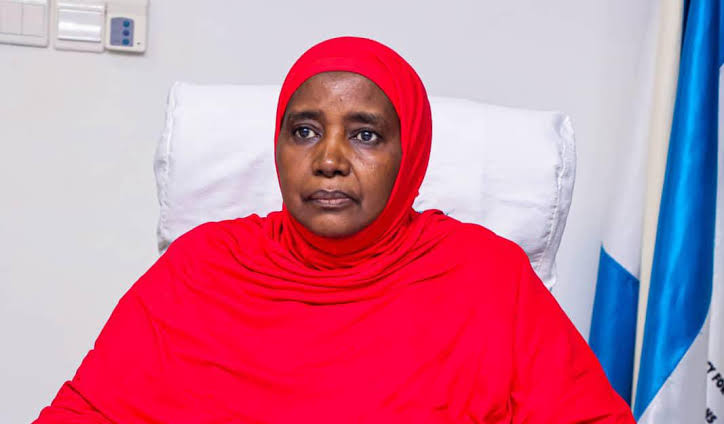
Michael Olugbode in Abuja Nigeria is seeking to close operational gaps between investigation, prosecution and adjudication in human trafficking and migrant-smuggling cases as criminal networks adopt more sophisticated methods and expand across borders. The move is aimed at strengthening the country’s criminal justice response to transnational organised crime and ensuring that perpetrators are effectively prosecuted while victims receive protection throughout the justice process. Nigeria’s position as a country of origin, transit and destination for migrants exposes it to complex trafficking and migrant-smuggling threats, requiring closer coordination among investigators, prosecutors, judicial officers, intelligence analysts and other law-enforcement practitioners. Speaking in Abuja on Monday at the opening of a capacity-building workshop on “Strengthening the Criminal Justice Chain in Human Trafficking and Migrant Smuggling Cases,” the Director-General of the National Agency for the Prohibition of Trafficking in Persons (NAPTIP), Binta Bello, said the effectiveness of the justice system depended on the strength of every stage of the enforcement process. Bello said human trafficking and migrant-smuggling networks exploit human vulnerability, undermine national security, violate fundamental human rights and threaten economic stability across national boundaries. According to her, the growing sophistication of criminal networks made it necessary to strengthen the entire criminal justice chain rather than focus on isolated stages of enforcement. “A criminal justice system is only as strong as its weakest link. If an investigation is compromised at the intelligence stage, prosecution becomes difficult; if evidence collection is flawed, justice is delayed or denied; and if judicial proceedings lack specialised operational insights into trafficking dynamics, dangerous criminals return to the streets while victims remain unprotected,” Bello said. She said the workshop was designed to improve cooperation among investigators, prosecutors and judicial authorities, strengthen the quality of case files and improve the connection between investigation, prosecution and judicial decision-making. The initiative is also expected to close operational gaps from the initial detection of cases and victim-centred investigations through intelligence gathering and prosecution to final adjudication. Bello said participants would strengthen their capacity to address the links between trafficking, migrant smuggling, financial crimes, cybercrime and cross-border security threats. They would also refine strategies for financial tracking, digital evidence collection and international legal cooperation, including Mutual Legal Assistance. The NAPTIP Director General stressed that the intervention would reinforce a victim-centred and trauma-informed approach to justice, ensuring that victims were protected throughout judicial proceedings and not re-traumatised while seeking justice. Bello said NAPTIP had sustained a multi-dimensional strategy anchored on its 5P approach of Policy, Prevention, Protection, Prosecution and Partnership. She disclosed that the agency had secured hundreds of convictions against human traffickers, with its legal teams continuing to pursue maximum sentences as a deterrent to organised criminal syndicates. She said thousands of victims, including women, children and young men, had been rescued from domestic exploitation, forced labour, sexual servitude, organ-harvesting networks and digital exploitation centres within Nigeria and internationally. According to her, survivors receive psychosocial support, medical care, vocational training and reintegration assistance through NAPTIP’s specialised shelters across the country. Bello said the agency had expanded its intelligence operations in response to the growing use of digital platforms by traffickers, enabling it to track online trafficking syndicates, fake job-placement schemes and cyber-enabled exploitation networks operating in urban centres and across borders. She added that specialised joint operations with security agencies, border-control authorities and international law-enforcement partners had enabled NAPTIP to intercept transnational syndicates and disrupt smuggling corridors across West Africa and Europe. The agency, she said, had also updated operational guidelines, strengthened standard operating procedures for victim identification and enhanced evidence-gathering techniques to ensure that investigations met international standards. However, Bello warned the agency’s achievements could not justify complacency, given the evolving tactics of organised criminal networks. She said continuous innovation, institutional adaptation and deeper collaboration across the criminal justice pipeline remained necessary to sustain the fight against trafficking and migrant smuggling. The capacity-building activity is being implemented under the Common Operational Partnership (COP Nigeria), carried out by CIVIPOL in collaboration with the Fundación para la Internacionalización de las Administraciones Públicas (FIAP), under the Support to Migration Governance (Component 3) project in Nigeria. The project is funded by the European Union in partnership with the Nigerian authorities and is being developed in coordination with FIAP’s activities in Nigeria, particularly initiatives aimed at strengthening migration governance and combating human trafficking and migrant smuggling. Bello expressed appreciation to the European Union for its sustained support under the project, saying its investment in Nigeria’s migration-management and counter-trafficking frameworks reflected a commitment to global peace, security and human dignity. She commended CIVIPOL for its technical expertise and leadership in implementing COP Nigeria, while also appreciating FIAP for its partnership and coordination in strengthening governance, justice and anti-trafficking structures in Nigeria. The DG further thanked security agencies, judicial officers, civil society organisations and other resource persons for their participation and commitment to the fight against human trafficking. Bello charged participants to use the workshop to build stronger professional networks and partnerships that would extend beyond the training. “You represent the frontline defence of our nation’s criminal justice system against exploitation,” she told participants. She urged them to engage actively, challenge assumptions and share best practices from their respective institutions, stressing that the knowledge and skills acquired would directly influence Nigeria’s capacity to investigate, prosecute and dismantle trafficking and migrant-smuggling networks. She reminded participants that behind every case file, legal precedent and investigative report was a human life seeking justice and protection. “Together, through a strengthened criminal justice chain, we will deny traffickers a safe haven, bring perpetrators to justice, and uphold the dignity of every individual,” Bello said.
Nigeria Moves to Close Justice Gaps in Human Trafficking, Migrant Smuggling Cases
Full Article
Original Source
Read the full article at Thisdaylive →KhanList aggregates and links to publicly available news content. We do not host full articles from third-party sources. Always verify important information with original sources.