
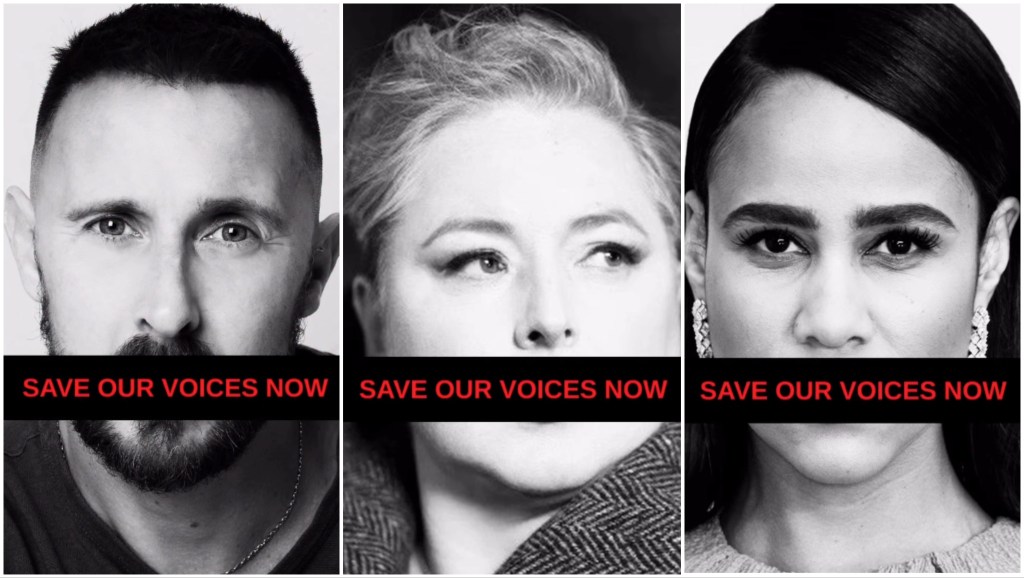
Welcome to Rendering, a Deadline column reporting at the intersection of AI and showbiz. Rendering examines how artificial intelligence is disrupting the entertainment industry, taking you inside key battlegrounds and spotlighting change-makers wielding the technology for good and ill. Got a story about AI? Rendering wants to hear from you: jkanter@deadline.com. Michael Caine has handed over his voice to AI. Liza Minnelli is making music with AI. With the blessing of their estates, dead actors like John Wayne are having their voices resurrected by AI. But what happens when consent is not given? What can actors do to protect a crucial tool of their craft from unwanted exploitation? The answer, in the UK at least, is very little. Watch on Deadline That’s why Nicola Coughlan, Luke Evans, and Hugh Bonneville are lending their voices to a new campaign: Save Our Voices Now. BAFTA winner Siobhán McSweeney and Harry Potter star Miriam Margolyes have also endorsed the message. The campaign was established by Tip Toe actor Peter Caulfield and Alice Sockett, an established audiobook narrator. They are calling on the government to give individuals enforceable copyright ownership over their own voice. Save Our Voices Now’s Parliament petition has amassed more than 4,000 signatures, but the early indications are that the campaign has been met with inertia rather than action. In December 2024, the British government launched a major consultation on copyright protections in the age of AI. Ministers received 11,520 responses, many of which were from creators and rights holders. The government published the findings of the consultation in March, but said there was no clear consensus on strengthening AI copyright laws, despite 81% of respondents endorsing the need for greater copyright protections. Flash forward five months, and what’s the government’s response to the Save Our Voices Now campaign? To launch another consultation. “It is right that we value and protect human creators, and that is why we have announced we will launch a consultation on how we address these harms, while protecting legitimate innovation,” a Department for Culture, Media and Sport (DCMS) spokesperson says. Caulfield is not impressed. “A consultation is such a big fob-off,” he tells Deadline. “We don’t need a second consultation in as many years. We need the law to change.” Actors’ union Equity has also voiced frustration at the government’s position. A DCMS spokesperson did not respond to questions on why a second consultation is necessary and what it will achieve. Meanwhile, the U.S. and Denmark are pushing through legislation that gives citizens the rights to control digital replicas. “The UK is very much lagging behind,” laments Caulfield. “Since we started the campaign, we’ve been inundated with shocking stories about how big brands are taking people’s voices without consent, and AI software is being used to defraud families.” He launched the campaign after submitting audition tapes to Audible, before being “stonewalled” about what was happening to his unsuccessful voice recordings. “They were very reluctant to give me any information about what happens with my data,” he says. Caulfield is not accusing Audible of theft, but is making clear how the rights situation is murky at best. Part of the campaign is about placing the legal burden of consent on the platform and the AI developer, not the individual. But when AI is moving so fast, and legislation is moving so slowly, there are fears it may already be too late. Since launching last week, Save Our Voices Now has attracted further endorsements from Richard E. Grant and The Great British Bake Off presenter Alison Hammond. They will need to speak loudly to make their voices heard in the corridors of power.
Nicola Coughlan, Luke Evans & Hugh Bonneville Are Speaking Out Against AI Voice Cloning, But Is The Government Listening?
Full Article
Original Source
Read the full article at Deadline →KhanList aggregates and links to publicly available news content. We do not host full articles from third-party sources. Always verify important information with original sources.