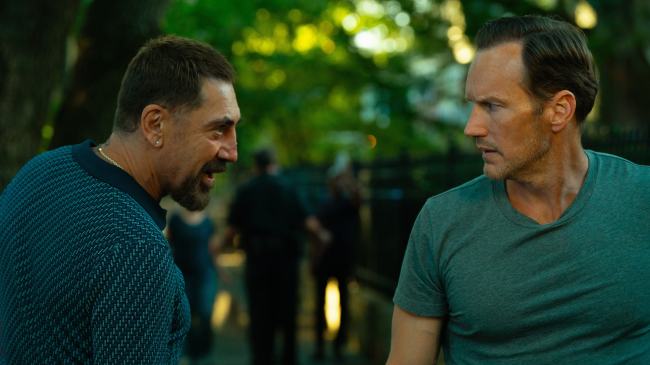
When Nick Antosca decided he wanted to adapt the 1991 Martin Scorsese movie “Cape Fear” (itself a remake of a 1962 thriller starring Gregory Peck and Robert Mitchum) into a television series, he quickly learned that he had to sell two formidable filmmakers on the idea. “When I first dared to think, ‘I want to do ‘Cape Fear’ again,’ I didn’t know what the process would involve,” Antosca told IndieWire’s Filmmaker Toolkit podcast. “Universal said, ‘You’ve got to get approval from Spielberg [whose company produced the 1991 film] and Scorsese.'” Antosca gave Scorsese and Spielberg a one-page pitch outlining where his “Cape Fear” would be different from the first remake’s story of ex-convict Max Cady (Robert De Niro) terrorizing lawyer Sam Bowden (Nick Nolte) and his family (Jessica Lange and Juliette Lewis) after blaming him for his incarceration. Antosca planned to lean into the anxiety that comes with uncertainty, making it unclear whether or not Cady (played in the series by Javier Bardem) was even guilty of the crime he went to jail for, and introducing doubts about his role in the calamities that plague the Bowdens. Though any question about Cady’s capacity for committing evil acts was completely obliterated by the time Antosca got to his 10-episode series’ conclusion, this ambiguity is key to the show’s greatness — and was attractive to Scorsese and Spielberg, who both signed off on Antosca’s take. Unfortunately, Antosca still had to untangle a complicated rights situation, which took years. And then COVID hit. “So much time had passed that [Scorsese and Spielberg] had to hear it again,” Antosca said. “We went back to them, and they approved it again.” Antosca didn’t know how involved Scorsese and Spielberg would be, but as scripts were being written the two directors started giving notes and Antosca realized they weren’t just going to slap their names on the show without participating. Once the shoot began, Scorsese even began calling Antosca on FaceTime to share his thoughts. “I didn’t expect that,” Antosca said. “These guys are shooting giant movies.” Antosca found Scorsese to be a valuable resource when it came to figuring out how to protect certain scenes or shots that were important to him but not quite working. “He would say, ‘Try rolling this cut five frames and see if that helps,’ or ‘Try intercutting these two scenes.’ Little things made it so much better, so that was great. He would say if he thought something wasn’t working, but it was always encouraging. It was always generous and collaborative.” Antosca was relieved to find that Scorsese seemed genuinely happy the series was happening, and he wanted the blessing of one of the director’s key collaborators as well. When he realized he was neighbors with screenwriter Wesley Strick, who wrote the 1991 film, Antosca called him and invited him to lunch. “He told amazing stories about working with Scorsese and working on the movie and working with Spielberg,” Antosca said. “I’m a fan of his writing, obviously, and he was super supportive of the show.” When Strick came out to Atlanta to visit the set, Antosca threw him into a scene as a doctor. “There was no dialogue written for him and Javier because it’s all from Anna’s [Amy Adams] POV,” Antosca said. “But actually they do need to be talking, so it’s, ‘Hey, now improvise a bunch of dialogue with Javier Bardem.” ‘Cape Fear’Apple TV In a way, the Strick cameo and the much larger role for “Cape Fear” alumnus Juliette Lewis are in keeping with a tradition Scorsese established in the 1991 movie when he gave small parts to Peck, Mitchum, and Martin Balsam, who had all been in the 1962 original. Casting Lewis, who had given a great performance in Antosca’s Hulu series “The Act,” was a no-brainer. “It became obvious that if Juliette would do this, she’d be awesome for it,” Antosca said. Perhaps the biggest challenge facing Antosca when reinventing “Cape Fear” for a new era was finding his Max Cady. Robert Mitchum and Robert De Niro were both iconic in the role, with De Niro making such an impression on the culture that his performance was parodied on everything from “The Ben Stiller Show” to “The Simpsons.” “It’s such a leap of faith,” Antosca said. “You’re dead if you don’t have somebody who can truly follow in the footsteps of those guys, and do something different. Because what De Niro did is so different from what Mitchum did.” Bardem wasn’t an immediately obvious choice, mainly since he’s Spanish and Antosca saw “Cape Fear” as a kind of Southern gothic — or, more specifically, a Southern giallo. “You think of Max Cady as a Southern guy,” Antosca said, “but by the time I was pitching networks I knew I wanted it to be Javier. I would say to Apple, ‘Picture Javier Bardem,’ not knowing if we could get him. Fortunately, he came on pretty early once we had the show set up.” While the 1991 film definitively kills Max Cady off, the finale for Antosca’s series leaves him alive and presumably headed back to jail, one of the biggest changes between the show and its cinematic predecessors. Antosca wanted to give a sense of Cady’s lingering impact on the family by ending with an outdoor cookout scene echoing the way the series began, when the Bowdens were more innocent. “We wanted to leave the story in a sense of uncertainty,” Antosca said, explaining that the Bowdens are clearly trying to recreate what their lives were like before even though it’s impossible. “We felt if they actually killed him, it wouldn’t have the same effect,” Antosca said. “Maybe Max is locked up forever now, but they will never be the same. Maybe they’ll heal eventually with a lot of therapy, but they’re going to be looking over their shoulders at things that aren’t there.” Leaving Max alive obviously leaves the door open for a second season, which Antosca doesn’t dismiss even though he says Season 1 was always intended to feel complete on its own. “Creatively, we focused on a single season with a relatively closed-ended story. We wanted it to feel like a full nightmare.” “Cape Fear” is currently streaming on Apple TV. To hear the entire conversation with Nick Antosca and make sure you don’t miss a single episode of Filmmaker Toolkit, subscribe to the podcast on Apple, Spotify, or your favorite podcast platform.
Nick Antosca Made ‘Cape Fear’ His Own with Scorsese and Spielberg’s Blessing — and Their Notes
Full Article
Original Source
Read the full article at Indiewire →KhanList aggregates and links to publicly available news content. We do not host full articles from third-party sources. Always verify important information with original sources.