
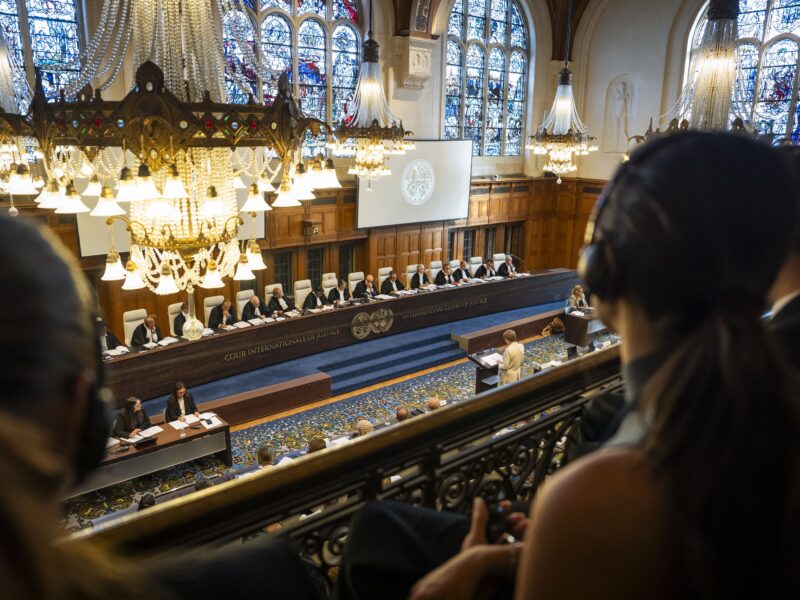
Berlin argues the case over its military support cannot proceed since Israel won't agree to appear.THE HAGUE, Netherlands (CN) — Nicaragua told the U.N.’s top court Thursday Germany should have to answer for its support for Israel even if Israel is not in the courtroom.Four days of hearings at the International Court of Justice ended with Nicaragua urging judges to reject Germany’s procedural objections and examine claims its assistance enables genocide and other violations against Palestinians. Berlin wants the claims dismissed, arguing the court lacks authority or cannot hear them without Israel.As Israel fought in Gaza after the Hamas-led attacks of Oct. 7, 2023, Nicaragua looked beyond the battlefield to Germany, one of Israel’s arms suppliers. It sued Berlin in March 2024 over military assistance to Israel and a funding freeze for the U.N. agency serving Palestinian refugees.Nicaragua invoked promises countries made after World War II: to prevent and punish genocide under the 1948 Genocide Convention and protect people caught in war under the 1949 Geneva Conventions. Those duties, Nicaragua argues, do not stop with the countries pulling the trigger.Berlin contends Nicaragua went to court before there was a legal dispute to settle, giving Germany barely two weeks to consider its diplomatic warning. On Thursday, Nicaragua’s lawyer Alfredo Crosato Neumann countered Germany had already publicly rejected Nicaragua’s position on Feb. 7, 2024, before the lawsuit was filed.Crosato said: “Germany’s apparent attempt to reduce it to a story of lost email messages is vain and hardly merits a response at this stage.”Another disagreement turns on how far back the court can look. Germany’s acceptance of its authority covers facts or situations after April 30, 2008; Berlin says several claims reach further back. Nicaragua’s lawyer Daniel Müller points to later decisions, including approvals to export German-made submarines to Israel in December 2023 and the second quarter of 2026. Those decisions can face scrutiny, he argues, even if the military relationship began decades earlier.Israel’s absence presents a different hurdle. Germany argues judges cannot hold Berlin responsible for assisting Israeli wrongdoing without first deciding whether Israel acted unlawfully. Yet Israel has not consented to that examination in this case.A 1954 ruling supplies Germany’s precedent. Italy wanted Albanian gold seized from Rome during World War II as compensation for purported Albanian wrongdoing, but the court refused to decide whether Albania owed compensation without its consent. Berlin says Israel’s absence poses the same barrier.Members of the German delegation attend hearings at the International Court of Justice in The Hague, Netherlands, Monday, Sept. 7, 2026. (UN Photo/ICJ-CIJ/Jeroen Jumelet)Nicaragua’s lawyer Alain Pellet counters that judges can assess Germany’s duties without deciding Israel’s responsibility. He also cites the court’s earlier findings on Israel’s separation wall, its occupation of Palestinian territory and its obligations toward U.N. aid operations. Germany maintains those opinions cannot establish the specific wrongdoing at issue here.The claims also include German support for racial discrimination, segregation and apartheid against Palestinians. Berlin says Nicaragua skipped required steps to seek a resolution before bringing those claims. Nicaragua counters the humanitarian emergency left no time for prolonged negotiations and that the countries’ separate acceptance of the court’s authority offers another route.Defending its arms export approvals as lawful, the German delegation also cited funding for Palestinian institutions and humanitarian relief. Nicaragua’s representative Carlos José Argüello Gómez responded Thursday: “This renders its humanitarian ledger a futile exercise in funding relief for the very casualties its military exports helped create.”The International Court of Justice was created in 1945, in the aftermath of World War II, to settle legal disputes between countries and issue advisory opinions on international law. Based in The Hague, it is the United Nations’ principal judicial body and can’t hear cases brought by individuals.The lawsuit has already survived one German attempt to have it dismissed. In April 2024, judges declined Nicaragua’s request for emergency restrictions but kept the case open. Nicaragua submitted its detailed claims in July 2025. Berlin’s objections that October paused their examination pending a decision on whether the court can hear them.Nicaragua has until Sept. 16 to identify the facts supporting six claims it says fall after the April 2008 cutoff in Germany’s acceptance of the court’s authority. Germany may comment by Sept. 22. The court announced no judgment date Thursday, saying it would notify the parties later. Its next judgment will determine whether, and how far, the lawsuit can proceed.Courthouse News reporter Eunseo Hong is based in the Netherlands.Subscribe to our free newslettersOur weekly newsletter Closing Arguments offers the latest about ongoing trials, major litigation and rulings in courthouses around the U.S. and the world, while the monthly Under the Lights dishes the legal dirt from Hollywood, sports, Big Tech and the arts.Additional Reads
Nicaragua demands Germany answer to world court for backing Israel
Full Article
Original Source
Read the full article at Courthousenews →KhanList aggregates and links to publicly available news content. We do not host full articles from third-party sources. Always verify important information with original sources.