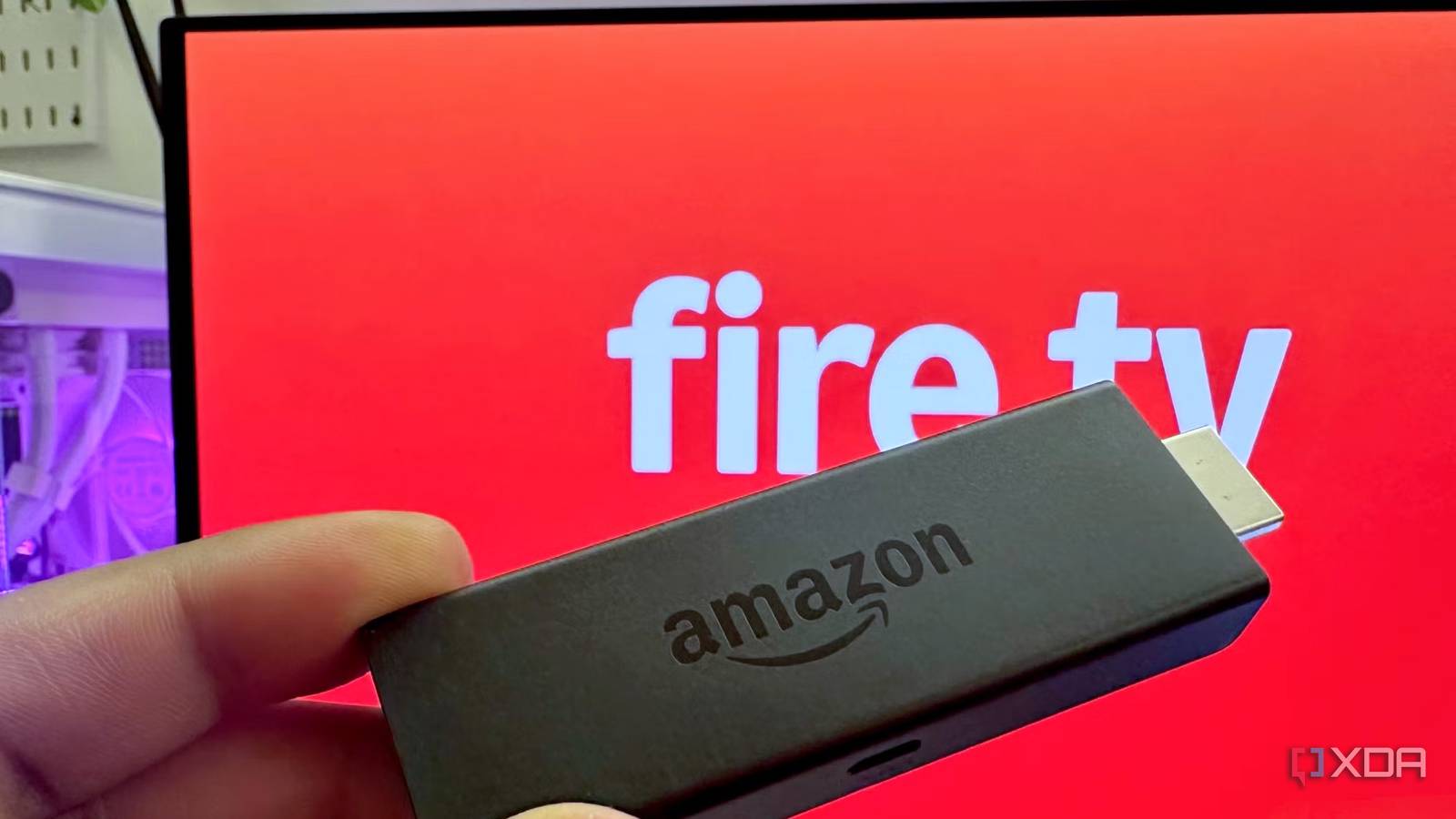
Published Jul 24, 2026, 4:30 PM EDT Gaming has been Samarveer’s greatest passion, and the Literature graduate in him takes immense joy in dissecting games for their themes, messages, and impact. Samarveer holds a deep appreciation of gaming, and considers the platform to be the most immersive and impactful across all media. He can be found engaging with gaming communities online, always ready to debate the finer points of ray tracing or itching to write an 8-page collegiate thesis on any game that impacts him emotionally. Going from a new smart TV to buying a streaming stick is a straight path when you realize your TV has slowed down in a year or two. Even when you upgrade your streaming device, it's only natural to expect the new stick to be faster and smoother. Then there are times like today when I'm doing the opposite. Every new Amazon Fire TV Stick now ships with Vega OS instead of Android-based Fire OS, and that alone is enough to make me cling to my aging Fire TV Stick for as long as it keeps running. I'm not holding on to my existing Fire TV Stick out of nostalgia, though. The reason is practicality over everything else. My current Fire TV Stick still gives me a level of freedom that Amazon's newer hardware simply can't match. After years of tweaking, sideloading, and making it work exactly the way I want, I'm in absolutely no hurry to trade this one in for a newer one with a shinier operating system. Every new Fire TV Stick is taking a different path Vega OS makes perfect sense for Amazon, but not for me Amazon hasn't decided to switch from Android-based Fire OS to Vega OS on a whim. Building its own OS gives the company tighter control over its software updates, app distribution, performance, and the overall user experience. Plus, it reduces Amazon's reliance on Google's ecosystem. Vega OS is also leaner than Fire OS and promises quicker navigation, lower overhead, and greater efficiency, all on the same class of streaming hardware. The trade-off is that Vega OS leaves behind much of the Android compatibility that made older Fire TV Sticks so appealing to enthusiasts. Buying a new Vega OS-based Fire TV Stick means saying goodbye to native Android apps, sideloading workflows, and years of community-built tools. Amazon is not updating existing Fire TV Sticks to Vega OS. Older units still running Fire OS will remain on their current OS and continue receiving official support and updates. None of these things are carrying over neatly to Vega OS, and the app ecosystem on the new Linux-based OS is still finding its footing. Now, the average consumer doesn't care about the OS inside their streaming stick as long as their favorite show streams well. For anyone who does like to tinker, though, it's a pretty noticeable change. For me, that trade-off simply isn't worth making. A faster OS is nice to have, but I'd rather keep the flexibility I've spent years building around my current Android-powered Fire TV Stick. Moreover, Vega OS is far more locked down, whereas Fire OS's Android foundation gives every user a launchpad for whatever new project they want to undertake. My old Fire TV Stick still has room to grow There's a huge advantage my Fire TV Stick continues to have over every new Vega OS model: time. My Fire OS-powered Stick has spent years in the hands of enthusiasts all over the internet, who have documented just about every tweak, workaround, and optimization imaginable. No matter what project I want to undertake, be it a custom launcher or just a few small tweaks here and there, chances are someone has already done the entire thing and written a full guide for the problem I'm facing. In fact, I've already benefited from that collective knowledge by making my Fire TV Stick noticeably more responsive than it was a few years ago, thanks to the right Developer Options tweaks, disabling all the unnecessary background activity, and a handful of quality-of-life changes. The new Vega OS may promise efficiency, yes, but I've managed to squeeze a surprising amount of it from the hardware I already own. Even if that stops being enough someday, I'm still not out of options, though. If worse comes to worst, I still have the Kamakiri exploit to use and unlock the bootloader to make my existing Android-based Fire TV Stick even faster. There are years of community support and documentation behind my existing streaming stick, and I'm going to exhaust every one of those possibilities before I even think about replacing it. I'm not worried about my old Fire TV Stick becoming obsolete, either Vega OS still asks me to give up too much in return I'm not losing sleep over software support, either. My Fire TV Stick isn't being abandoned by Amazon, for starters. I'll continue receiving updates for the foreseeable future, which gives me plenty of time to keep using hardware that already does everything I need it to do. A much bigger issue to highlight here is that Vega OS is still finding its footing, and it's giving up a lot in exchange for its cleaner, leaner design. Its native app catalog is still growing, and some experiences are relying on web-based implementations rather than fully native apps. This can make launching them feel less immediate. Throw in the loss of Android app compatibility and sideloading, and you're left with a platform that's far more dependent on whatever Amazon chooses to offer. Sure, it could be in a better place when the time comes for me to truly throw in the towel and get a new Vega OS-based Fire TV Stick, but that is when I would see myself moving over to Google TV or Xiaomi TV instead of the closed ecosystem of Amazon's new sticks. Heck, I might even buy a late-2025 Fire TV Stick model, too, since it would be newer than my 2021 Stick and still give me full freedom to frolic around the Android playground underneath. I'm in no rush to replace something that still works for me My current Fire TV Stick from 2021 is shaping up to be a rare case where newer doesn't automatically mean better. It's proof that software ecosystems matter just as much as silicon. It's still got plenty of life left in it, and more importantly, it still gives me the freedom to experiment and break things. In a nutshell, this Fire TV Stick is genuinely mine, because it lets me make it my own. Until a newer streaming device can offer me that same sense of ownership again, I'm perfectly content letting this old Fire TV Stick stick around a little longer.
Newer Fire TV Sticks running Vega OS are faster, but my old one still has something they'll never get back
Full Article
Original Source
Read the full article at Xda-developers →KhanList aggregates and links to publicly available news content. We do not host full articles from third-party sources. Always verify important information with original sources.