
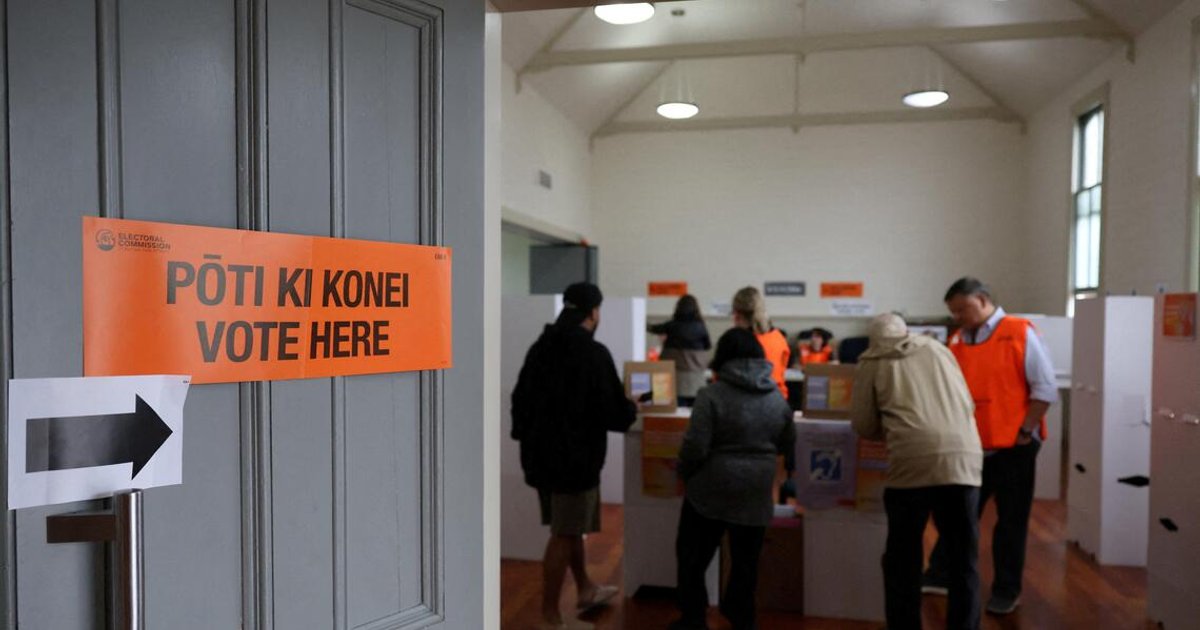
WELLINGTON - New Zealand’s ruling centre-right National Party and main opposition Labour were running neck and neck as counting began in the nationwide general election, but early projections showed the incumbent coalition would win enough seats to retain power.Results from the Electoral Commission show that with 14.4% of the results counted, the National Party has 30.90% of the party vote, with the centre-left Labour on 28.39% of the vote.A seat projection from New Zealand’s Electoral Commission showed the current three-party ruling coalition led by National was heading towards remaining in control after an election dominated by a struggling economy and voter disillusionment with the two biggest contenders.“I think the (National Party) are a bit higher than we expected in complete honesty with you,” Labour lawmaker Kieran McNulty said in an interview with public broadcaster TVNZ.“We’re not reading too much into it because it’s a relatively low level of votes that have been declared.”Left-leaning parties including Labour are aiming to make the National Party coalition the first one-term government in nearly 50 years.While New Zealand’s Electoral Commission expects to report preliminary results from 50% of voting places by 10pm (5pm Singapore time), there may be no new government until after official results are released on Nov 27 and coalition negotiations are concluded.New Zealand’s electoral system makes coalitions the norm, and the tightness of 2026s race means one or more of the country’s smaller parties will almost certainly participate in a governing coalition.The country switched to a mixed member proportional system in 1996, which means people vote for both the party and a local constituency candidate.There are 71 constituency seats and at least 49 party seats and a party or coalition needs a majority to form a government.Special votes, which include those from overseas voters or people outside their electorate, will not be included in the vote count until Nov 27.Historically, special votes have favoured the left, with parties on the right losing support following the count.New Zealand has emerged only slowly from a prolonged economic downturn, with growth subdued, household budgets strained and unemployment rising to 5.7% in the third quarter, its highest level in 11 years. REUTERS
New Zealand election early count shows tight race but National Party ahead in early projections
Full Article
Original Source
Read the full article at Straitstimes →KhanList aggregates and links to publicly available news content. We do not host full articles from third-party sources. Always verify important information with original sources.