
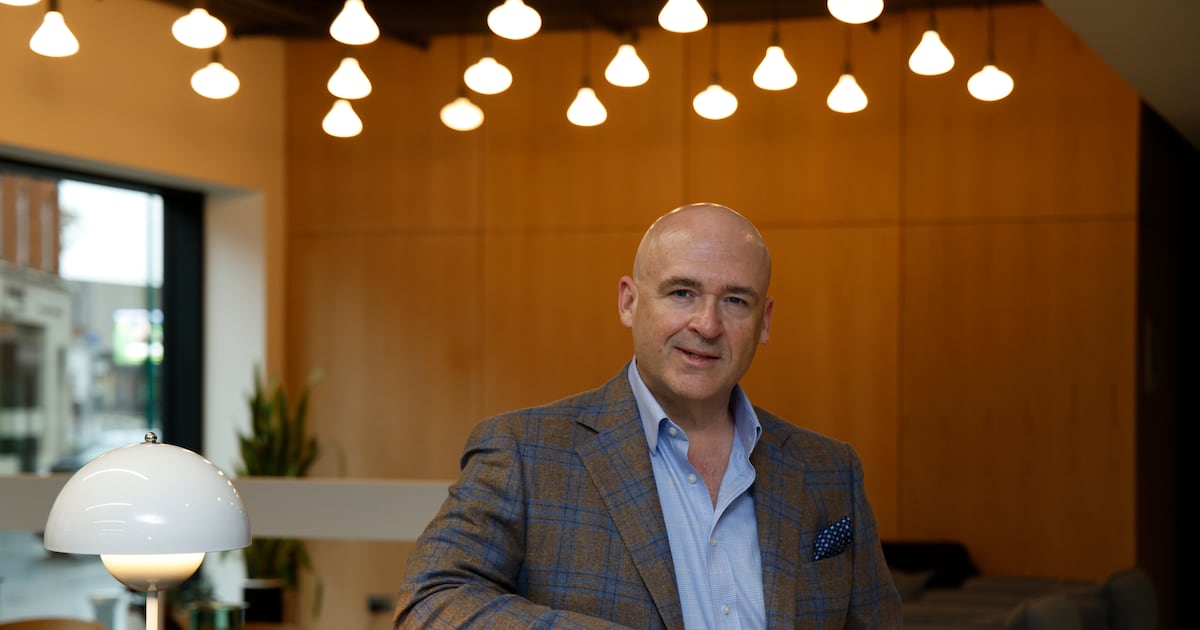
Dominic Miciotta moved to Ireland with his husband and two childrenDominic Miciotta. Photograph: Nick Bradshaw/The Irish Times Dominic Miciotta has felt safe since he moved to Ireland last year, in contrast to how he had felt living in the United States.“The biggest culture shock was not feeling terrified to send my children to school, adjusting to my son walking to school or riding my bike. They are safe and they are not going to get shot in school, that’s not anything I have to carry any more.” He describes the general feeling the US over the past few years as edgy, and this sense of imminent threat followed him around in daily life. “At the supermarket, dry cleaner, at the gas station, driving on the road, people are upset, frightened and angry.”READ MOREAfter a lifetime of living in the US Miciotta and his husband began to consider moving their family abroad after the 2016 presidential election. He met his husband through online dating in 2011 and they have two children together. The couple considered various countries to make their new start. But they settled on Ireland as Miciotta grew up close to his Irish grandfather in New York and there was a viable path for them to come and work here. “We set up an Irish company, which sponsored me.” Miciotta, who had previously worked in higher education and talent management, founded Global Wealth 360, a “holistic global relocation experience”.Before moving the family were living in a liberal town in the New York suburbs, but even there his children faced hostility for having two fathers. [ An American in Dublin: ‘People are like, okay, maybe she has notions, but she doesn’t know any better’Opens in new window ]“We got a feeling too often in America that some other parents were uncomfortable with us being in their space.”He contrasts this with the family’s reception since moving to Ireland. At no point have they been made to feel uncomfortable or unwelcome, he says. Miciotta thinks that this is because Irish men are secure in their masculinity. Dominic Miciotta. Photograph: Nick Bradshaw/The Irish Times “Their masculinity is not offended or bothered by my presence. The impression I get is so refreshing.”In fact, he has become something of an advocate for Irish men with his female friends back home. He laughs as he says that recently he has been telling them: “You want a nice guy, move here”. While much of the move was smooth sailing, Miciotta admits that it took some time for him to get to grips with Irish phraseology. He recounts being on a train that had broken down and overhearing an Irish man on the phone say “It’s grand” before describing how they had been stuck on the tracks for hours and would have to change trains. That was when he realised that when an Irish person says, “Oh it’s grand”, it may not actually be grand. Some language he was able to instantly grasp. On his children’s first day at their new school, he asked one of the attendants helping the children to cross the road how they were and they said, “You know yourself”.“I understood it immediately through the context.” Though he had some idea of what Ireland was like from his grandfather, he also had a rose-tinted view before moving.[ From the US to Mayo: ‘They warned of slow internet and tiny roads. It wasn’t a problem for me’Opens in new window ]“This romanticised idea of Ireland and its beauty, charm, fairies and mythology, and I describe it all as this sort of cultural romance.”However, wading through the mound of bureaucracy required when relocating quickly grounded him in the reality of life here.“After six months of living in a new country you hit a wall and are like, What the hell did I just do? It really strikes you that you are not in Kansas any more.”There was no single event that led him to have this feeling, but rather a series of moments from the difficulty trying to buy a house near to their children’s school, to setting up an Irish bank account. “What I preach for myself, and others, is to remember that you are a guest in this country. You have made this choice to move somewhere else, and you are not always going to be comfortable.”[ From Boston to Ireland: ‘It’s been almost three years, but I’m still a foreigner’Opens in new window ]When asked how he has gone about making friends and building community, he admits that because of his stage of life he has not really invested much in building a network here yet. “I have friends, I have family – they all live in America. When your kids are young you are just sort of keeping your head above water, getting them to all their activities, working and living your life. You don’t really think about friendships in the same way.”Back in the town where they lived in the US, he worked hard to fit in with other families. He was constantly inviting them over and hosting in an effort to ensure that his family would be accepted.“It got to a point where I thought, What the hell am I doing? I don’t even like these people.”So far he has really enjoyed spending some time with the parents of his children’s friends, who he describes as lovely. But he has no expectations of friendship from those people. He has mostly spent time here with fellow British and US migrants.Miciotta and his husband plan to live in Ireland long-term as it is where they would like to raise their family.We would like to hear from people who have moved to Ireland in the past 10 years. To get involved, email newtotheparish@irishtimes.com or send us two lines about yourself using the form below. IN THIS SECTION
New York to Dublin: ‘Irish men’s masculinity is not offended or bothered by my presence’
Full Article
Original Source
Read the full article at Irishtimes →KhanList aggregates and links to publicly available news content. We do not host full articles from third-party sources. Always verify important information with original sources.