
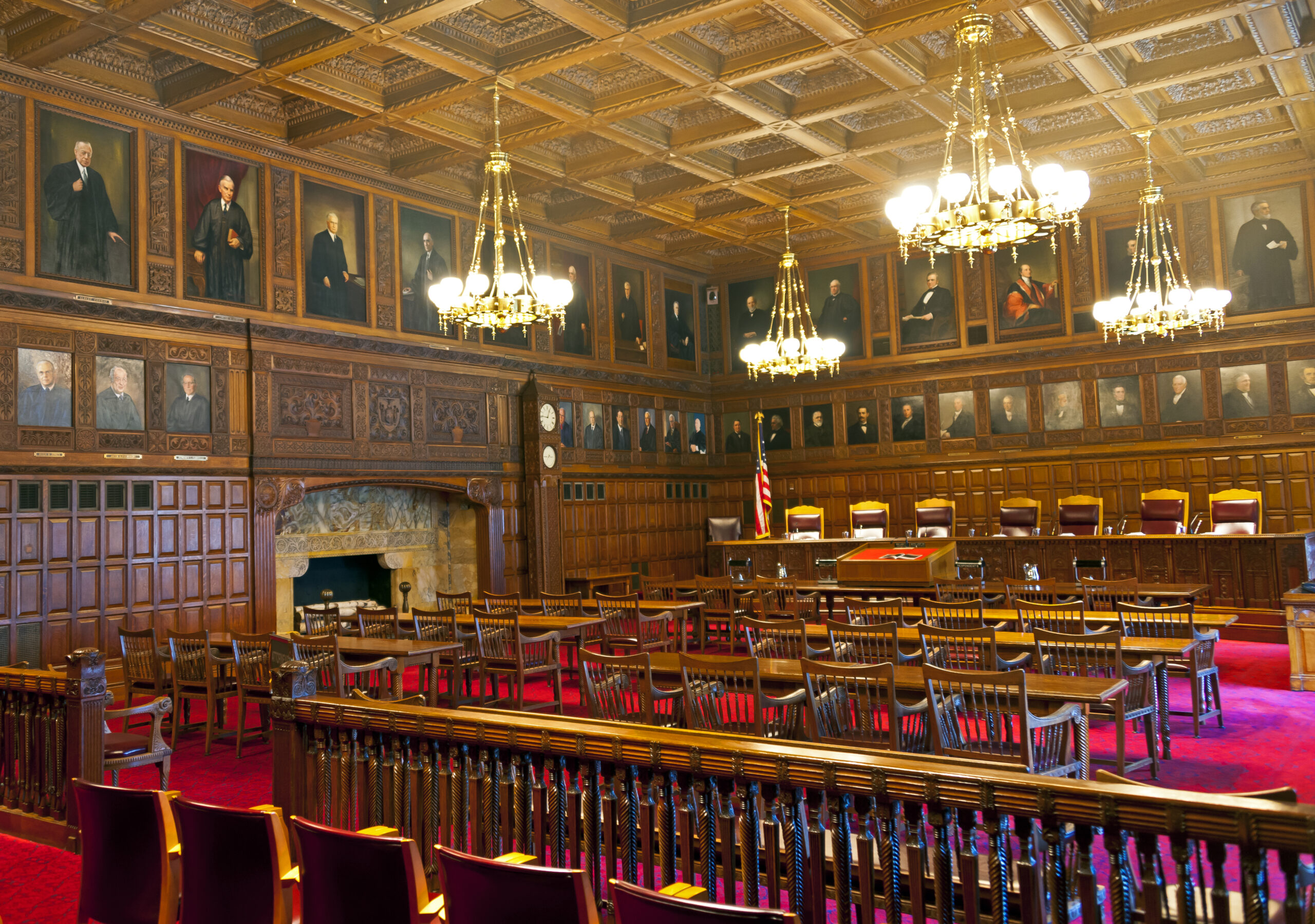
“How can the system survive if the general public thinks that judges have skin in the game?” asked one judge on the New York Court of Appeals.(CN) — In 2023, defendant Glaston Gaines was given a choice: face up to 25 years in prison for a robbery charge or plead guilty and waive his right to appeal in exchange for a sentencing commitment of 10 to 13 years from the trial judge.He chose the latter, and was ultimately sentenced to 12 years in prison for his role in the crime. But the maneuver from the judge was under the microscope of the New York Court of Appeals on Thursday, as the seven-judge panel grappled with whether court-initiated appeal waivers should be lawful at all.Gaines claims they aren’t. His lawyer, Legal Aid attorney Sarod Nori, told the state’s high court that these waivers are “a threat to the legitimacy of the criminal justice system,” since it amounts to coercion from the trial judge — who is supposed to be impartial.In Gaines’ case, the appeal waiver wasn’t part of his plea deal with the prosecution at all. Instead, it was tacked on as an added requirement from the court in exchange for the commitment to the sentencing time range.“A sentence is not a bargaining chip that a judge can use,” Nori argued.What ensued was a debate over the intended purpose of a court-initiated appeal waiver in the first place. Nori suggested they are an option for judges “in the interest of finality,” so criminal cases can be closed without victims having to reopen old wounds in the appellate process. Judge Madeline Singas brought up a hypothetical of a 9-year-old rape victim, whom a judge might want to protect from the proceedings by offering such a waiver agreement for sentencing.Chief Judge Rowan Wilson took it a different way.“The reason we have appeal waivers is so the system doesn’t get flooded with cases we can’t try because there’s too many of them,” he said. “It’s really an efficiency point, no?”Either way, Nori maintained it’s an unlawful tool in the trial court’s belt. According to court filings, Gaines told his judge, “I feel like I have no choice” but to accept the appeal waiver when he pleaded guilty. He was also denied the opportunity to speak at his plea hearing after the judge told him to save it for sentencing.Even the state admitted that may have been a misstep.“I will concede that if the defendant is asking to say something, that the judge should probably allow him to say it,” state attorney April Orlowski told the court Thursday.Judge Michael Garcia suggested these issues could just be handled on a case-by-case basis by the appellate division. While an appeal waiver generally prevents a defendant from appealing most aspects of their conviction and sentence, they can still make a challenge if the deal itself was made in bad faith — as Gaines claims his was.The court didn’t immediately issue a ruling following the hearing. But several of its judges offered up critiques about the optics of greenlighting the practice. Judge Caitlin Halligan said it could lead to an appearance of bias for a judge since it “insulates” their decision from further review.Judge Jenny Rivera expressed similar concerns.“How can the system survive if the general public thinks that judges have skin in the game, that they’re interested in a particular outcome, that they’re seeking favoritism for one side over the other?” she asked.Laws surrounding court-initiated appeal waivers vary from state to state. New York has taken a nuanced approach to the matter, defined largely by a 1989 ruling in *People v. Seaberg,*which found that a defendant can indeed waive their appellate rights in exchange for a more favorable sentence from the court. But earlier this year in People v. Turner, a mid-level state appellate court found that the trial court must provide an on-the-record rationale for their appeal waiver.Subscribe to our free newslettersOur weekly newsletter Closing Arguments offers the latest about ongoing trials, major litigation and rulings in courthouses around the U.S. and the world, while the monthly Under the Lights dishes the legal dirt from Hollywood, sports, Big Tech and the arts.Additional Reads
New York high court prods trial judges’ appeal waiver power
Full Article
Original Source
Read the full article at Courthousenews →KhanList aggregates and links to publicly available news content. We do not host full articles from third-party sources. Always verify important information with original sources.