
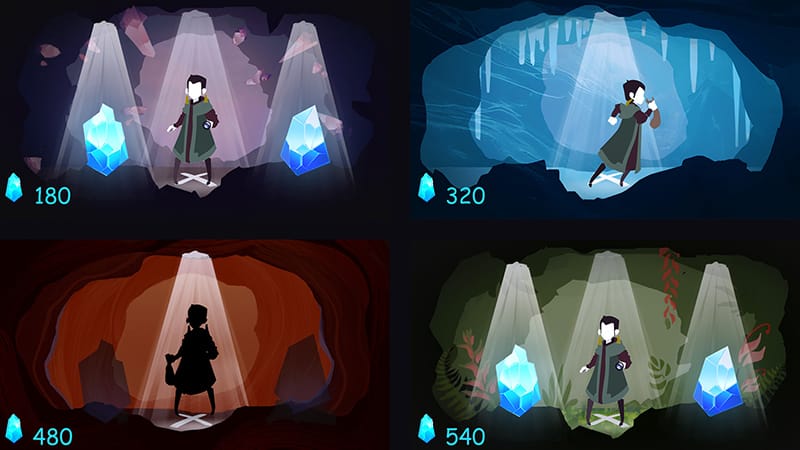
It started over a coffee.Two Boston University scientists met to talk about each other’s work. Benjamin Scott, PhD, is a cognition researcher, and Helen Tager-Flusberg, PhD, studies autism. Each expected nothing more than a get-to-know-you session.Benjamin Scott, PhDTager-Flusberg was interested in some of the technologies that Scott’s team used in the lab to study perception and learning in animal models, particularly rodents. “She saw that our approach might be able to get perceptual information from minimally verbal kids with autism who are typically excluded from this type of work,” he said.Helen Tager-Flusberg, PhDTager-Flusberg was hopeful that what Scott and his team had developed could “offer us ways of tapping into how profoundly autistic people interpret the world. It’s a question I’ve always been interested in,” she said. She was also keen to adapt what they had developed into a potential outcome measure “that would tap into showing improvement when we have potential treatments available.”What Scott and his team were doing, what Tager-Flusberg saw so much potential in, was using simple training pipelines to train rats to perform a decision-making task. Two main components make it work: reinforcement and behavior shaping. “So rats make choices, and we tell them whether they’re right or not,” explained Scott (when it comes to the rats, sugar water is the reward of choice). Behavioral shaping “just means starting off as simply as possible and then gradually increasing the complexity until you’re performing the entire task.”Kind of like levels in a video game.How to Make a Cool Video Game From ScratchTo pull it off, the game needed to instill a sense of excitement, hold attention, and create the desire to engage. In short: It needed to be fun. The right person for the task, said Scott, was “a really talented grad student in the lab,” Quan Do, whose background is in computer science and electrical engineering. “When I told him about what Helen and I had discussed, he got very excited and said, ‘You know what, I could turn the training pipeline and task we use in rodents into a video game.’ That was the initial spark that turned Helen and my discussion into this project,” explained Scott.The game is called GEODE (gathering evidence to optimize decisions), an online video game “designed to measure visual perception across the full autism spectrum,” according to their study in Science Advances.Quan Do“I want to make and play games where I can pretend to be in the movie. [I thought] Maybe that could resonate with people,” said Do. A cinema buff, he drew inspiration from one of his favorite film series: Indiana Jones. The design of GEODE was based on an earlier game he made called Indie and Alone for a previous online study looking at rule learning and evidence accumulation in adults (Indie and Alone is a play on words for Indiana Jones). The player had a fedora and was stuck in a chamber exploring, gathering information, and trying to escape. “In the new game, the character design was left intentionally vague so players can see and interpret the main character as they wish,” said Do. “The Indiana Jones inspiration is still there, though. There are still caves, crystals, and skulls appearing in different levels.”Players hunt for gems — the video game design was inspired by Indiana Jones.Do wrote the game “and then we got a video game designer on board, Sadie Johnson,” said Scott. “She created this beautiful graphical environment that was stimulating and engaging.”Making This Up as You GoGEODE is a character-driven quest to find gems by following a treasure map, but there is an important element to its design that is key to making it accessible to players across the autism spectrum: There are no instructions. Players learn as they go, discovering the rules through gameplay.During gameplay, researchers track a player’s ability to utilize and apply game information.Psychologist Christina Corsello Orahovats, PhD, director of clinical services at the University of North Carolina at Chapel Hill TEACCH Autism Program, who was not involved with the study, was a fan of the approach. “A lot of research in autism focuses on either a group with profound autism or a group of highly verbal individuals with autism,” she said. “One of the things that’s nice about this study is that [the researchers] really made an effort to cover both of those groups. They found a way to kind of look at the underlying processes of cognition that is fun and engaging. I thought that was really impressive.”The team had a group of 300 adolescents, all aged between 11 and 17 years, play the game. Just over 200 players had autism. Most of the players were able to pick up the rules and adjust as the game became more difficult, but the learning curve was steep between neurotypical players and those with autism. The team found that the autistic teens found it harder to take in and use the new sensory information they were receiving as the game progressed. “The deficit seems to be in a component of perception called perceptual integration, where you are accumulating information over time to form a complex idea about the world,” said Scott.Achieving the Next LevelThe researchers were pleasantly surprised with the results of their experiment, but they see more potential. Scott sees a way to connect it back to his studies in animals. “It’s been really hard to bridge the animal work and the human work in autism, because while we know some of the underlying genes, it’s very unclear what the behavioral or neural signatures of autism would be in an animal model,” explained Scott. “Because this game can be played by multiple species, or at least there’s an animal version, it gives us a clearer window into what to look for in these animals with mutations in autism risk genes.”Boston University researchers (from left) Helen Tager-Flusberg, Joseph McGuire, and Benjamin Scott used the video game to pinpoint a potential cause — called “noisy evidence integration” — of perceptual impairments in people with autism.Tager-Flusberg sees potential in adding auditory stimuli to future versions of the game. “We’ve seen this in earlier research out of my lab, that in terms of sensitivities and atypical processing, auditory stimuli are more challenging, especially for profoundly autistic people,” she said. “Across the spectrum, auditory sensitivities are more common and prominent and also quite significant when we think about how they potentially interfere with the ability to interpret incoming language.”Scott is grateful to the kids who played GEODE. “I think it’s important to recognize how these experiments really couldn’t be done without the patient populations who are giving their time and effort to help participate. I’m very grateful that they were happy to play the game.” And they didn’t just try it: “We got feedback from the players who were more verbal. They said that they really enjoyed the game. That was also really nice to hear.”Corsello Orahovats reported having no conflicts. Disclosure information for study authors is available in the original study publication.
New Video Game Reveals How Kids With Autism Make Decisions
Full Article
Original Source
Read the full article at Medscape →KhanList aggregates and links to publicly available news content. We do not host full articles from third-party sources. Always verify important information with original sources.