
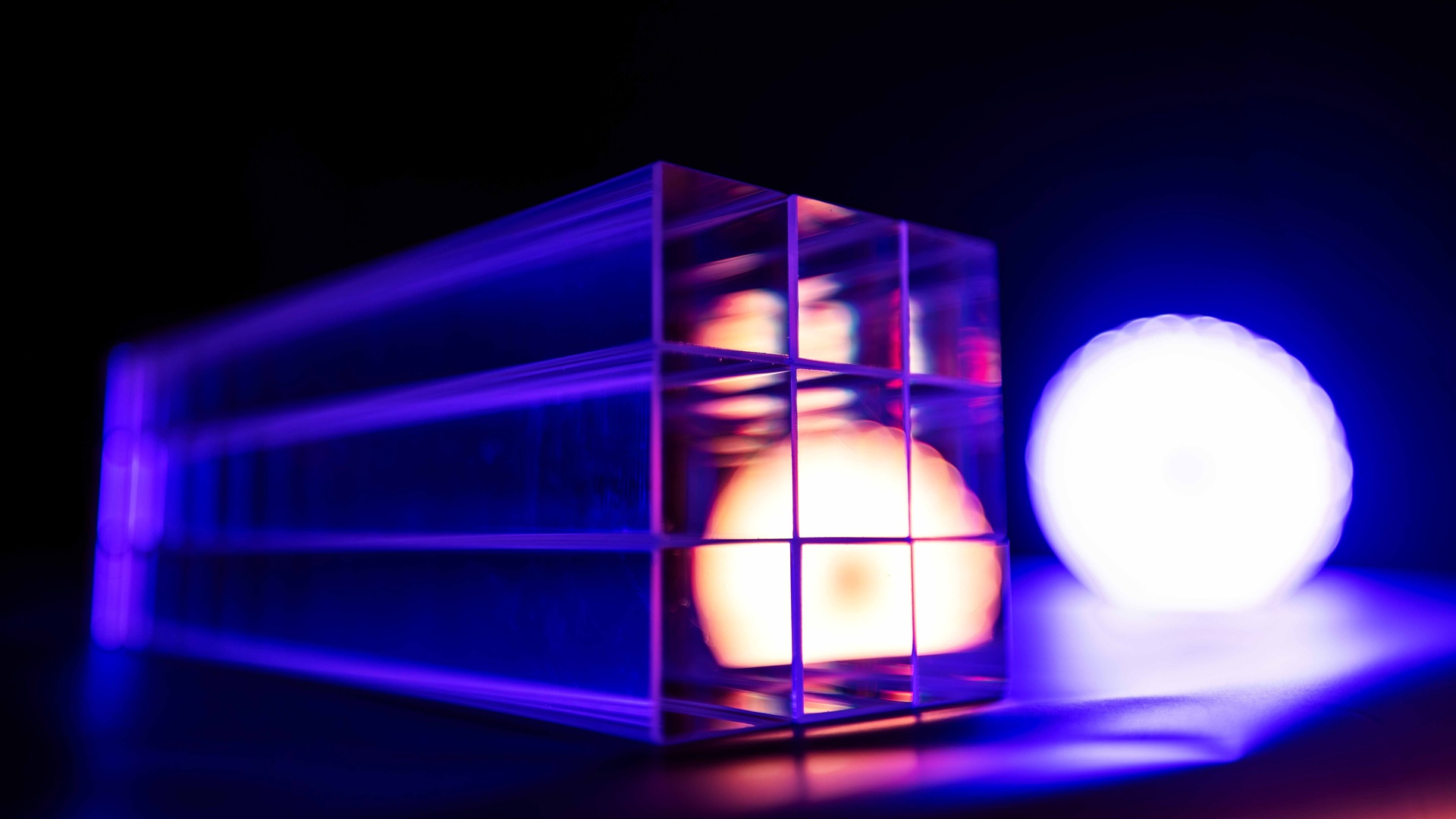
The world’s first polarized electron-proton collider, the Electron-Ion-Collider (EIC) which is currently under construction has received over 1,000 crystals to support its massive ePIC detector. The particle accelerator, built at the US Department of Energy’s (DOE) Brookhaven National Laboratory (BNL) together with Jefferson Lab (Thomas Jefferson National Accelerator Facility), carried out its first long-lead procurement with the delivery and acceptance of a total of 1,069 lead-tungstate crystals. These will become part of its ePIC detector. Once operational, the collider will reportedly smash electrons into ions. It should help scientists investigate the fundamental building blocks of visible matter. The crystals will be used for the main part of the Electron Endcap Electromagnetic Calorimeter (EEEMCAL), one of ePIC’s several detector systems. Alexander Bazilevsky, a BNL physicist, and electromagnetic calorimetry manager for the ePIC detector, stated that the calorimeter will primarily measure electrons scattered by the beam. “Such a calorimeter should be very compact, very precise, very fast, and radiation tolerant,” Bazilevsky explained. New crystals for ePIC According to the scientists, the EIC will circulate two beams of particles (ions and electrons) in opposite directions. Bunches from the two beams will collide every 10 nanoseconds in ePIC (the Electron-Proton/Ion Collider Detector), a house-sized system that will record the aftermath of these collisions. Meanwhile, EEEMCAL will measure the energies of the electrons it collects. Lead-tungstate crystals were the most practical technology capable of meeting those requirements. The finished calorimeter will require around 3,000 custom-grown crystals. Producing them will take several years. This led the DOE to classify their procurement as a long-lead item. Researcher Joshua Crafts holding a lead-tungstate crystal.Credit: Jefferson Lab / Aileen Devlin DOE cleared the way for long-lead purchases in April 2024. The first order went to the US arm of Czech synthetic crystal producer Crytur. Around 100 to 120 crystals were delivered each month. The first phase ended with 1,069 crystals received in February. “Crytur sent an initial pilot batch. We processed that,” Joshua Crafts, a researcher who worked on this part of the process, stressed. “That established the workflow and made sure that everyone was happy with the overall process of how we were testing the crystal quality, and with the back and forth between Jefferson Lab, Brookhaven Lab, and Crytur.” The researchers measured and tested every crystal to ensure it met the detector’s requirements. Crafts shared that so far, none of them have been rejected. “There have been no crystals that have failed to meet our overall quality goals,” he said. Exploring protons The project will now move ahead with its second crystal purchase as the scientists carry out more extensive testing on the first batch. The researchers will also keep working on the detector’s mechanical design, with fabrication of its frame set to follow. When done, the ePIC could give physicists a new view of the particles and forces that shape ordinary matter. The EIC will investigate how quarks and gluons are arranged inside protons and other particles. Upon arrival, each crystal is measured and quality tested to ensure it meets the detector’s rigorous requirements.Credit: Jefferson Lab / Aileen Devlin As per Tanja Horn, PhD, a professor at The Catholic University of America, the EIC will allow scientists to study pion and kaon structures and pursue high-precision studies of proton spin. “I find that a really exciting direction at the EIC – that we have the opportunity to study these processes,” Horn said.The collider will reuse major components of Brookhaven’s Relativistic Heavy Ion Collider (RHIC), which recently finished its final experimental run. “It will provide us with a deeper look inside the proton with ultimate precision, bringing us to a qualitatively new level of proton structure studies,” Bazilevsky concluded in a press release. Get the latest in engineering, tech, space & science - delivered daily to your inbox.Based in Skopje, North Macedonia. Her work has appeared in Daily Mail, Mirror, Daily Star, Yahoo, NationalWorld, Newsweek, Press Gazette and others. She covers stories on batteries, wind energy, sustainable shipping and new discoveries. When she's not chasing the next big science story, she's traveling, exploring new cultures, or enjoying good food with even better wine.
New US particle collider gets 1,069 crystals to track electrons after collisions
Full Article
Original Source
Read the full article at Interestingengineering →KhanList aggregates and links to publicly available news content. We do not host full articles from third-party sources. Always verify important information with original sources.