
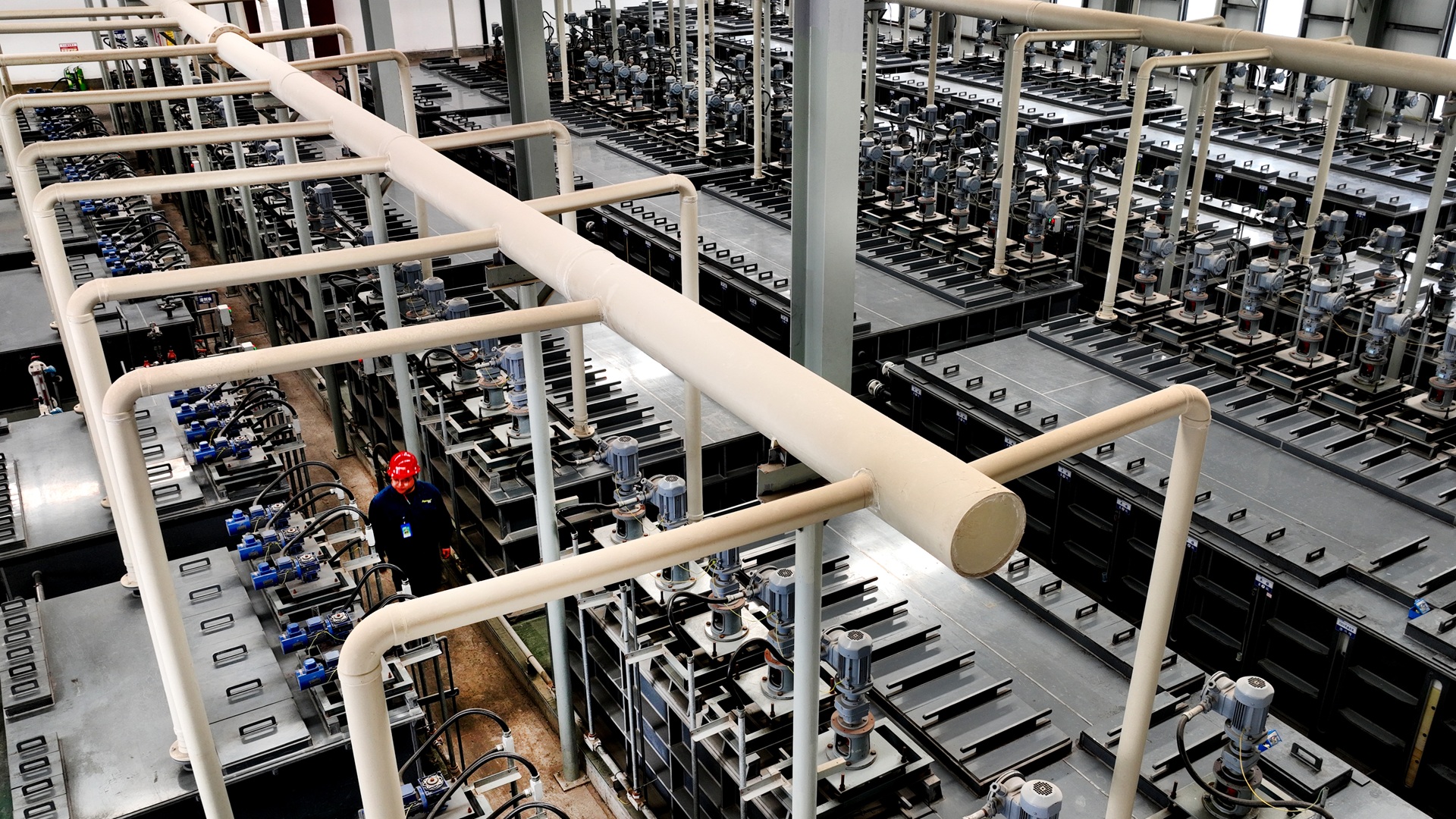
MIT spinout Found Industries has opened a new facility in Cambridge, Massachusetts, to develop and scale technologies for recovering gallium and other critical minerals from industrial waste streams and byproducts. The deep-tech startup says its new headquarters and Found Metals Process Development Center will help move its technologies from laboratory experiments to continuously operating industrial systems. The facility will be used to build and test equipment, work with real-world feedstocks and prepare processes for commercial deployment. Gallium is one of the company’s first targets. The metal is used in advanced semiconductors, radar, communications equipment, data centers, space-based solar systems and power electronics. Yet the United States produces virtually none of the primary gallium it consumes, according to the company. Found is developing processes to recover gallium from industrial streams without relying on foreign-controlled materials or reagents. Its technology pipeline also includes indium, germanium, antimony and other critical materials used across the industrial and defense sectors. Turning waste into resources The new center is aimed at a key challenge in critical-mineral production: scaling a process that works in a laboratory into one that can operate reliably in an industrial setting. “The opening of this center marks Found’s transition from scientific breakthrough to industrial scale-up,” said Peter Godart, founding president and CEO of Found Industries. “Gallium and other critical metals already move through industrial streams in the United States, but we have yet to extract them at scale.” Rather than depending entirely on new mining projects, Found plans to recover minerals already present in industrial waste, refining residues, scrap streams and other byproducts. That approach could allow existing industrial sites and infrastructure to become part of the domestic supply chain. The company’s work is receiving federal support through the Department of Energy’s TRACE-Ga program. Found was selected to advance its Direct Feedstock Extraction technology, a continuous electrochemical process designed to recover gallium directly from dilute liquors. The process is intended to avoid ion-exchange preconcentration and significant changes to existing mineral production circuits. In practical terms, that could make it possible to add gallium recovery to industrial processes that already produce material containing the metal. Scaling critical minerals Found’s strategy also extends beyond gallium. In May 2026, the company signed a memorandum of understanding with ARES Strategic Mining to evaluate the recovery of gallium, germanium and other strategic materials from feedstocks associated with the Lost Sheep Mine in Utah. The companies are evaluating feedstock assessment, process integration, pilot projects, scale-up and potential commercialization. “The United States and allied countries need more than new mines,” said MIT Professor Elsa Olivetti. “We need to treat existing industrial waste streams, refining residues, scrap streams and byproducts as strategic mineral resources.” The Cambridge facility will support that effort by providing space to integrate processes, test representative feedstocks, develop equipment and qualify recovered products before deployment with industrial partners. Found’s initial domestic gallium projects have also received support from the Department of Defense, the Massachusetts Clean Energy Center and private investors. The company will maintain a presence in Boston for its energy projects while using Cambridge as its main metals process-development hub.Found began as Found Energy, developing technology that uses activated aluminum to generate hydrogen and heat. Its expansion into critical-material recovery reflects a broader effort to use existing industrial resources to address vulnerabilities in U.S. supply chains.Recommended ArticlesGet the latest in engineering, tech, space & science - delivered daily to your inbox.With over a decade-long career in journalism, Neetika Walter has worked with The Economic Times, ANI, and Hindustan Times, covering politics, business, technology, and the clean energy sector. Passionate about contemporary culture, books, poetry, and storytelling, she brings depth and insight to her writing. When she isn’t chasing stories, she’s likely lost in a book or enjoying the company of her dogs.
New US center targets gallium recovery from waste to strengthen critical-mineral supply
Full Article
Original Source
Read the full article at Interestingengineering →KhanList aggregates and links to publicly available news content. We do not host full articles from third-party sources. Always verify important information with original sources.