
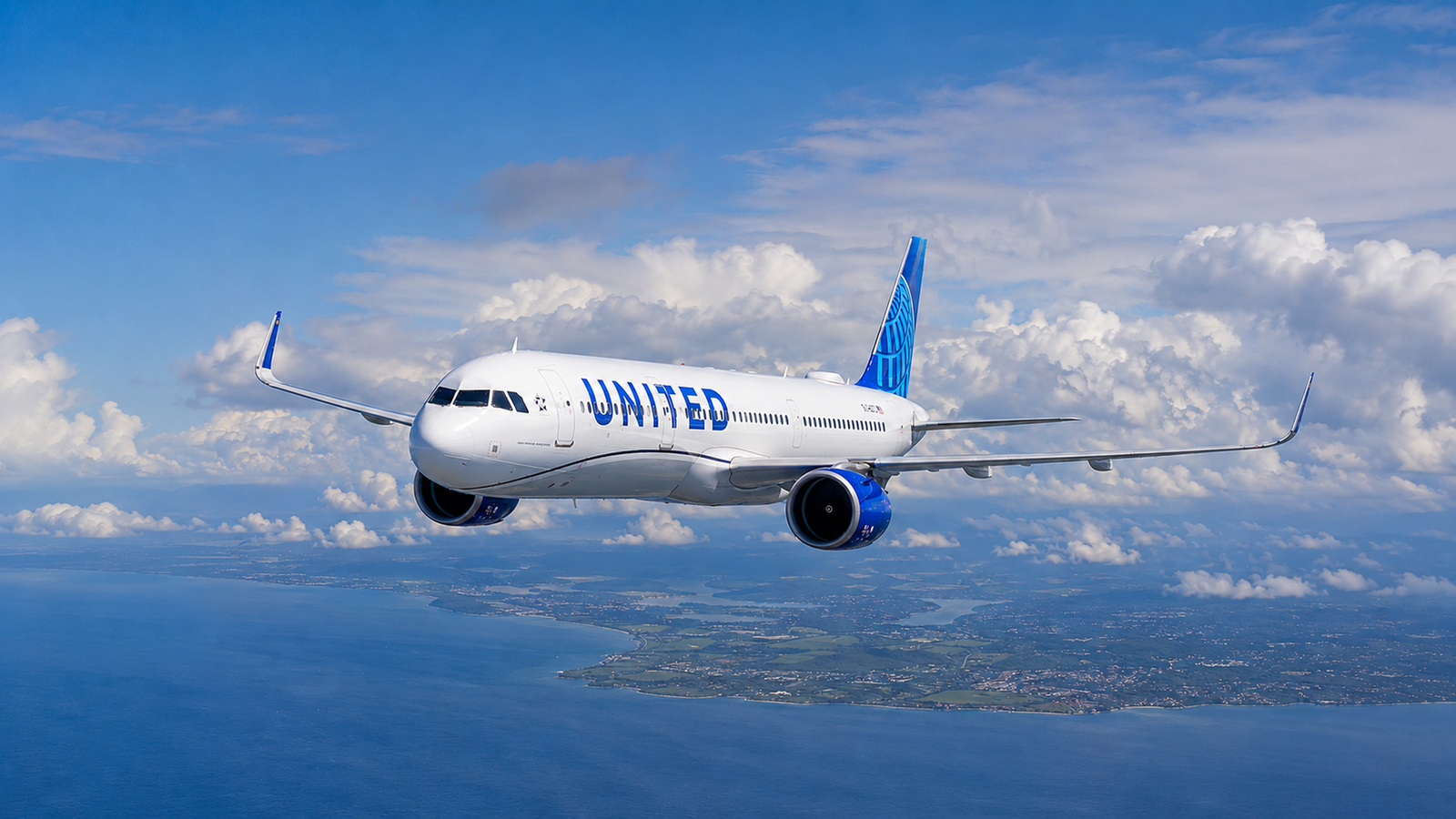
Published Aug 28, 2026, 5:46 PM EDT Paul has had a career of 25+ years focused on the international technology sector, which has taken him to over 100 countries. Along the way, he developed a deep love for aviation, with a travel bucket list measured by aircraft types flown rather than destinations reached. Now he brings that avgeek passion, along with the journalism experience he accumulated early in his career, to write insightful pieces for Simple Flying. United Airlines has finally revealed where passengers will first be able to fly on its new Airbus A321XLR. Rather than immediately sending the extra-long-range narrowbody across the Atlantic, United will initially deploy it domestically from Washington Dulles International Airport (IAD) to San Diego and Los Angeles, according to Ishrion Aviation. Both assignments are currently scheduled short-term through November 30, at which point the aircraft will begin its international operations. The California flights will therefore provide a relatively brief domestic preview of an aircraft that United has bought for Europe. The carrier took delivery of its first A321XLR in June, and has ordered 50 examples to replace its Boeing 757-200s on selected transatlantic services, while opening thinner markets from Newark Liberty International Airport (EWR) and Dulles. United's A321XLRs will first head west Credit: Simple Flying United's first scheduled A321XLR service will operate between Washington Dulles and San Diego International Airport (SAN) from September 9, with Los Angeles International Airport (LAX) joining the schedule on October 1. Both are premium transcontinental routes for United, with the XLR set to operate on one of the three daily IAD-SAN departures, before making up one of the seven daily IAD-LAX rotations. Tickets are already on sale, and the XLR is easily distinguishable on routes that otherwise only use Boeing aircraft. Route Airbus A321XLR Start Date Scheduled Through Washington Dulles — San Diego September 9 November 30, 2026 Washington Dulles — Los Angeles October 1 November 30, 2026 The 150-seat aircraft will give domestic passengers an unusually premium narrowbody experience. It has 20 lie-flat United Polaris suites with privacy doors, 12 Premium Plus recliners, 34 Economy Plus seats and 84 standard economy seats. Other features include free Starlink WiFi for MileagePlus members, 4K OLED entertainment screens, and a rear economy snack bar. Notably, the XLRs also have an unusual Economy Plus row where two middle seats have been replaced by shared tables, providing extra elbow room. “The Airbus A321XLR was designed from the ground up to be the airline's most premium narrowbody airplane,” United said. The domestic deployment also gives United time to introduce the aircraft into normal operations and get crews familiar with it before sending it thousands of miles over the Atlantic. United had already said that the XLR would spend several months on domestic flying, and basing those initial operations at Dulles makes particular sense because the airport will also host its first international services. The Points Guy notes that Premium Plus seats can even be booked as extra-legroom economy on some of these domestic flights, creating an unusual opportunity to sample the cabin before its long-haul debut. From December, the XLR becomes an Atlantic aircraft Credit: Simple Flying That long-haul mission begins on December 1, when United will launch daily A321XLR flights from Washington Dulles to both Amsterdam Schiphol Airport (AMS) and Dublin Airport (DUB). The airline then plans a much more ambitious rollout in summer 2027, with five newly announced European routes from Newark and Washington using the aircraft. Simple Flying has separately examined both the initial Amsterdam and Dublin deployment and the block times of United's five new XLR destinations. Route Start Date Frequency Washington Dulles — Amsterdam December 1, 2026 Daily Washington Dulles — Dublin December 1, 2026 Daily Newark — Luxembourg April 2, 2027 Daily Washington Dulles — Toulouse April 26, 2027 Daily Newark — Ibiza May 31, 2027 4x weekly Newark — Valencia June 2, 2027 3x weekly Newark — Marseille June 4, 2027 Daily This is the mission United envisaged when it ordered 50 XLRs in 2019. The airline described the aircraft as a replacement for its aging 757-200s, highlighting the opportunity to add unique European destinations from Newark and Washington. With just 150 seats and 32 dedicated premium seats, the XLR lets United consider destinations that may be difficult to support with a larger widebody. It also supports United’s growing willingness to create demand rather than simply follow it. United's latest regulatory filing also provides a clearer picture of how quickly the fleet should grow. Having received its first aircraft, the carrier had commitments for another 49 XLRs as of June 30. It expects five more during the second half of 2026, followed by 15 in 2027 and the remaining 29 thereafter. That would potentially leave United with 21 XLRs by the end of next year if deliveries match its current expectations. Delivery period Expected A321XLR deliveries Already delivered by June 30, 2026 1 Second half of 2026 5 2027 15 After 2027 29 Total order 50 There are nevertheless limitations. Patrick Quayle, United's SVP of global network planning and Alliances, said the airline is "very conservative with the range of the aircraft." He explained that the range Airbus presented during the aircraft's marketing phase was greater than what United considers achievable with the aircraft as constructed and built, and the XLR cannot practically reach as far into Europe as originally envisaged from New York. He said the new Spain and France routes sit comfortably within its capabilities. Quayle has also acknowledged "a few teething issues" with the program, but United remains confident that enough aircraft will arrive to operate its planned 2027 schedule. American Airlines is using the XLR differently Credit: Simple Flying United will not be the first US carrier to fly the XLR domestically. American Airlines became the first US operator of the type in December 2025 when it launched the aircraft between John F. Kennedy International Airport (JFK) and Los Angeles. It subsequently scheduled XLR operations between Boston Logan International Airport (BOS) and Los Angeles and JFK and San Francisco International Airport (SFO) as part of the replacement of its premium A321T operation. American's aircraft have a similarly premium-heavy configuration as United's. United Airlines' A321XLR American Airlines' A321XLR Business class 20 Polaris suites 20 Flagship Suites Premium Economy 12 12 Economy/Economy Plus 118 123 Total 150 155 American is also taking the aircraft to opposite extremes. From October 25, it is scheduled on a roughly 243-nautical-mile Philadelphia-Boston sector, as the aircraft is positioned for subsequent long-distance flying. Compare that to the new route announced this week from Philadelphia International Airport (PHL) to Vienna International Airport (VIE) at 4,321 miles (6,955 km), which will be the longest narrowbody route in the world with a westbound block time of 9.5 hours. The bigger distinction is strategic. American has explicitly designed the XLR to perform both premium transcontinental and international missions, replacing the A321T while simultaneously expanding into Europe. United's strategy is more specialized. Its separate A321neo "Coastliner" fleet is intended to perform the premium transcontinental role, while the XLR is aimed across the Atlantic. From September through November, passengers between Washington and California will therefore get a brief glimpse of United's newest premium narrowbody, but the seven international routes already scheduled show where the aircraft's future really lies.
New: United Airlines Schedules Airbus A321XLR Flights On 2 Domestic Routes From Washington DC
Full Article
Original Source
Read the full article at Simpleflying →KhanList aggregates and links to publicly available news content. We do not host full articles from third-party sources. Always verify important information with original sources.