
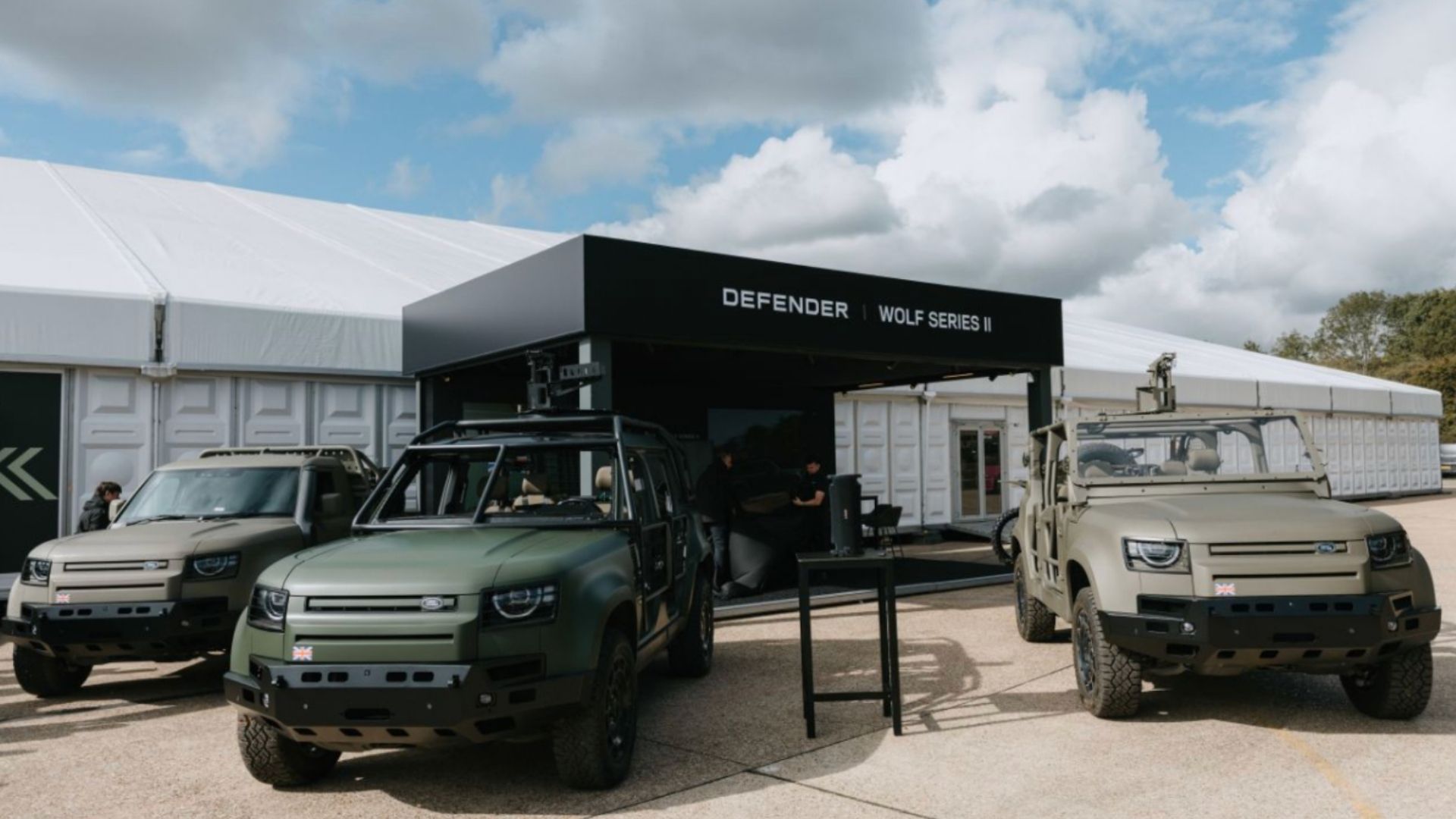
Jaguar Land Rover has introduced three variants of its new Defender Wolf Series II military vehicle as it seeks to replace some of the British Army’s oldest light mobility platforms. The vehicles were presented on September 16 at the DVD 2026 defense exhibition at Millbrook proving ground in Bedfordshire. The Ministry of Defense is expected to assess potential candidates there for its Light Mobility Vehicle program, intended to replace Wolf-spec Land Rovers and Pinzgauer trucks still in service. Defender developed the Series II as a modern military platform offering greater strength, payload capacity, and durability for operations in demanding environments. Three military variants unveiled Thomas Mueller, JLR’s chief technology officer, described the vehicles displayed at the exhibition as “the first of many variants of Defender Wolf Series II to come.” “This is Defender’s first military vehicle launch since the original Wolf, which served the British Armed Forces for more than 70 years,” Mueller said. JLR said that the vehicle endured more than 62,000 tests as part of its Extreme Event Test procedure. Reports surrounding the unveiling suggest that four versions are planned: a tactical mobility vehicle, general mobility vehicle, ambulance, and utility vehicle. However, JLR has only confirmed that three variants appeared at DVD 2026. The company has not identified which three configurations were displayed. It has also not revealed when the fourth reported variant could make its debut. The Wolf Series II enters a competition to succeed vehicles that have supported British military operations for decades. More than 8,000 Wolf-spec Land Rovers served with the British Army at the fleet’s peak, while allied armed forces have also operated the vehicle. Monocoque platform replaces ladder frame Unlike the original Wolf, which relied on a conventional ladder-frame chassis, the Series II uses Defender’s D7x monocoque architecture. The same underlying platform is found in the company’s civilian Defender range. The shift represents a major departure from the construction of the previous military model. A monocoque design integrates the vehicle’s body and structural frame rather than mounting the body on a separate chassis. “Built on Defender’s lightweight D7x monocoque architecture, it delivers exceptional durability, increased payload capability and outstanding strength,” Mueller said. According to JLR, the Defender Wolf Series II completed more than 62,000 tests under its Extreme Event Test procedure. The evaluation is used for vehicles expected to operate in difficult terrain and severe conditions. JLR expands its defense ambitions The Wolf name was introduced in 1998 for a militarized Defender supplied to British forces. Although it became a familiar military workhorse, operational experience highlighted weaknesses in the platform, including inadequate protection against improvised explosive devices during the war in Afghanistan. Those limitations, combined with the age of the wider fleet, have increased the need for a modern replacement. The Light Mobility Vehicle program could determine whether the Defender name continues serving British personnel in its latest form. JLR has also established a dedicated Defender Defense Division to work with military and government customers. The move indicates that the company’s ambitions extend beyond the British replacement program.Defender vehicles are already used by police, border security, fire, and mountain rescue organizations across several countries. The Series II now gives JLR a new platform with which to pursue specialized defense and government requirements.Get the latest in engineering, tech, space & science - delivered daily to your inbox.Atharva is a full-time content writer with a post-graduate degree in media & amp; entertainment and a graduate degree in electronics & telecommunications. He has written in the sports and technology domains respectively. In his leisure time, Atharva loves learning about digital marketing and watching soccer matches. His main goal behind joining Interesting Engineering is to learn more about how the recent technological advancements are helping human beings on both societal and individual levels in their daily lives.
New UK military vehicle survives 62,000 tests for harsh missions
Full Article
Original Source
Read the full article at Interestingengineering →KhanList aggregates and links to publicly available news content. We do not host full articles from third-party sources. Always verify important information with original sources.