
SINGAPORE: Four of the exchange-traded funds (ETFs) recently listed in Singapore are off to an encouraging start, observers told CNA this week.They analysed the daily turnover and spreads of the ETFs tracking the S&P 500, S&P 500 Equal Weight, Nasdaq 100 and MSCI World for the first 30 days of trading since they listed on the Singapore Exchange (SGX) on Oct 13.Mr James Ooi, chief market strategist at Tiger Brokers, on Wednesday (Nov 25) noted that SGX data showed three of the new ETFs – all except the S&P 500 Equal Weight – were among the top 10 most traded by retail investors over the first 30 days."This points to a relatively healthy level of investor interest and trading activity so far," he said.That view was echoed by Ms Charu Chanana, chief investment strategist at trading platform Saxo. "The early traction is encouraging, particularly for a new set of listings," she said. Net purchases of the four ETFs amounted to S$178 million (US$138 million)as at Nov 24, SGX data showed."This suggests there is genuine investor appetite for accessing global equity markets through SGX," said Ms Chanana. The four Xtrackers UCITS ETFs recorded an average daily turnover of S$7.8 million, SGX said, with the majority – S$3.9 million – going to the S&P 500 ETF.UCITS refers to Undertakings for Collective Investment in Transferable Securities. Such ETFs are European regulated, often domiciled in Ireland, and help investors avoid US estate and dividend taxes.The Nasdaq 100 ETF ranked second, with an average daily turnover of S$2.3 million.Combined turnover hit a high of S$27 million on Nov 6, after a sell-off on US markets overnight following the US midterm elections.On bid-ask spreads, the ETF tracking the S&P 500 showed the tightest spreads averaging 10 basis points, said SGX. The Nasdaq 100 and MSCI World averaged a spread of 17 basis points, while the S&P 500 Equal Weight ETF saw an average spread of 29 basis points.SG LISTINGS VS UK LISTINGSBefore the new ETFs were listed, financial influencers on social media had suggested investors should monitor liquidity and spreads when considering whether to buy the SGX-listed funds or the UK-listed funds.If the spread between the buying price and the selling price is wider, investors end up paying more when they buy, and receiving less when they sell.Based on the first 30 days of trade, analysts said spreads are wider than the UK listings, but are reasonable, especially for longer-term investors.The ETF tracking the S&P 500 has an average spread of 10 basis points according to SGX data, compared with three basis points for the same ETF listed in London, said Mr Eric Xiao, head of sales in Asia for CMC Markets.That comes up to a one-off S$7 cost for investing and selling a S$10,000 holding, he said, describing it as reasonable for long-term investors, but costly for active traders.On a S$500 monthly trade, the difference is around a dollar, he said.The SGX listing suits long-term investors who want to buy the S&P 500 in modest amounts using Singapore dollars or money from their Supplementary Retirement Scheme (SRS) account, which cannot be used to make trades on UK-listed funds. "Investors who hold US dollars and can reach London cheaply are better off there," he said.Those who trade often or want to invest in the Equal Weight S&P 500 may want to use the UK listings, because spreads on that ETF average 29 basis points on the SGX.Ms Chanana also said investors should compare various factors and metrics when deciding which listing to go for."An investor deploying SRS savings may naturally arrive at a different choice from someone building a global portfolio with cash or an active trader prioritising execution costs," she said.For long-term investors, a marginally wider spread may matter less than convenience and the ability to invest consistently, she said.SGX ADVANTAGES?Looking ahead, Mr Xiao of CMC Markets said he expects SGX spreads to become steadier, although they are unlikely to match London's.Mr Ooi of Tiger Brokers also said liquidity may improve further as the ETFs attract sustained buying and selling. That could eventually lead to tighter spreads and higher turnover."Recent market volatility may also support greater interest in ETFs, as some investors may increasingly favour diversified exposure over individual stock positions," he said.Ms Chanana similarly noted the surge in turnover during market sell-offs and subsequent rebounds. She said investors may increasingly be using ETFs as a flexible tool to navigate global market volatility."When conviction around individual stocks becomes harder to establish, broad market ETFs offer investors a way to deploy capital without having to call the bottom in any particular stock or sector," she said.Mr Ooi said Singapore-listed ETFs offer the convenience of trading in Singapore dollars during Asian market hours.He noted that some SGD counters on the SGX attract greater trading activity than their USD counterparts, suggesting that there is a preference for local currency trading.Singapore-based retail investors would not need to access overseas exchanges or incur currency conversion costs if they choose to invest in the SGX-listed ETFs."While established UK-listed counterparts offer tighter spreads, this advantage may not necessarily outweigh the appeal of SGX-listed ETFs, particularly the convenience of trading during local market hours and potential savings on currency conversion costs," he said.
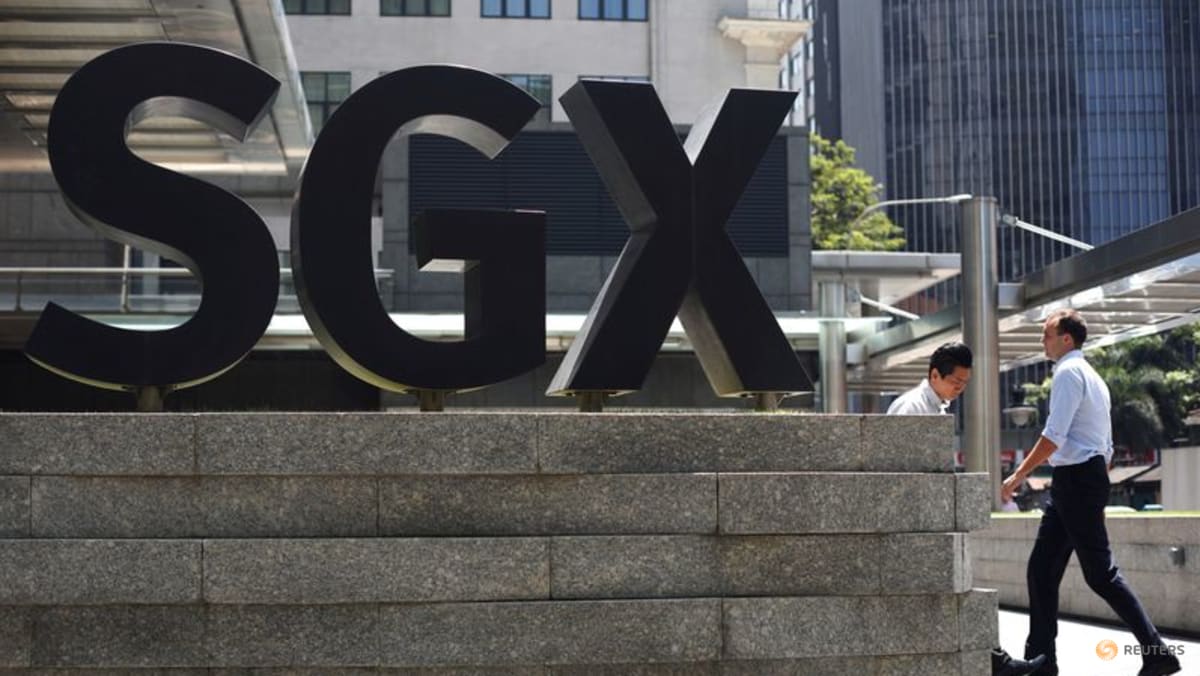
New Singapore Exchange ETFs off to encouraging start, analysts say after first 30 days of trading
Full Article
Original Source
Read the full article at Channelnewsasia →KhanList aggregates and links to publicly available news content. We do not host full articles from third-party sources. Always verify important information with original sources.