
Gravity is one of the fundamental forces of nature, but scientists still struggle to explain how it works at the smallest scales. A new proposal from OpenAI physicist Venkatesa Chandrasekaran offers another mathematical approach to solving that problem. His research explores how gravity behaves in four-dimensional spacetime without introducing matter. The framework also reproduces the famous formula describing black hole entropy. It recovers Einstein’s equations at low energies and includes the first quantum correction. The work has attracted attention partly because of Chandrasekaran’s collaboration with OpenAI’s models. CEO Sam Altman also praised the physicist for pursuing difficult scientific questions that others might consider impossible. Different approach to gravity Chandrasekaran’s approach starts with something familiar: light. His framework studies how light travels along intersecting boundaries surrounding a region of spacetime. Physicists call this enclosed region a causal diamond. But why use light to study gravity? General relativity describes how massive objects bend spacetime. Quantum mechanics explains how nature behaves at extremely small scales. Scientists have struggled for decades to combine these two descriptions into one consistent theory. The new proposal uses the boundaries formed by light to describe gravitational behavior. Chandrasekaran then applies mathematical methods to turn that description into a quantum theory. In simpler terms, he is trying to describe gravity using the rules of quantum mechanics without assuming that spacetime itself remains fixed. The framework also produces a mathematical tool called a path integral, which helps physicists calculate the possible outcomes of a quantum system. Black hole formula emerges One of the paper’s most important results involves black holes. According to the Bekenstein-Hawking formula, a black hole’s entropy depends on the surface area of its event horizon. Entropy broadly describes how much information about a system remains hidden from an outside observer. Chandrasekaran derives this relationship from his framework. He also calculates an additional logarithmic correction for large Schwarzschild black holes. The result matches a coefficient previously obtained by physicist Ashoke Sen using a different mathematical approach. OpenAI CEO Sam Altman commented on the research. He recalled how Chandrasekaran had believed early models could help tackle difficult mathematical problems, including Millennium Prize problems. Ven was one of the earliest believers that we could use our then-current model to solve millenium prize problems.There are a lot of brilliant people in the world, but being brilliant and also having correctly-placed confidence and courage to keep pushing on something that… https://t.co/ryBs1OX2gy— Sam Altman (@sama) November 26, 2026 The framework also reproduces Einstein’s equations when applied to low-energy conditions. Importantly, Chandrasekaran includes the first quantum correction in this calculation. This suggests that the proposal can recover familiar gravitational physics while accounting for quantum effects. The collaboration also involved an extraordinary amount of computational work. Chandrasekaran says he used approximately 400 million tokens with GPT-6 Astra over several months while developing the research. The model helped with mathematical calculations and proofs, making the project an interesting example of how advanced language models are entering highly specialized scientific research. Testing the theory remains Despite its mathematical results, the proposal still faces significant hurdles. The current framework describes gravity in a vacuum, meaning it does not include matter. It therefore does not yet provide a complete description of gravity throughout the universe. There is also a bigger question: Can the theory predict something scientists can actually measure? Recovering results that existing physics already explains is important. However, a new theory of gravity must eventually offer predictions that distinguish it from competing approaches. Without those predictions, researchers cannot determine whether it describes nature more accurately. The paper remains a preprint and still requires independent scrutiny. Its mathematical findings will need further examination by the wider physics community. Get the latest in engineering, tech, space & science - delivered daily to your inbox.Aamir is a seasoned tech journalist with experience at Exhibit Magazine, Republic World, and PR Newswire. With a deep love for all things tech and science, he has spent years decoding the latest innovations and exploring how they shape industries, lifestyles, and the future of humanity.
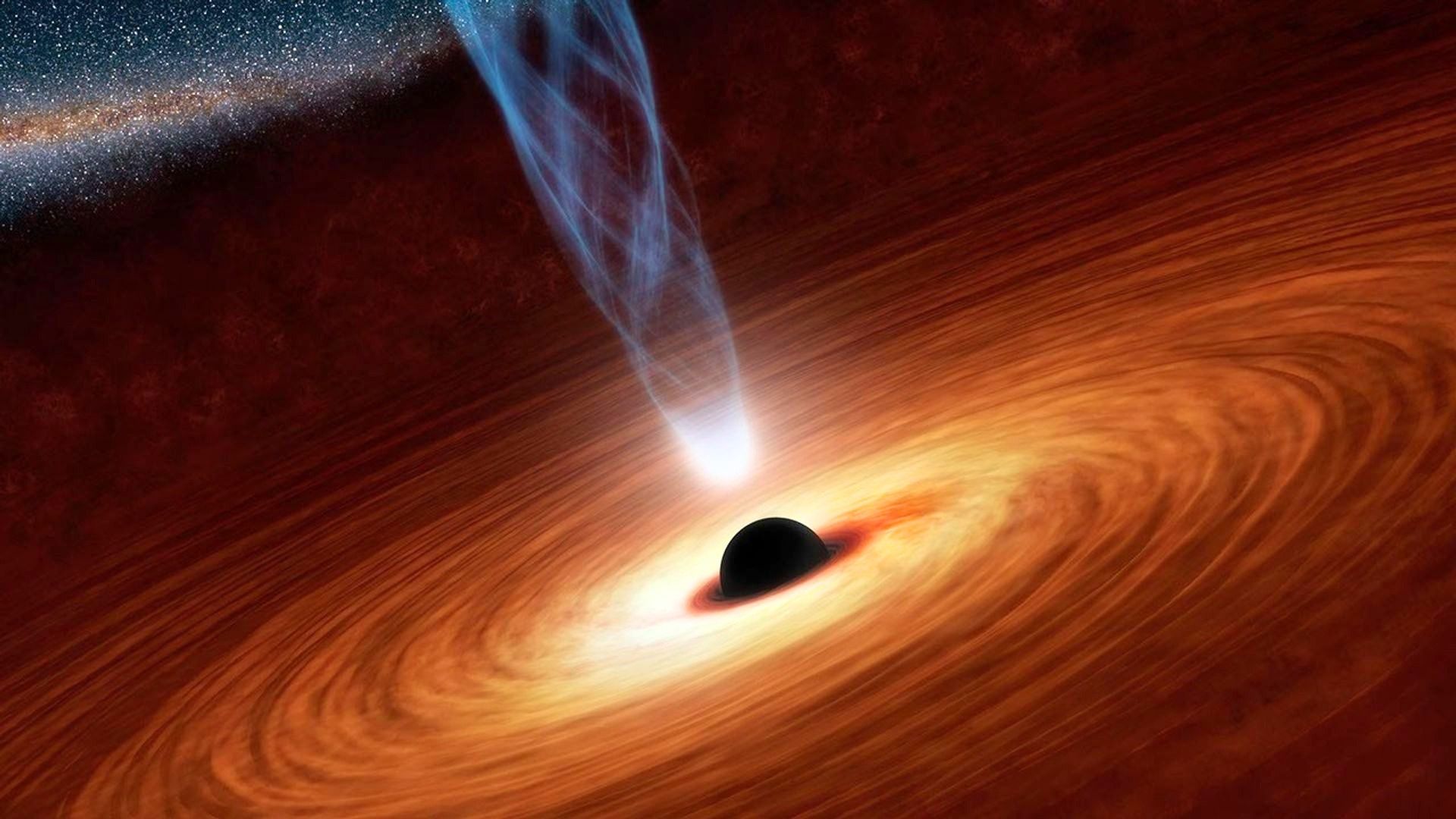
New quantum gravity theory explains black hole entropy using 400 million GPT-6 tokens
Full Article
Original Source
Read the full article at Interestingengineering →KhanList aggregates and links to publicly available news content. We do not host full articles from third-party sources. Always verify important information with original sources.