
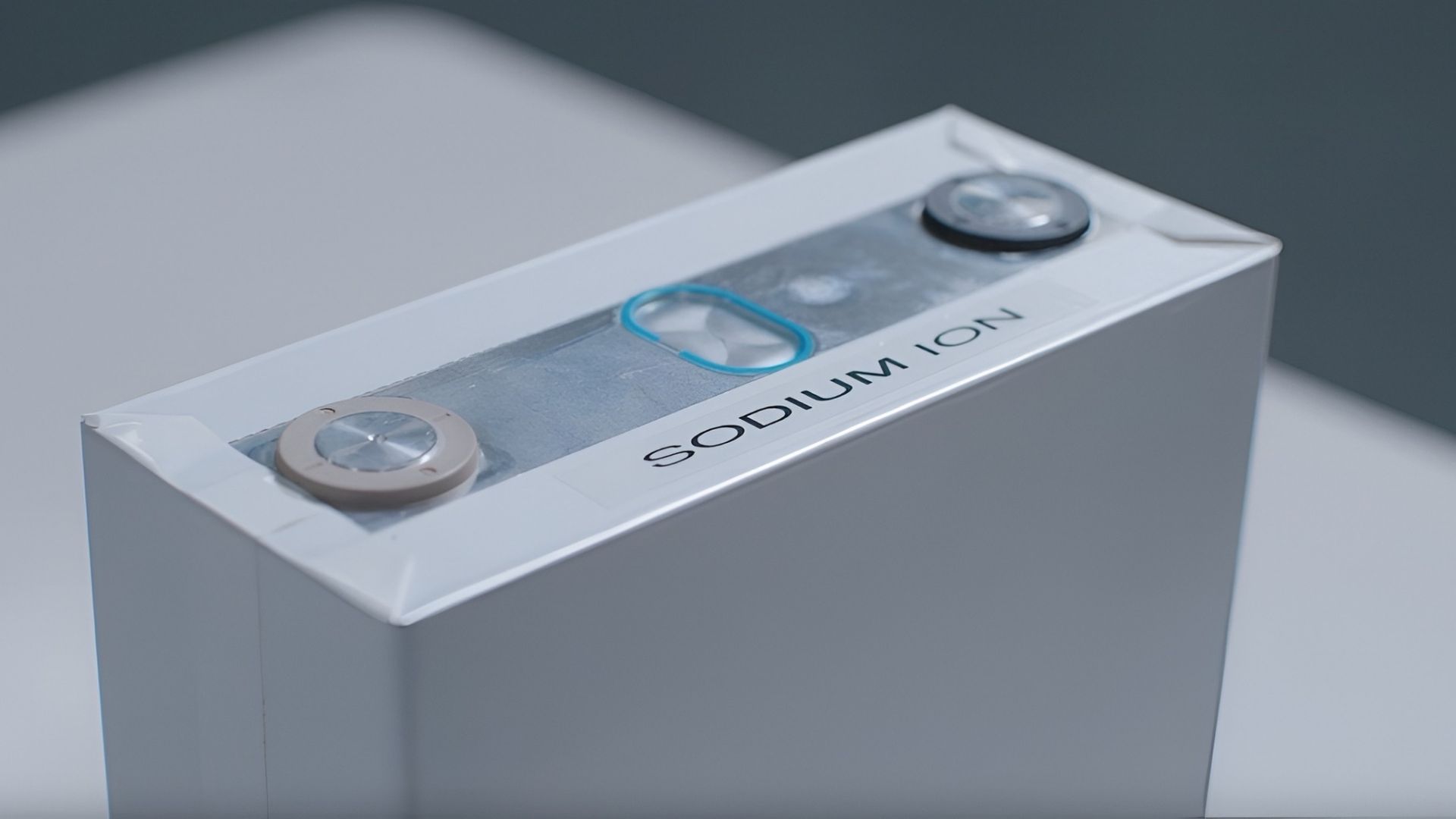
Key TakeawaysSouth Korean researchers developed a polymerizable deep eutectic solvent electrolyte for safer, more durable sodium-metal batteries.The electrolyte achieved an ionic conductivity of 1.39 mS/cm at 30°C and a sodium-ion transference number of 0.58.A sodium-metal battery using the electrolyte retained 90.4% of its capacity after 1,000 cycles, while a pouch-cell demonstration showed resistance to folding and cutting. Researchers in South Korea have developed a polymer-based electrolyte that could make sodium-metal batteries safer and more durable. In tests, the electrolyte delivered an ionic conductivity of 1.39 mS/cm at 30°C, while a battery using it retained 90.4 percent of its capacity after 1,000 charge cycles. The electrolyte was developed by a team led by Professor Chan-Jin Park at Chonnam National University. It uses a polymerizable deep eutectic solvent (PDES), designed to improve sodium-ion movement while addressing safety and stability problems that have limited the practical use of sodium-metal batteries. Sodium-metal batteries are being studied as potential alternatives to lithium-ion systems because sodium is abundant and relatively inexpensive. However, sodium metal is highly reactive, and its interaction with conventional liquid electrolytes can cause unwanted chemical reactions and uneven metal deposits called dendrites. These deposits can damage the battery and increase the risk of short circuits. The researchers designed the new electrolyte to tackle these problems by combining efficient ion transport with a more stable, solid-like structure. A solvent turned solid The PDES electrolyte contains sodium perchlorate (NaClO4), N-isopropylacrylamide (NIPAM) and succinonitrile (SN). Together, these ingredients form a deep eutectic solvent, a liquid mixture whose components interact through forces such as hydrogen bonding and ion-dipole interactions. The team then used in-situ polymerization to turn the mixture into a more robust polymer matrix. This process helps prevent the electrolyte from leaking while retaining the properties needed for sodium-ion movement. Each component serves a different purpose. Sodium perchlorate supplies sodium ions, while NIPAM helps separate the ions and forms the polymer structure. Succinonitrile improves the mixture’s flexibility and further supports ion dissociation. The optimized formulation achieved an ionic conductivity of 1.39 millisiemens per centimeter at 30 degrees Celsius. It also recorded a sodium-ion transference number of 0.58, indicating that sodium ions account for a substantial share of the electrical charge carried through the electrolyte. Battery holds capacity longer In full-cell tests, the electrolyte helped form a stable interface between the electrode and electrolyte. This reduced unwanted side reactions and irregular sodium growth during repeated charging and discharging. The battery delivered an initial discharge capacity of 110.2 milliamp-hours per gram at a rate of 0.1C, with coulombic efficiency close to 99 percent. More importantly, it retained 90.4 percent of its capacity after 1,000 cycles at 2C. The researchers also tested the electrolyte’s safety and mechanical properties. It showed resistance to ignition when exposed to flame and reduced the risk of leakage. In a pouch-cell demonstration, the battery continued powering an LED even after being folded and cut. These results suggest that the polymer-based electrolyte could help address some of the durability and safety limitations of sodium-metal batteries. However, further testing will be needed to establish how the technology performs in larger cells and under practical operating conditions. The study, titled “Noncovalent interaction-regulated polymerizable deep eutectic solvent electrolyte for sodium metal batteries,” was published in Energy Storage Materials. Get the latest in engineering, tech, space & science - delivered daily to your inbox.With over a decade-long career in journalism, Neetika Walter has worked with The Economic Times, ANI, and Hindustan Times, covering politics, business, technology, and the clean energy sector. Passionate about contemporary culture, books, poetry, and storytelling, she brings depth and insight to her writing. When she isn’t chasing stories, she’s likely lost in a book or enjoying the company of her dogs.
New polymer electrolyte helps sodium batteries retain 90% capacity after 1,000 cycles
Full Article
Original Source
Read the full article at Interestingengineering →KhanList aggregates and links to publicly available news content. We do not host full articles from third-party sources. Always verify important information with original sources.