
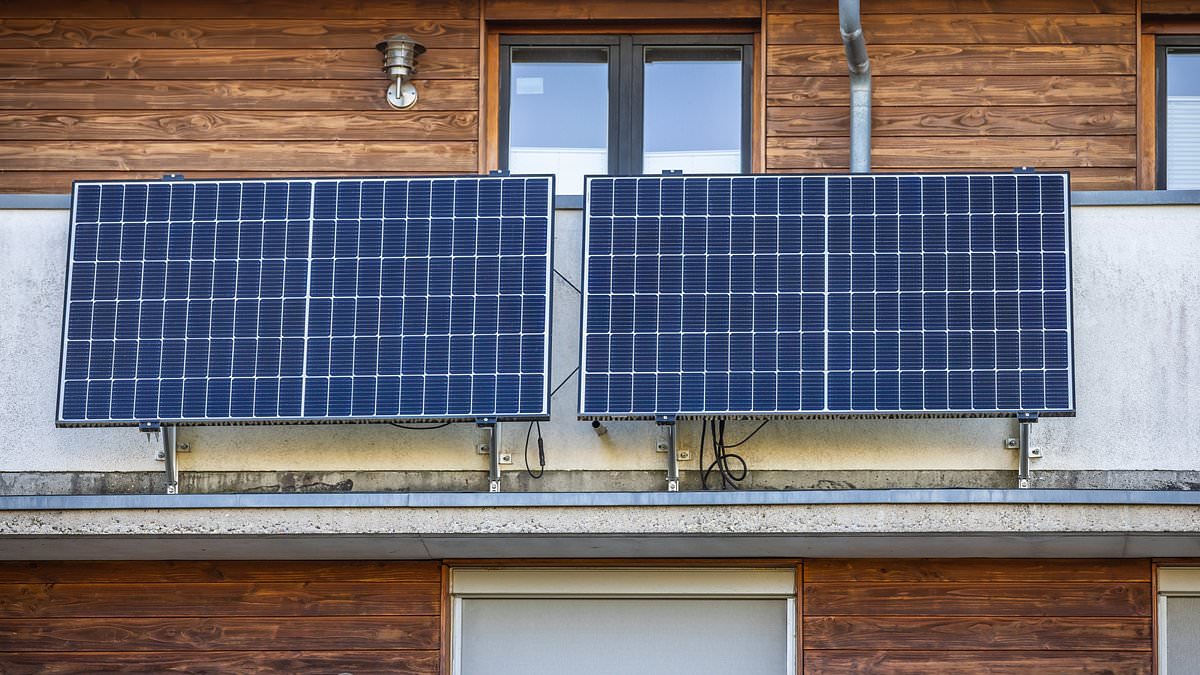
Plug-in solar panels can legally be sold in Britain as of this week, but customers might have to wait some time to benefit from any sunny weather. The Government has changed the rules on the sale of smaller, cheaper and more portable panels designed for flats, claiming more people will save on their bills using solar energy. The devices are allowed to be sold in Britain as of yesterday, August 27 and estimates suggest they could save users £70 to £100 per year on bills. But some of Britain's best-known and largest retailers told This is Money shoppers will have to wait to buy plug-in solar panels from their online or high street shops.Argos is the only major retailer to put the panels on sale so far, with a selection of plug-in home kits available priced between £599 and £989. Argos' £599 plug-in solar panel kit includes a 515W solar panel, 800W microinverter, hybrid frame and connections. The panels are not suitable for balconies, it said. Other retailers, such as B&Q, Lidl, Wickes and Amazon, all said the panels would be available to customers at a later date. And for keen proponents of green energy looking to buy the panels from Argos online or in store today, they will have to wait until October to receive their order. On sale now: Argos is selling a selection of plug-in solar panels - but delivery is not quickA spokesman for B&Q told This is Money it 'hoped' plug-in solar panels would be available to buy from its online and physical shops 'from October'. They added that the chain wanted to ensure the plug-in solar panels it sold were affordable and 'safe, compliant and easy for customers to use'. Amazon and Currys both said they did not yet have a set date for the launch of plug-in solar panels for the home in Britain.John Boumphrey, UK & Ireland country manager, Amazon said: 'The Government's announcement on plug-in solar panels is a practical step that gives households a simple way to generate their own power, reduce bills, and contribute to the UK's net zero goals. We're looking forward to helping customers benefit from this technology.'Wickes is also understood to be preparing to sell the solar panels at some point. Meanwhile, Lidl said it did not have an update on a potential launch date for plug-in solar panels in its stores. Across Britain, nearly 172,000 solar installations have been fitted since the start of 2026, the government said this week. Rooftop solar accounted for more than seven in ten installations in July, it added. Energy minister Michael Shanks said: 'From the South East to Scotland, households across Britain are embracing solar power and taking control of their energy.'Record numbers of families are installing solar panels to generate clean, homegrown power, helping them cut their energy bills. And through our Warm Homes Plan, we will upgrade homes, tackle fuel poverty and make rooftop solar more affordable for families.'Now, by making plug-in solar available across Great Britain, we’re making it easier than ever for more families to benefit from Britain’s solar revolution.' In action: The panels can save users between £70 and £100 per year on bills - but only if they can find somewhere to buy themKnow the risks before buying plug-in solar panels Plug-in solar panels are cheaper than roof panels, can be installed without an electrician and are suitable for certain properties with outdoor space. The government said households could save up to £110 a year on their energy bills by using plug-in solar panels at home. But industry experts have warned that not all properties are ready for plug-in solar panels. Older wiring, inadequate electrical protection and incorrectly installed equipment can increase the risk of overheating, electric shock and, in the most serious cases, fire.As demand grows, homeowners should ensure their property is suitable and that any equipment meets safety requirements. Take steps to ensure your home is suitable for plug-in solar panels:1. Don't assume every home is suitable for plug-in solarExperts at Electrical Safety First said: 'Given unresolved concerns about the potential impact of plug-in solar panels on certain residual current devices (RCDs), we recommend households have at least a Type A bidirectional RCD protecting circuits intended for use with plug-in solar panels. 'Until these concerns are addressed, homes with Type AC RCDs should not use plug-in solar systems without first upgrading to a minimum Type A bidirectional RCD on those circuits.'2. Have your electrics checked before you buy Do not assume 'plug-in' means it's suitable for every home. It is a good idea to have your electrics assessed by an electrician registered with a competent persons scheme before purchasing or using a plug-in solar system, particularly in older properties or where the condition of the electrical installation and type of protective devices is unknown.3. Never connect plug-in solar through extension leads or adapters Plug-in solar systems should not be connected via extension leads, cable reels, multiway adaptors, travel adaptors or plug-in RCD adaptors. Electrical Safety First said: 'These accessories can overheat, become overloaded and create additional safety risks.'4. Buy from reputable retailers and avoid third-party sellers via online marketplaces Experts at Electrical Safety First said: 'Given the size of these devices, it is likely many shoppers will seek to purchase them online. 'We urge shoppers to stick to reputable high street retailers and their online websites to ensure the device they are buying is safe and meets the new interim product specification. 'We advise households to avoid buying these devices from third-party sellers on online marketplaces, no matter how appealing this may be, as these platforms are currently not legally responsible for the safety of goods sold via their sites, exposing people to substandard versions that may put you and your home at risk.'5. Follow the one home, one device mantra Only one plug-in solar panel system is permitted per household. Installing multiple units could reduce the effectiveness of protective devices.Megan Dunford of Zurich UK, said: 'Plug-in solar panels promise cheaper, greener energy, but they shouldn’t be treated like a plug-and-play gadget. Fundamentally, you’re adding a mini power station on your home, so you need to go into it with your eyes open.'She added: 'If you rent your home, live in a flat, or need to install panels on an external wall, balcony or other communal structure, seek permission from your landlord or freeholder before installation. Solar equipment should also be considered as part of any building fire risk assessment.'
New plug in solar panels are only being sold by ONE major retailer online... and they won't be delivered until October
Full Article
Original Source
Read the full article at Dailymail →KhanList aggregates and links to publicly available news content. We do not host full articles from third-party sources. Always verify important information with original sources.