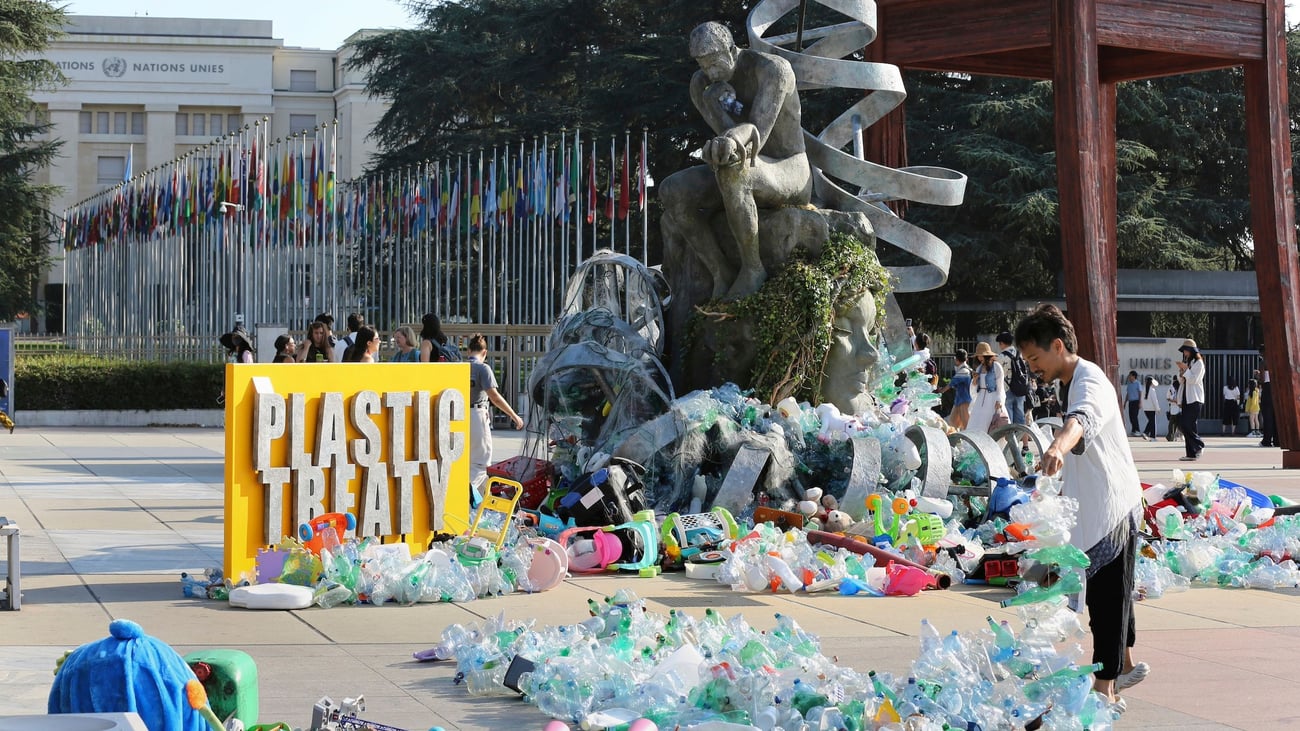
A majority of nations have called for ambitious, legally binding measures to curb humanity's production of plastic, which is expected to triple by 2060.(AFP) — A new document attempting to resuscitate a floundering global plastics treaty suggests negotiations are trending in a less ambitious direction, a leading scientific expert told AFP on Tuesday.Talks to strike the world’s first treaty addressing humanity’s ever-growing tide of plastic pollution fell apart in August 2025 after opposition from oil-producing nations.The first public document since that collapse was released quietly over the weekend but quickly came under stinging criticism from environmental groups.While it resembles a new draft text, chairman Julio Cordano of Chile emphasized that it was “an informal reference document and does not constitute a negotiated or agreed text.”Cordano noted that the document took a “balanced approach,” with subjects where “views remain divergent” put into brackets.Richard Thompson, a British marine biologist who coined the term microplastics, told AFP the document was extremely similar to the draft text that was rejected a year ago.“If anything, it’s even slightly weaker,” added Thompson, a researcher at Plymouth University who has served as an independent scientific observer to the talks.Others were more scathing.“The text cuts the international legal effort to address plastic pollution off at the knees, delivering a text that fails not only future generations, but present ones,” the Center for International Environmental Law’s David Azoulay said in a statement Monday.** ‘Once-in-a-planet opportunity’**Negotiators from 185 countries have struggled to find common ground between two broad groups.A majority of nations have called for ambitious, legally binding measures to curb humanity’s production of plastic, which is expected to triple by 2060.However, a smaller bloc of mostly oil-producing states — including Saudi Arabia, Kuwait and Russia — has pushed back against such restrictions, seeking to focus more narrowly on waste management.Thompson suggested that rising pressure to reduce carbon emissions was leading some oil producers to seek “an alternative market for growth” by making plastic, which is derived from petroleum.Research published in The Lancet last year estimates that the many health problems caused by plastic pollution cost the world $1.5 trillion a year.Thompson also expressed concern that independent scientific observers, including himself, had been excluded from offering expert advice to negotiators.“That creates unnecessary suspicion,” he said.Calling the treaty “a once-in-a-planet opportunity,” Thompson said he saw “no point … in agreeing on something that is too weak to deliver.”Chairman Cordano said an updated version of the “aid to negotiations” will be prepared after the next round of informal talks in Bangkok from Sept. 27 to 30.Formal negotiations, hosted by the U.N. Environment Programme, are then scheduled for March 2027.Subscribe to our free newslettersOur weekly newsletter Closing Arguments offers the latest about ongoing trials, major litigation and rulings in courthouses around the U.S. and the world, while the monthly Under the Lights dishes the legal dirt from Hollywood, sports, Big Tech and the arts.Additional Reads
New plastic treaty document criticized for weaker ambition
Full Article
Original Source
Read the full article at Courthousenews →KhanList aggregates and links to publicly available news content. We do not host full articles from third-party sources. Always verify important information with original sources.