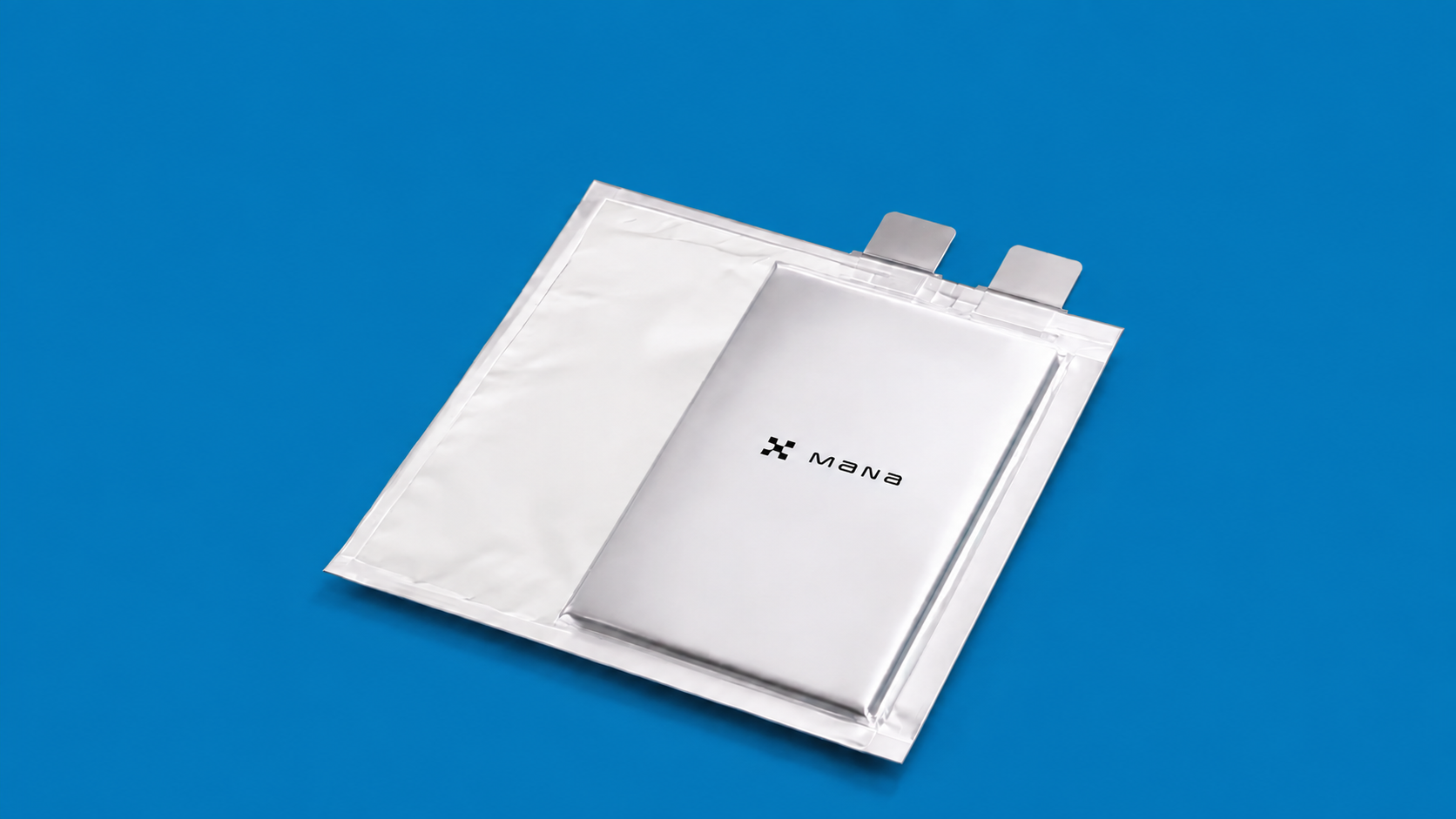
In an era defined by mineral issues and unexpected supply chains, American startup Mana Battery and French manufacturing giant Saft have come together to prove that the best way to innovate battery technology is to start cutting parts out. Under a newly signed Joint Development Agreement (JDA), the two companies plan to co-develop, test, and commercialize next-generation anode-free sodium-ion batteries. Particularly, relying on abundant sodium rather than scarce minerals reduces the carbon footprint and enhances overall supply chain sustainability. It is an ambitious pairing. Mana, a spin-out from the University of Colorado Boulder, brings a liquid electrolyte platform. Saft, a subsidiary of TotalEnergies, brings decades of industrial scaling and military-grade qualification. “Sodium-ion is a strategically important chemistry for the industries we serve, and anode-free designs are its most promising frontier,” said Kamen Nechev, Chief Technology & Innovation Officer at Saft. “Mana Battery brings world-class electrolyte innovation that complements our cell design, manufacturing and qualification capabilities. Together we intend to bring safe, high-performance sodium-ion batteries to defense, aerospace, rail, datacenter and industrial UPS customers,” Nechev added. Anode-free architecture Driven by surging global demand, recent prototypes demonstrate that anode-free sodium-metal batteries are emerging as a viable alternative to conventional lithium-ion technology. Anode-free battery design simplifies cell architecture by eliminating the physical host material such as graphite or hard carbon that usually sits on the negative current collector. This architecture achieves superior energy density and lowers manufacturing costs. During the initial charge cycle, sodium ions travel directly from the active cathode material across the liquid electrolyte and deposit as a thin, smooth layer of dense metallic sodium directly onto the current collector surface. This in situ electroplating process creates a temporary metallic anode on demand without adding bulk, extra weight, or raw material overhead. When the battery discharges, this newly formed sodium layer dissolves back into ions that migrate back to the cathode. Removing the anode material makes the battery lighter, smaller, and able to store much more power. It also simplifies how the battery is made without relying on restricted supplies of lithium, cobalt, or nickel. At the same time, it offers robust safety, a resilient supply chain, and reliable performance across extreme temperatures. Application in defense, aerospace This partnership focuses directly on harsh, mission-critical applications that demand high reliability and extreme safety. The technology will provide sub-zero cold starts, heat resistance, and long standby charges for military hardware. It would also offer hyperscale AI data centers a thermal-runaway-safe alternative for backup power. And its high safety margins and low weight could make it an ideal replacement for heavy legacy lead-acid batteries across the aerospace and rail sectors. “Saft is exactly the partner we would design for this mission — a battery manufacturer with decades of experience qualifying cells for the world’s most demanding defense, aerospace, rail and industrial customers,” said Tyler Evans, CEO of Mana Battery. “This agreement validates the maturity of our electrolyte and anode-free platform and puts it on the fastest possible path from the lab to the field, where its energy density, safety and supply-chain advantages matter most,” Evans added. If successful, the partnership could prove that the future of energy density relies on making batteries simpler, safer, and remarkably lighter. Recommended ArticlesGet the latest in engineering, tech, space & science - delivered daily to your inbox.Mrigakshi is a science journalist who enjoys writing about space exploration, biology, and technological innovations. Her work has been featured in well-known publications including Nature India, Supercluster, The Weather Channel and Astronomy magazine. If you have pitches in mind, please do not hesitate to email her.
New partnership targets anode-free sodium batteries for defense and data centers
Full Article
Original Source
Read the full article at Interestingengineering →KhanList aggregates and links to publicly available news content. We do not host full articles from third-party sources. Always verify important information with original sources.