
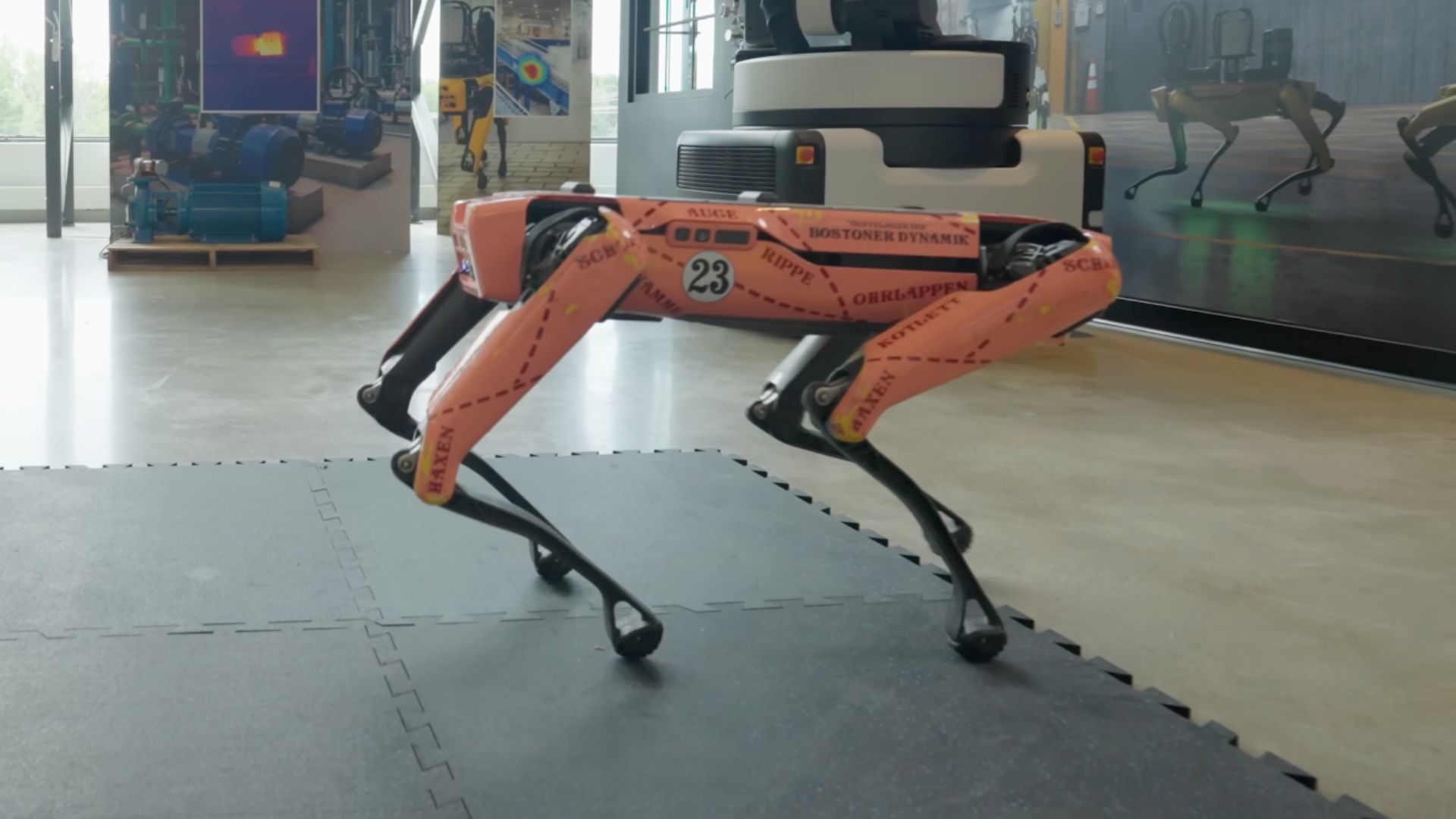
Researchers have developed an AI agent-driven approach that could make it easier to train robot navigation systems across different machines and environments. NVIDIA’s new framework, named COMPASS, is designed to reduce the time and effort needed to adapt navigation policies when robots, scenes, or operating conditions change. The system combines AI agents with simulation, reinforcement learning, and automated testing to streamline the development process. The researchers demonstrated the approach using a quadruped robot, showing how the system can support navigation training and evaluation while keeping humans involved at key decision points. Transforming robot training COMPASS (Cross-Embodiment Mobility Policy via Residual RL and Skill Synthesis) combines a pretrained navigation model with reinforcement learning and AI agents to adapt robot behavior without building a navigation system from scratch for every robot and environment. Robot navigation is more complicated than simply making a machine move. A navigating robot must understand its surroundings, determine where it is, choose a path, avoid obstacles, and safely reach a target. When the robot or environment changes, developers often need new data, simulation environments, software interfaces, training, and testing. Repeating this process can be time-consuming and difficult to reproduce. COMPASS aims to reduce that workload. Instead of retraining a navigation system from the beginning, it starts with NVIDIA’s pretrained X-Mobility policy. It uses reinforcement learning to train a specialist for a particular robot and environment. The specialist learns to correct the existing policy so it can better handle the physical characteristics and surroundings of the target robot. The researchers also use AI coding agents to automate much of the development process. A developer can specify the robot, environment, and navigation goal, while the agent checks software dependencies, prepares simulation assets, runs initial tests, starts training, investigates failures, and compares trained models. Human approval remains part of the process, with developers deciding whether a scene is ready, whether initial tests are successful, and whether a trained model should be promoted. Simplifies robot navigation The reference workflow uses the Boston Dynamics Spot quadruped robot. Developers can begin with a built-in warehouse environment, making it easier to test the system before moving to more complex settings. COMPASS can also use scenes from NVIDIA’s SAGE-10K dataset, which contains 10,000 generated indoor environments covering 50 room types. For environments that need to resemble real locations closely, the workflow can use NVIDIA Omniverse NuRec to reconstruct captured spaces for simulation. This allows developers to test and fine-tune navigation policies in environments that more closely match where a robot could eventually operate. Training begins with a small smoke test to make sure the robot, environment, cameras, and control system work together correctly. Once approved, larger reinforcement-learning runs can begin. The system saves checkpoints during training so developers can compare different versions instead of automatically selecting the final model. The researchers evaluate trained policies using measures such as the rate at which robots reach their goals, how often they fall, and how long they take to complete a route. The pretrained navigation policy and newly trained versions can be tested under the same conditions to determine whether the adaptation improves performance. Once a model is approved, it can be connected to a robot’s runtime system. The policy can use camera images, odometry, and a navigation goal to generate movement commands. NVIDIA’s cuVSLAM can optionally provide visual odometry when a robot does not already have suitable position and movement information. The approach could provide a more repeatable way to adapt navigation systems across different robots and environments, while keeping human oversight for important development and safety decisions. Get the latest in engineering, tech, space & science - delivered daily to your inbox.Jijo is an automotive and business journalist based in India. Armed with a BA in History (Honors) from St. Stephen's College, Delhi University, and a PG diploma in Journalism from the Indian Institute of Mass Communication, Delhi, he has worked for news agencies, national newspapers, and automotive magazines. In his spare time, he likes to go off-roading, engage in political discourse, travel, and teach languages.
New NVIDIA framework could help robots learn to move through new places
Full Article
Original Source
Read the full article at Interestingengineering →KhanList aggregates and links to publicly available news content. We do not host full articles from third-party sources. Always verify important information with original sources.