
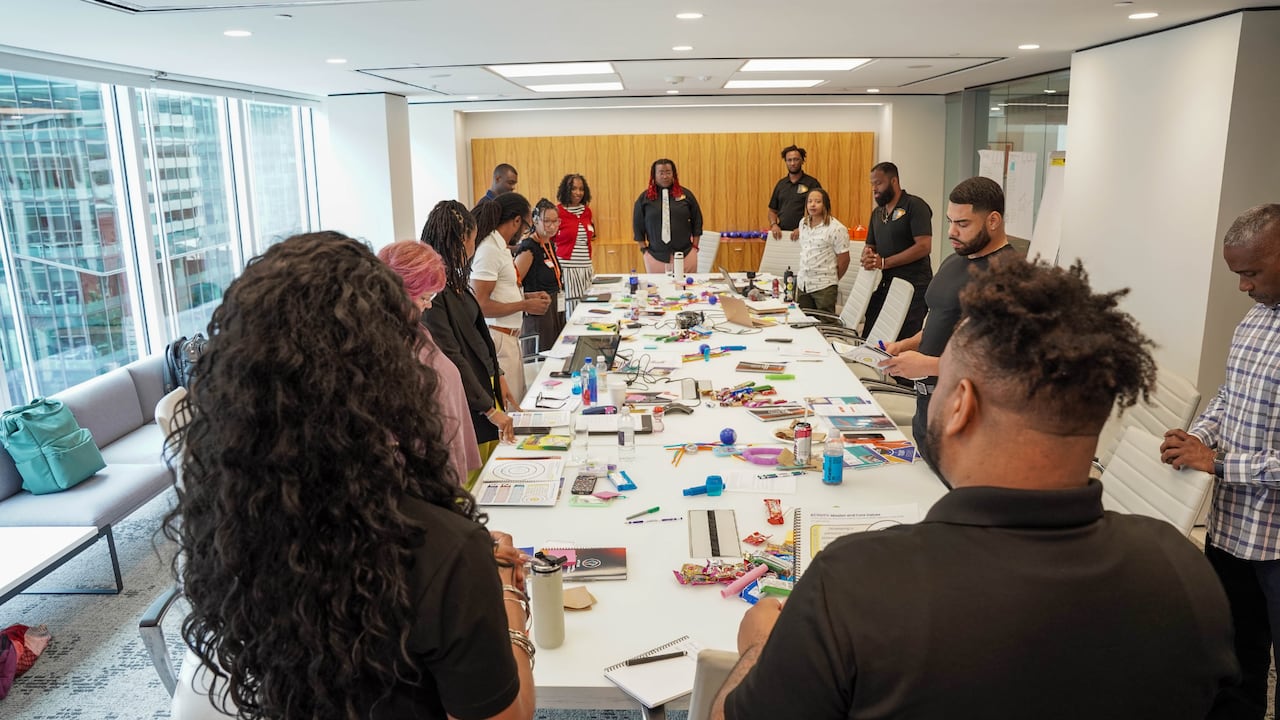
As HIV cases rise in Alabama, a new program is empowering individuals in the Montgomery area to create projects that will expand health access and education about the illness.Project Liberate invests in local leaders who are interested in tackling the systemic issues creating barriers to care, such as poverty and underemployment. Over the next several months, a group of 10 Black queer men will not only be investigating those problems, but will also be given the resources, connections and other tools needed to build community-based solutions. The program is conducted through the Normal Anomaly Initiative, a Houston-based, Black queer led nonprofit improving health and well-being in under-resourced communities. Founder and Executive Director Ian L. Haddock hopes 2,500 Montgomery residents will be impacted by the solutions created within the Project Liberate cohort. He listed multiple reasons for the health disparities his organization is seeing when it comes to HIV.“One of the things I often like to say is that, ‘HIV is the symptom. All the other things are the disease.’ So education, stigma, environment, poverty, transportation – all of those are actually the disease, and HIV just so happens to be one of the symptoms,” Haddock said. “What we want to do is focus on those social determinants of health, those structural issues that immediately contribute to the risk, incidence and prevalence of HIV.” Project Liberate is a vital program to have in the South, which is home to 38% of the nation’s population, but accounts for 51% of all new HIV diagnoses. According to preliminary data from the Alabama Department of Public Health, the number of new HIV cases in the state has risen from 452 in 2022 to 593 cases in 2025.[Can’t see the chart? Click here.]Over the past four years, the majority of those cases were found in Jefferson, Mobile and Montgomery counties. Montgomery County experienced an increase of new cases between 2022 and 2024 before dropping to 49 cases in 2025. An estimated 1,720 people are living with HIV in Montgomery County.[Can’t see the chart? Click here.]Black Alabamians are disproportionately represented in the data making up 26% of the state’s population in 2025, but 55% of new cases and 60% of the population living with HIV in the state.In comparison, white people make up 67% of the state population, 29% of new cases and 27% of people living with HIV in Alabama.Medical advancements have made drastic improvements when it comes to the treatment and prevention of HIV. PrEP, emergency medication taken after a potential exposure, drastically reduces a person’s chances of getting HIV. Taking medication as prescribed can lead to a person having an undetectable amount of HIV in their blood, meaning the illness cannot be transmitted to sex partners. Health officials stress those who do have HIV can live thriving lives when given proper care. Racism and queerphobia can widen the gap when it comes to healthcare. According to a 2020 survey from the Center for American Progress, an independent, nonpartisan policy institute, LGBTQ+, 69% of Black LGBTQ+ individuals reported financial instability due to discriminatory experiences and 53% of them reported a household income of less than $40,000 a year. When it comes to housing, 55% of Black people reported a discriminatory experience that negatively impacted their ability to rent or purchase a home. Reports state that unstable housing affects a person’s ability to store and take medication in a consistent manner due to lack of privacy.Haddock said Project Liberate seeks to make it possible for people to thrive in Montgomery. “What we want to do is create leadership that thinks about the structural issues that contribute to high HIV incidence,” Haddock said. “What we’re seeing in terms of the data is that PrEP and PEP are working for certain communities. It’s working for white gay men in a lot of different places. It’s reducing HIV occurrences. So for other populations where it’s not working in many cases what we have to question is, ‘What are the contributing factors?’”Since 2021, Project Liberate has transformed the lives of program participants and their communities in Houston. Nearly 59 Black and queer-owned businesses and nonprofits committed to social impact have been launched. About a quarter of the businesses went full time. More than 500 health screenings were conducted in communities and more than 1,600 people have received health education. Project Liberate members are inspired to find ways to continue their impact after the program is over. Haddock recalled a barber who gave discounted haircuts to people who had proof that they got tested for HIV. The deal encouraged people in his community to stay on top of their status.“So even though he wasn’t specifically in public health or trying to be an advocate or anything, he still found a way, years after he left the program, to continue the mission of creating solutions for communities,” Haddock said.Haddock has always imagined expanding Project Liberate’s mission in Montgomery. He said the city’s civil rights history makes it a place where change is realized. “Project Liberate is about finding marginalized people and giving them hope and possibility,” Haddock said. “When we really think about where movements have started, where change has happened, there is no other place that I can think of in America like Montgomery.”Haddock feels confident in replicating the program’s success in Montgomery. In early October, the Normal Anomaly Initiative traveled to the city to connect with more than 30 people who were already doing community work. They talked to preachers, bar owners, students from the Montgomery-based HBCU Alabama State University and others who had insight on the structural issues present in their cities. Some of the problems include HIV stigma, lack of transportation and gatekeeping of resources.“It sort of feels like a college town,” Haddock said of Montgomery. “So the concentration of power is in academia, but a lot of people might not be directly in academia, or they might be students. So how do they create things that are not based upon getting the approval of that concentration of power?” When the Normal Anomaly Initiative started collecting and reviewing applications for project liberate, Haddock said he became impressed with the eagerness to solve Montgomery’s problems. “Throughout the selection process, we were reminded that Montgomery is filled with Black queer men who are already demonstrating leadership, even when their contributions aren’t always recognized as such,” Haddock said. “What stood out wasn’t simply the interest in participating, but the diversity of experiences, perspectives, and generations represented. It reinforced our belief that Montgomery is the right community to continue expanding Project Liberate. We aren’t bringing leadership to Montgomery; we’re investing in the leadership that already exists.” Haddock’s nonprofit will be honing in on those leadership skills during Project Liberate’s first retreat, which starts on Friday. In February, the program will spend its second retreat talking about how to collectively use the group’s resources and skills to improve healthcare access in their communities. In May, Project Liberate’s third retreat will focus on how members will bring their projects to life so that impact can begin.MORE BY JONECE STARR DUNIGAN Haddock is excited about being amongst people who are excited to create a better future together.“We believe that liberation is the responsibility to free somebody else,” he said. “Oftentimes when we think about liberation, we think this big thing because liberation is also about how we connect to other people, and that’s really important. But we also can’t diminish the little pieces of freedom we find when we have possibility – when we can dream together, when we can create together – because I think this socio-political climate is missing the culture of resistance that says, ‘We may not have much else, but all we need is each other.’”
New Montgomery program empowers Black queer men to be solution builders during HIV crisis
Full Article
Original Source
Read the full article at Al →KhanList aggregates and links to publicly available news content. We do not host full articles from third-party sources. Always verify important information with original sources.