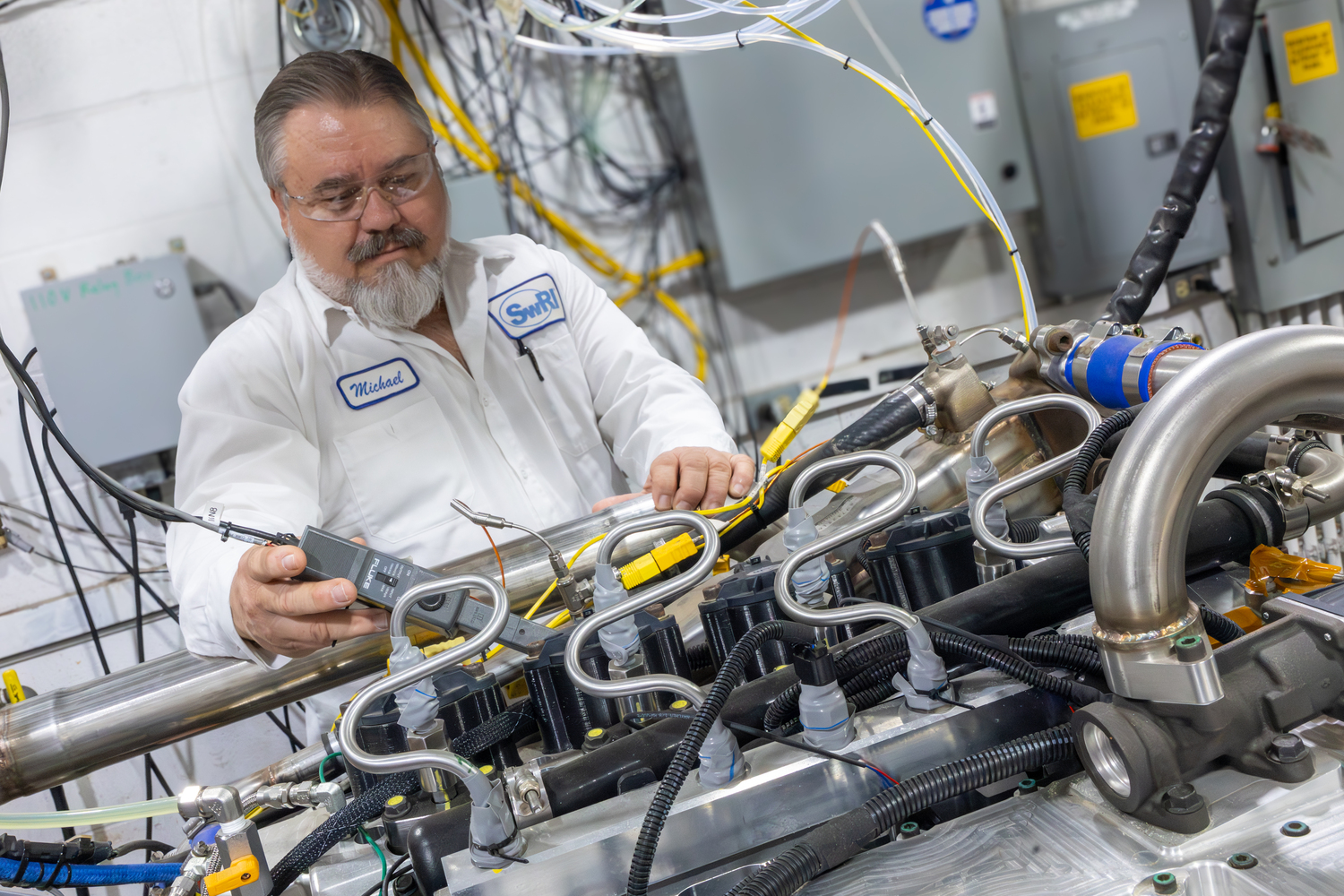
Researchers from the Southwest Research Institute (SwRI) have successfully developed an optimized spark-ignited hydrogen engine suitable for medium-duty commercial vehicles. As a form of internal combustion engine (ICE), the new engine behaves much more like a diesel engine than earlier hydrogen engines. In other words, it is not a new kind of fuel-cell engine, but rather burns hydrogen inside cylinders using spark ignition. Just like a petrol engine, the new ICE produces mechanical propulsion using pistons. “In addition to decades of developing medium- and heavy-duty engines, SwRI has some of the most extensive experience in the world developing and testing H2-ICEs for internal research, clients and industry demonstrations,” said Dr. Qilong Lu, a program manager in SwRI’s Powertrain Systems Engineering Department and one of the leads on this project. “The engine was designed, constructed and rigorously tested at SwRI to ensure efficiency and performance,” Dr. Lu added. “We began at the single-cylinder level, focusing on optimizing combustion and injection strategies,” Lu said. “From there, our team ramped up efforts to develop the full multi-cylinder engine, addressing key challenges such as pre-ignition, combustion stability and overall systems integration,” Lu added. The attraction is that hydrogen contains no carbon, so burning it produces water rather than carbon dioxide. It also allows manufacturers to retain much of the familiar internal-combustion ecosystem: engines, transmissions, manufacturing equipment, servicing knowledge and supply chains. The team also managed to deliver the new hydrogen ICE’s diesel-like torque using a turbocharger that forces more air into the engine. This allows it to burn more hydrogen and produce the strong low-speed torque needed to move loaded trucks. The new engine also has improved airflow thanks to an innovative intake-port geometry allowing hydrogen to burn much faster than petrol and requiring different air movement inside the cylinder. The engine also features larger intake valves and hydrogen-specific injectors to enable optimum fuel-to-air mixing within the cylinders. It also uses special software and calibrations to precisely manage injection, ignition, boost pressure and the air–fuel mixture. Another wrinkle they had to overcome is safety. Hot engine surfaces or residual gases can ignite hydrogen before the spark fires, producing knocking, power loss or potentially engine damage. Low-emissions but not zero In terms of emissions, the engine produces what the team describes as “near-zero tailpipe CO₂.” While this is true in terms of the engine itself, the way in which the fuel hydrogen is produced matters here. If produced from natural gas, rather than renewable electricity, CO₂ could remain high, all things considered. Also, hydrogen combustion can still produce nitrogen oxides, or NOx, because combustion heats nitrogen and oxygen from the air to very high temperatures. It therefore isn’t literally a zero-emission engine and may require careful combustion control and exhaust after-treatment. “The project brought together many areas and experts at the Institute to complete,” said Chris Bitsis, assistant director of SwRI’s Powertrain Systems Engineering Department, who oversees combustion research programs. “SwRI’s hydrogen combustion engine program is working every day to advance this technology and showcase its potential as a near-zero carbon emissions industry solution,” he added.Recommended ArticlesGet the latest in engineering, tech, space & science - delivered daily to your inbox.Christopher graduated from Cardiff University in 2004 with a Masters Degree in Geology. Since then, he has worked exclusively within the Built Environment, Occupational Health and Safety and Environmental Consultancy industries. He is a qualified and accredited Energy Consultant, Green Deal Assessor and Practitioner member of IEMA. Chris’s main interests range from Science and Engineering, Military and Ancient History to Politics and Philosophy.
New hydrogen engine achieves diesel-level performance for medium-duty vehicles
Full Article
Original Source
Read the full article at Interestingengineering →KhanList aggregates and links to publicly available news content. We do not host full articles from third-party sources. Always verify important information with original sources.