
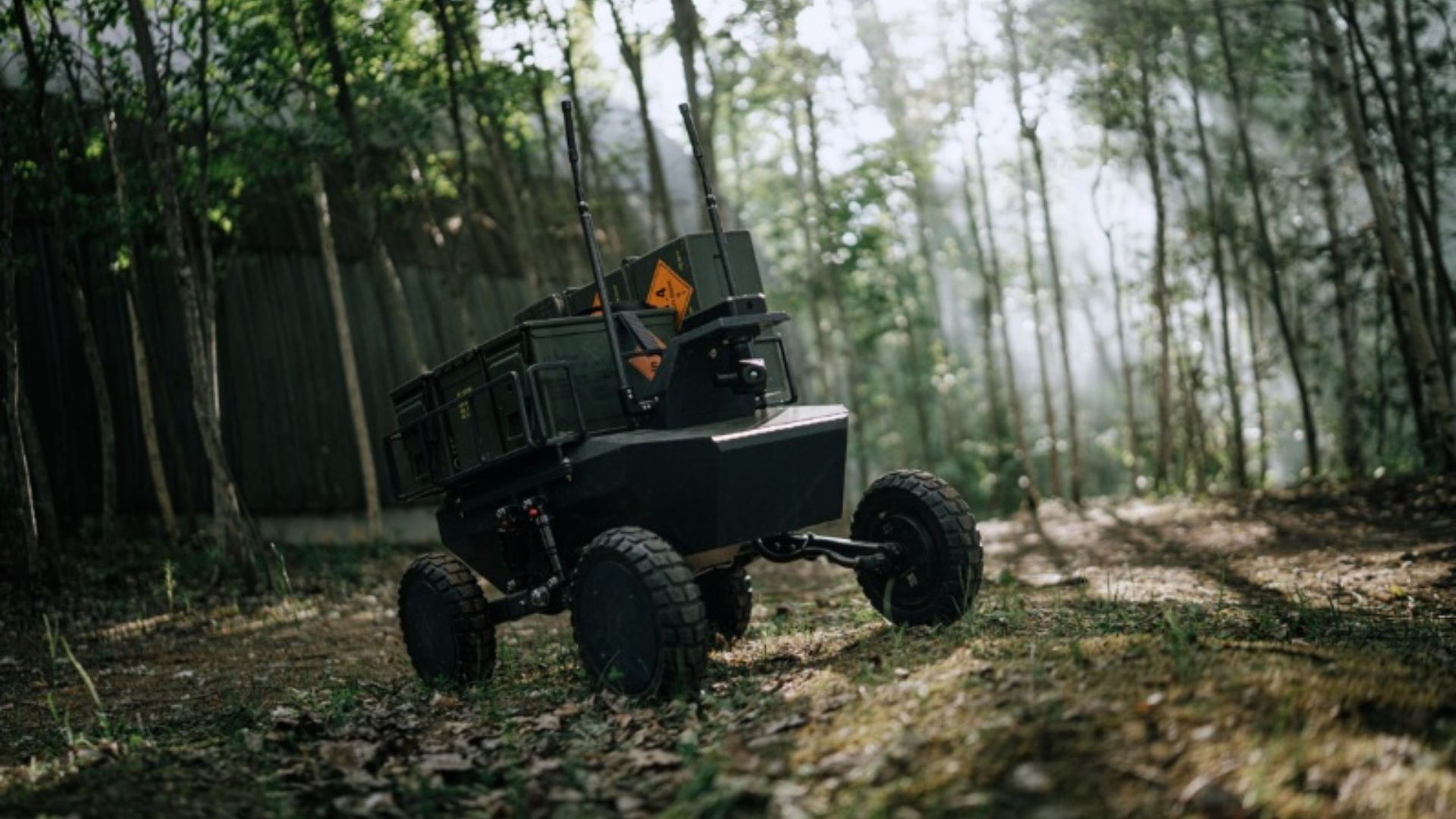
Robots are increasingly being used to help people carry out tasks in places that may be dangerous, difficult, or time-consuming to reach. Israeli physical AI firm XTEND has now expanded its robotics business from flying systems to ground-based machines with the first delivery of its AtlasROVER robot to a customer in the Asia-Pacific region. The AtlasROVER is the first robot from Atlas to use XTEND’s XOS operating software. XOS is designed to work with different types of robots and give them shared tools, including AI features, task-specific applications, and controls for human operators. XTEND says the move is part of a larger plan to create one software system for robots that operate in the air, on the ground, and eventually at sea. XOS meets AtlasROVER XTEND has expanded its XOS robotics operating system from aerial platforms into ground-based systems with the deployment of an AtlasROVER robot to a customer in the Asia-Pacific region. The deployment is the first XOS-powered AtlasROVER system XTEND has delivered since acquiring Latvia-based robotics company Atlas earlier this year. It also shows XTEND’s broader effort to use XOS as a common software layer across different types of robotic platforms. AtlasROVER is designed to operate in challenging environments and can carry different mission-specific payloads, according to XTEND. The company has not disclosed the identity or location of the customer, the number of robots delivered, or the specific mission covered by the contract. The deployment therefore offers limited information about the operational role of the platform, but highlights XTEND’s efforts to bring its software architecture beyond drones and into ground robotics. At the center of the integration is XOS, which XTEND describes as a hardware-agnostic operating system for physical AI and human-guided autonomy. Rather than developing separate software environments for each robotic platform, the system is intended to provide a common framework for AI capabilities, mission applications, and operator workflows. According to XTEND, it allows different robotic systems to operate through a shared software architecture while retaining their platform-specific hardware and capabilities. XTEND unifies robotics The integration of AtlasROVER gives XTEND a ground platform that can operate within the same broader XOS ecosystem as its aerial robotic systems. The approach could let operators use familiar interfaces and mission tools across different machine types, rather than learning separate control systems for every platform. XTEND says the architecture is intended to support cooperation between different robotic platforms while keeping humans involved in important operational decisions. The Atlas acquisition has expanded the range of ground robotics available to XTEND and provides the company with additional engineering and manufacturing capabilities in Europe. Following the acquisition, XTEND began integrating Atlas’ technology and deployed systems into its wider robotics portfolio. The AtlasROVER integration represents one of the first visible steps in applying XOS to this newly expanded ground-robotics portfolio. Building a common interface for autonomous systems For XTEND, the significance of the AtlasROVER deployment extends beyond the individual vehicle. The company is positioning XOS as a software foundation that can connect robots operating in different environments. While the system was initially developed around aerial robotics, extending it to ground platforms could help XTEND create a more unified ecosystem in which operators can manage different robotic assets through common tools and workflows. “Our goal is not to build isolated robotic products, but to create a common software layer that can extend across air, ground, and ultimately maritime systems,” said Aviv Shapira, CEO and co-founder of XTEND, in a statement. Such an expansion would make the software platform increasingly independent of any particular robotic form factor, with the underlying operating environment providing a common interface for human-guided autonomy. XTEND says it has deployed more than 12,500 systems across over 30 countries, including five active combat zones. The company employs nearly 300 people, with more than half based in Israel. It also operates manufacturing facilities in the UK, Singapore, and Latvia, in addition to its production site in Tampa. Get the latest in engineering, tech, space & science - delivered daily to your inbox.Jijo is an automotive and business journalist based in India. Armed with a BA in History (Honors) from St. Stephen's College, Delhi University, and a PG diploma in Journalism from the Indian Institute of Mass Communication, Delhi, he has worked for news agencies, national newspapers, and automotive magazines. In his spare time, he likes to go off-roading, engage in political discourse, travel, and teach languages.
New ground robot joins software platform that also powers aerial drones
Full Article
Original Source
Read the full article at Interestingengineering →KhanList aggregates and links to publicly available news content. We do not host full articles from third-party sources. Always verify important information with original sources.