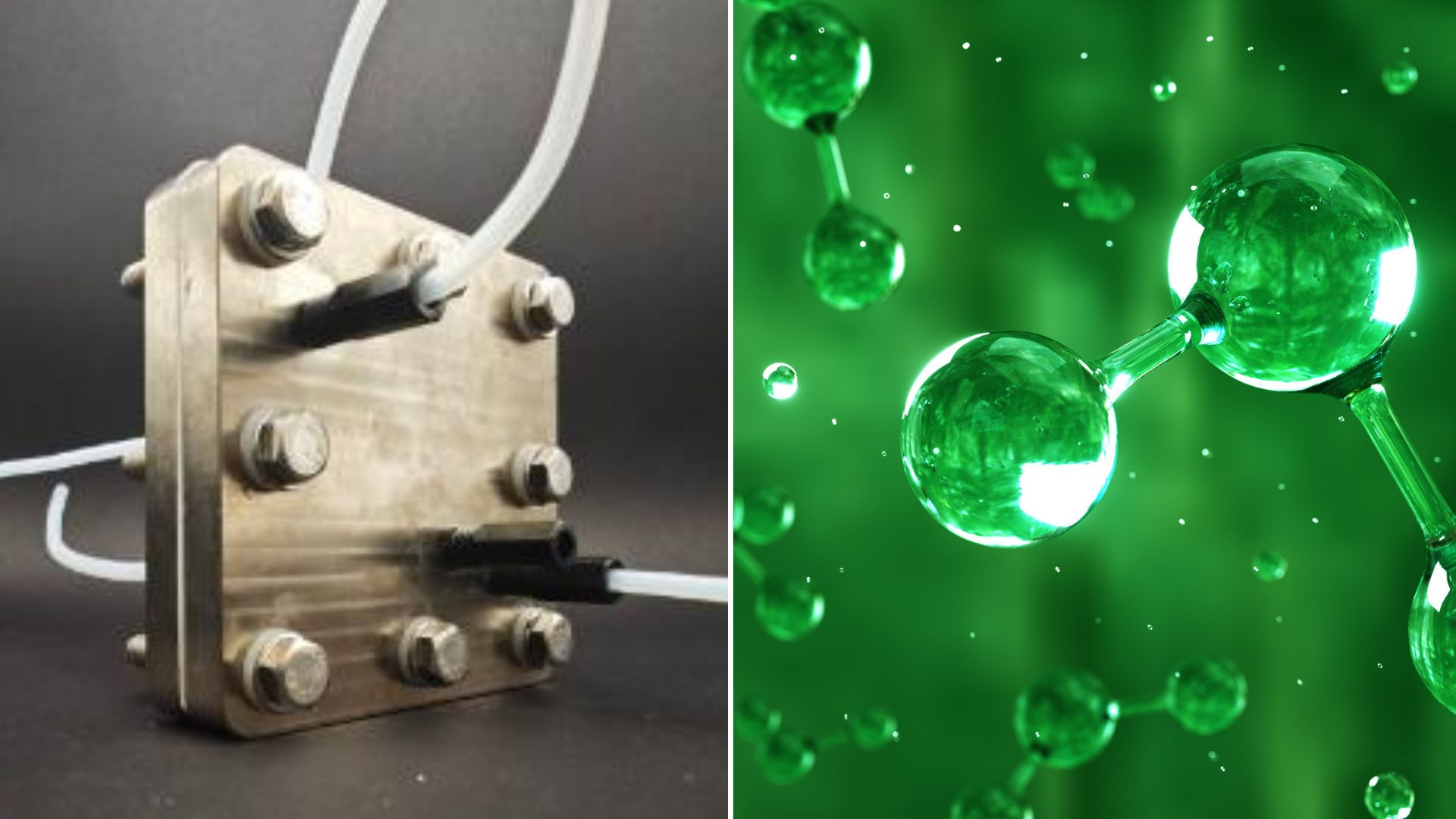
Scientists at Keele University in the UK have pulled off a double victory for green chemistry. A new electrolyzer transforms food waste into two high-value products at once: green hydrogen and raw materials for sustainable plastics. In testing, the electrolyzer achieves industrially relevant reaction rates. If applied on a larger scale, the development could be really helpful. Food waste accounts for roughly 8 to 10 percent of global greenhouse gas emissions, and typical plastic production generates hundreds of millions of tons of carbon dioxide and microplastic pollution annually. Not a standard electrolyzer, it eliminates membranes Standard electrolyzers run electricity through water to split it into hydrogen and oxygen. Oxygen gas is released into the air while hydrogen is trapped for energy. But there is a costly catch. As mixing hydrogen and oxygen creates an explosive hazard, conventional systems use expensive internal membranes to keep the two gases separate. Those membranes break down easily and demand immense amounts of electrical power to force the reaction through. The Keele team overcame this problem entirely. Introducing “biomass-derived molecules” extracted from food waste into the system allowed researchers Dr. Charlie Creissen and PhD student Lewis Cousins to change the chemical reaction at its core. The device stops generating oxygen altogether. No oxygen means no dangerous gas mixing, which allowed the team to throw out the costly membrane altogether. Without that membrane barrier, energy requirements plunged. “This research is a significant step towards fossil-free plastic production using renewable electricity,” said Creissen, lead author. “These membrane-free configurations can operate with lower costs and added value, enhancing access to green hydrogen and sustainable building blocks for everyday products,” Creissen added. The altered chemical reaction also lowers the cell operating voltage to under 1.5 V at high current densities (500 mA cm–2). Decarbonizing heavy industries Green hydrogen currently accounts for less than one percent of total global hydrogen production due to high energy demands and expensive membrane materials (often relying on rare metals like iridium and platinum). Removing the membrane could lower capital expenditure and operational expenditure. Hydrogen is a vital clean energy carrier because it can decarbonize heavy industries, such as steel, cement, and long-haul shipping. These industries cannot easily run on electricity or heavy lithium-ion batteries. Plus, it is capable of storing excess solar and wind power for months. Hydrogen storage has the potential to stabilize power grids and replace fossil fuels across global manufacturing and chemical production. And in the plastic industry, it could make a huge difference. Replacing crude oil derivatives with food waste biomass solves two major environmental challenges simultaneously. This approach reduces landfill waste from agricultural food waste while curbing global pollution and carbon emissions linked to petrochemical-based plastic production. Better yet, the system works fast. The new setup achieved reactions at commercial speeds while drawing far less power from the grid. For co-author Cousins, the development shows that smart hardware design can unlock huge efficiency gains. “Our design effectively demonstrates that electrolyzer configuration is key to improving performance,” Cousins noted. “We hope that our development inspires new research in sustainable engineering. Keele’s team may have cleared a path for cheaper zero-emission fuel and fossil-free everyday products simply by changing how the chemical process works. The findings were published in the journal ACS Electrochemistry. Recommended ArticlesGet the latest in engineering, tech, space & science - delivered daily to your inbox.Mrigakshi is a science journalist who enjoys writing about space exploration, biology, and technological innovations. Her work has been featured in well-known publications including Nature India, Supercluster, The Weather Channel and Astronomy magazine. If you have pitches in mind, please do not hesitate to email her.
New food waste electrolyzer makes green hydrogen and bioplastic base materials
Full Article
Original Source
Read the full article at Interestingengineering →KhanList aggregates and links to publicly available news content. We do not host full articles from third-party sources. Always verify important information with original sources.