
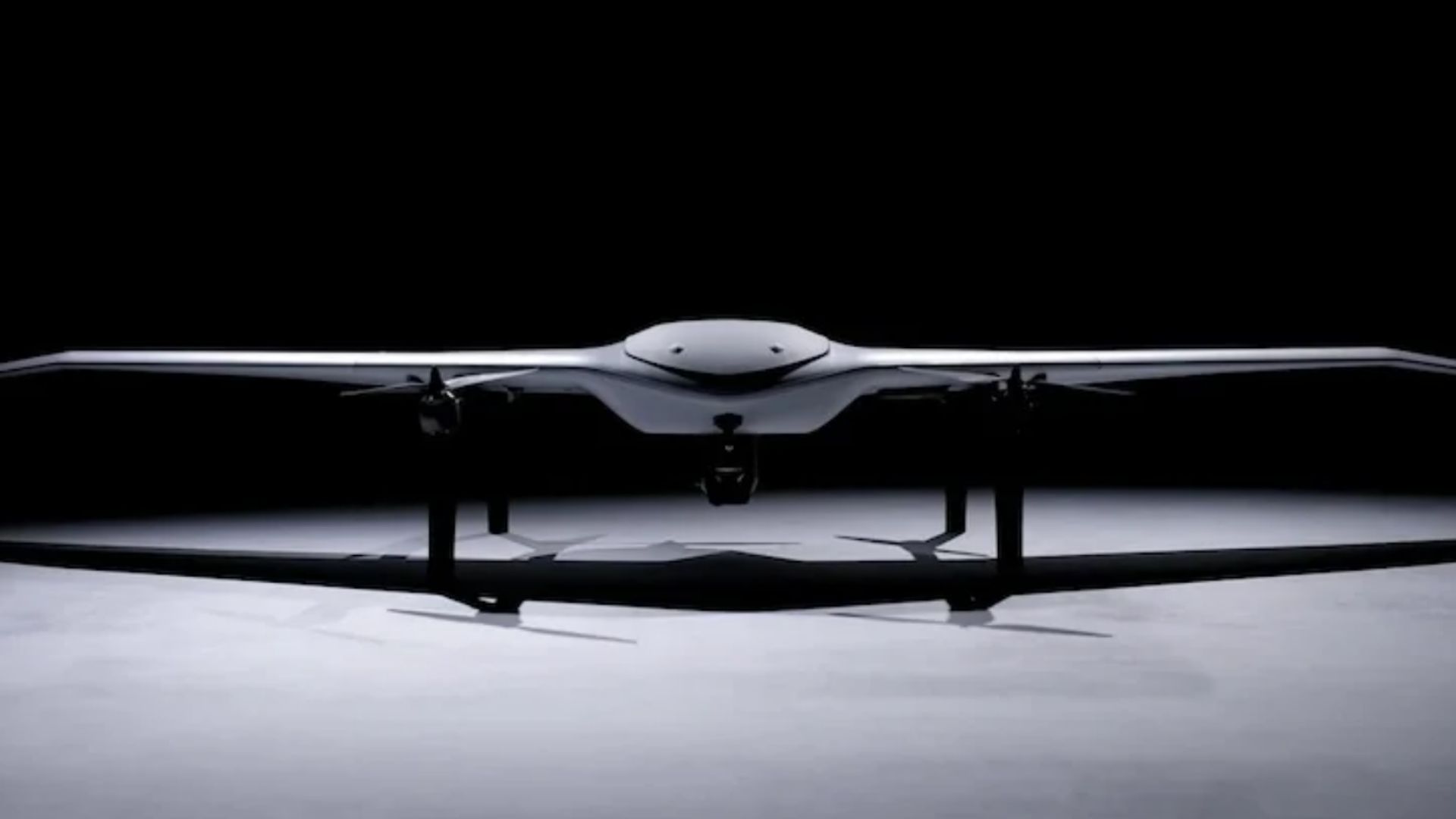
A surveillance drone can stay over an area only as long as its batteries allow. DeltaQuad says its new Evo-LE can remain airborne for up to eight hours, giving operators more time to observe remote locations before replacing the aircraft. The Netherlands-based company has launched the electric fixed-wing VTOL drone for intelligence, surveillance, target acquisition, and reconnaissance missions, as well as border security and communications relay. It lists a maximum range of 298 miles (480 km), although both range and flight time depend on the payload and operating conditions. The aircraft is available to order. More time over an area of interest Evo-LE expands DeltaQuad’s existing Evo line with an emphasis on endurance. The company says it developed the aircraft using feedback from frontline operators and lessons gathered over thousands of operational flight hours. “Endurance changes what is possible in a mission,” said Ross Jackson, Chief Commercial Officer at DeltaQuad. “More flight time over an area of interest provides operators with greater continuity in the information they receive and reduces the need to rotate systems during a mission,” he continued. That continuity could matter during surveillance of a border or other large area, where changing aircraft may interrupt the flow of information. Longer flights may also allow an operator to cover an area with fewer launches and recoveries. DeltaQuad has not specified how long Evo-LE can remain airborne with each available payload. Electric VTOL for confined launch sites The drone takes off and lands vertically before flying on its fixed wings. This allows teams to deploy it from confined positions without a runway, while using the winged configuration for longer flights. DeltaQuad lists a radio range of up to 75 miles (120 km), a maximum takeoff weight of 29 pounds (13 kg), and a payload capacity of 3.3 pounds (1.5 kg). Its automatic landing gear system gives onboard sensors an unobstructed 360-degree field of view during flight. For more complex operating environments, Evo-LE can be configured with anti-jamming equipment, secure communications and autonomous navigation. Those are available configurations; the company has not said that every aircraft will carry them. Changes beyond the batteries To extend flight time, DeltaQuad combined higher-energy-density battery technology with a dual-battery setup. It also redesigned the electrical architecture and upgraded the VTOL drivetrain. “Achieving this level of endurance required changes across the platform, not simply increasing battery capacity,” said Mark van Schie, Head of Product at DeltaQuad. “The redesign combines higher-energy-density battery technology with a dual-battery configuration, a redesigned electrical architecture and an upgraded VTOL drivetrain,” he added. The aircraft uses DeltaQuad’s Block 3 airframe, which it shares with the existing Evo model. According to the company, revised composite materials make the structure more rugged, while improved water-ingress protection supports operation in rain. Evo-LE’s headline figures describe what the platform can achieve under suitable conditions. For operators weighing it for a specific mission, the flight time available with their chosen sensors and communications equipment will be the more useful measure.Get the latest in engineering, tech, space & science - delivered daily to your inbox.Atharva is a full-time content writer with a post-graduate degree in media & amp; entertainment and a graduate degree in electronics & telecommunications. He has written in the sports and technology domains respectively. In his leisure time, Atharva loves learning about digital marketing and watching soccer matches. His main goal behind joining Interesting Engineering is to learn more about how the recent technological advancements are helping human beings on both societal and individual levels in their daily lives.
New electric drone can fly for 8 hours and cover up to 298 miles in one flight
Full Article
Original Source
Read the full article at Interestingengineering →KhanList aggregates and links to publicly available news content. We do not host full articles from third-party sources. Always verify important information with original sources.