
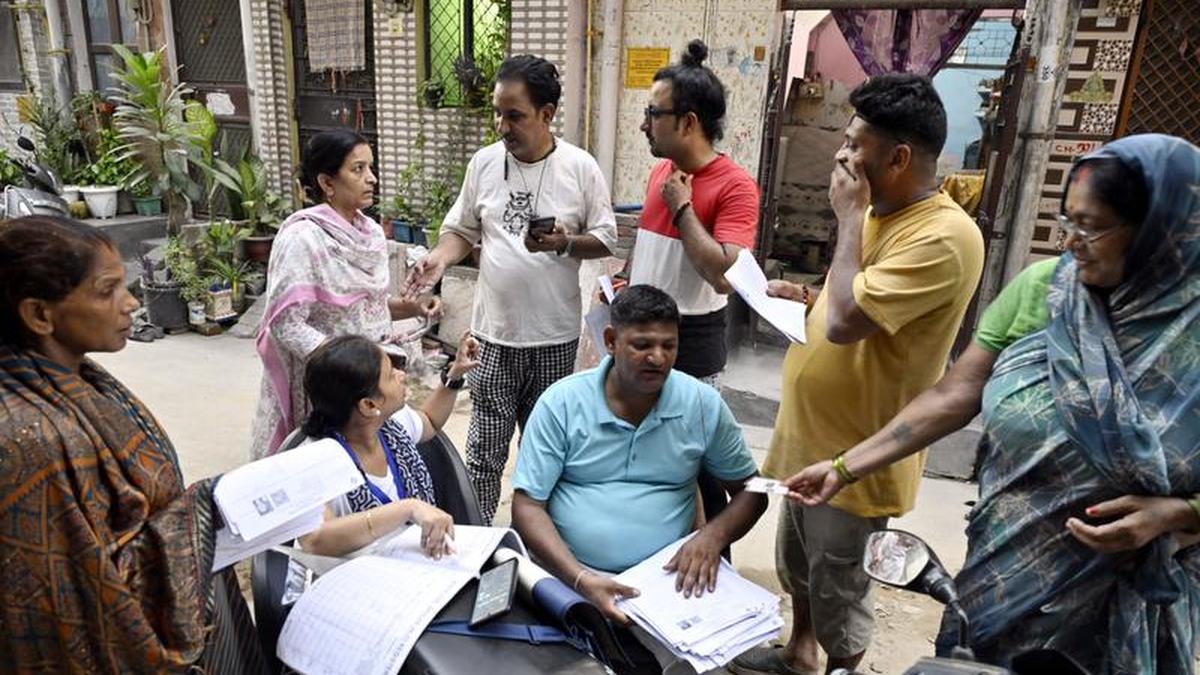
The disposal of notices issued to electors during Delhi’s special intensive revision (SIR) of electoral rolls has surged in the past week, with more than 15 lakh of the 33.1 lakh cases now disposed of, including over two lakh in a single day, according to official data shared on Thursday.The rise in disposal of notices follows the introduction of new options on the Election Commission of India’s (ECI) ECINET portal and fresh directions from the Delhi Chief Electoral Officer’s (CEO) office to speed up the process.The Hindu had reported on October 2 that the new options on the portal allow Electoral Registration Officers (EROs) in Delhi to mark an elector as eligible without requiring documents or a hearing while disposing of a notice, by uploading a “hearing order”.On September 26, nearly a month after the notices were generated on August 31, fewer than one lakh cases had been disposed of. However, the first progress report put out by the Delhi CEO on October 5 showed that more than 10 lakh cases have been verified. The total disposal of cases has since crossed 15 lakh.All 33.1 lakh electors who were served notices are part of the draft electoral roll. This means they had duly submitted their filled enumeration forms during the enumeration phase. Of these, 19.1 lakh cases pertain to what are termed “logical discrepancies”. These are not cases of non-mapping or missing linkage, but of electors who had successfully mapped themselves to the previous SIR roll. Despite this self-mapping, the system flagged inconsistencies in their details when matched against the 2002 base roll — such as mismatches in name, age, parentage or other demographic particulars — triggering notices for further verification.The ECI had said in a release on September 26 that electors issued notices would not be called for hearings and Booth Level Officers (BLOs) would collect documents from their homes, except in special cases decided by EROs, who exercise final authority over preparation of the roll and decide on all claims and objections.“Since BLOs are now going door to door to collect documents, they have been asked to target at least 10 cases a day and collect documents that are available,” a poll official said.‘Following written orders’However, several EROs remain divided over the question of documents and are wary of using the new options on the portal that allow them to clear notices without documents or a hearing, merely based on their own satisfaction about the elector’s eligibility.Some of them told The Hindu that the written instructions available to them require documentary proof to establish an elector’s eligibility and they continue to insist on prescribed documents before deciding on an elector’s inclusion.“We have not received any written instructions about the new options that allow no documents to be collected. Even if I upload a hearing order, that has to be based on some document, right? So, we are sticking to the prescribed list of 12 documents,” an ERO from south-east Delhi said on condition of anonymity.The ECI’s prescribed list of 12 documents does not include bank passbooks, PAN and Aadhaar cards. However, where electors have only such documents, BLOs have been uploading them along with their own undertaking based on field verification.“Even though the option is there now, EROs will have to justify their decision in the hearing order based on some document. They cannot simply clear cases,” another official said.Some EROs, however, said the absence of written instructions should not prevent officials from using the new options as the law gives them statutory powers.“Since the option has been made available, I will use it as needed. Logical discrepancy cases are those identified by the system and do not have to do with eligibility. The ERO has the statutory power to decide on this and mark a person eligible. This option enables us to use that power,” an ERO from north Delhi said.Based on field reportsAsked what the hearing order in such cases would be based on, he said the field report of the BLO would be sufficient. “It will help in clearing cases of marginalised or less documented voters who are genuine,” the officer said.The impact is particularly visible in the New Delhi constituency, where all cases have been cleared. Of the 52,368 electors on the draft roll, 20,777 had received notices for non-mapping or logical discrepancies.ERO Piyush Mohanty said documents had already been collected in 17,392 cases, including many during the enumeration phase itself.“For the remaining 3,385 electors, we used the new options and cleared the notices without documents. I uploaded the hearing order based on the field reports of the BLOs. They had already gone door to door during the enumeration phase. The new options helped in disposing of cases much faster,” Mr. Mohanty said.
New ECINET options speed up disposal of SIR notices, but several EROs divided on clearing cases without documents
Full Article
Original Source
Read the full article at Thehindu →KhanList aggregates and links to publicly available news content. We do not host full articles from third-party sources. Always verify important information with original sources.