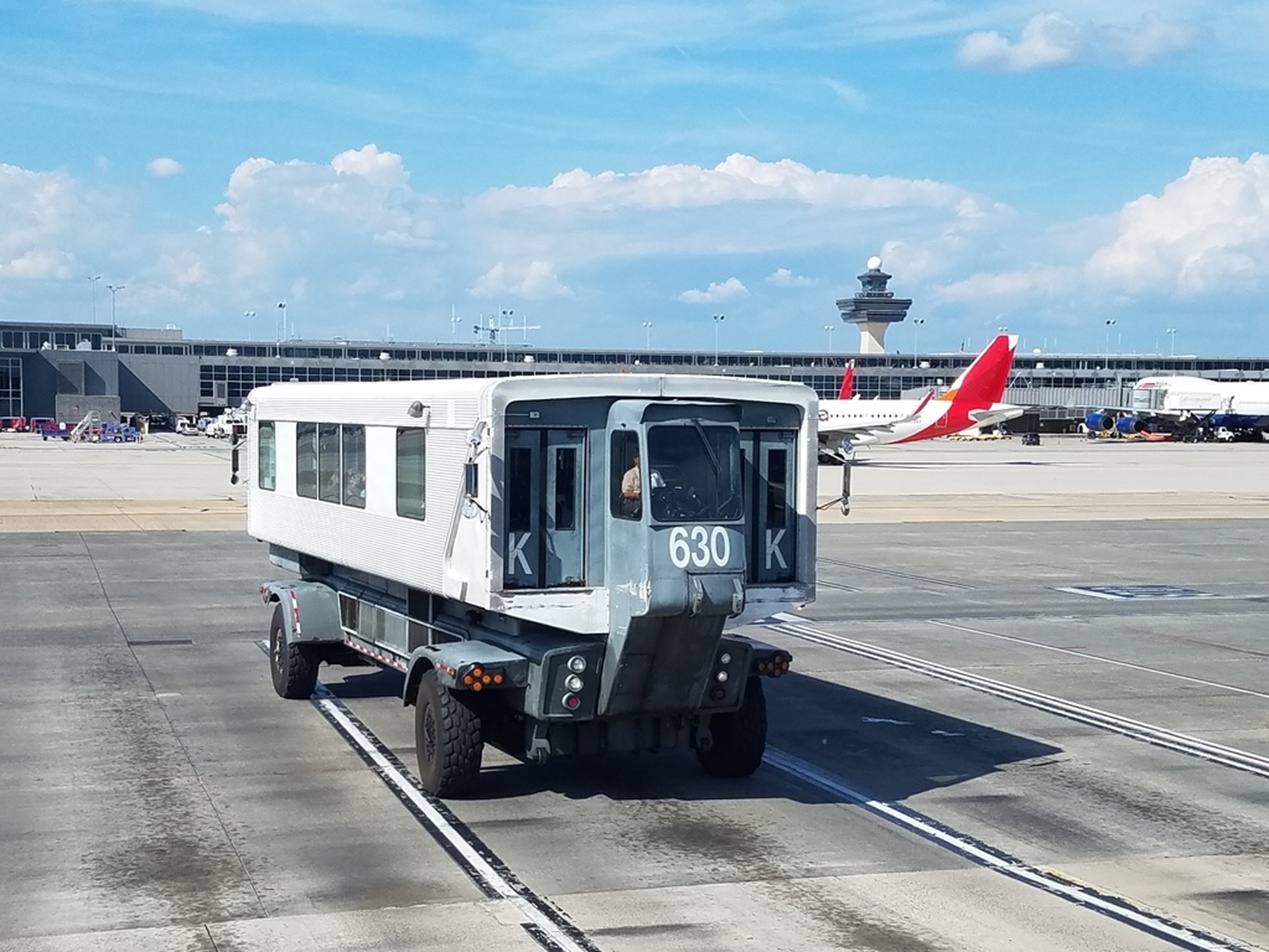
The Metropolitan Washington Airports Authority will vote Wednesday on $15.5 billion for the Dulles rebuild, 99% financed with debt and pushing major work into at least 2039, while driving airline costs per passenger from $12.77 toward $90 which will undercut growth, competition and low fares. The board packet proposes adding $15.5 billion to the 2026 capital construction budget for “Revitalizing Washington Dulles International Airport” on top of $4.41 billion already authorized, for a total of $19.91 billion. Required airline approval was provided July 2. This is the first real look at what is actually being authorized, when the pieces will happen, and how the airport proposes to pay for them. It is not the same as what the President announced on July 29. What They’re Actually Planning To Build The packet divides the program into five packages. Component Cost Timing Main terminal renovation and 300-foot expansions, a new passenger processor and connector, A/B renovation and expansion, baggage facilities $6.20 billion Starts Q4 2027 AeroTrain extension from A/B to G/H plus passenger and baggage ‘center spine’ tunnels $3.75 billion Starts Q1 2029 Full E/F concourses and new south central utility plant $4.00 billion Portions underway, later phase starts Q3 2027 Full G/H concourses $3.70 billion East half Q1 2028; west half Q3 2039 Demolition of C/D and a future 33 gate regional concourse $2.26 billion Demolition Q1 2031; replacement starts Q3 2039 A/B and new main terminal gates are labeled for all-airline international use. E/F is for United domestic and international. G/H is for all other airline domestic service. The future 33-gate regional concourse is labeled for United regional operations. This Doesn’t Do Everything The President Announced At the July announcement, the project was presented as a $22.5 billion transformation of more than five million square feet, beginning in spring 2027 and remaking the airport over roughly the next decade. The event emphasized an enormous (‘world’s largest’) close-in garage with 32,000 spaces, glass bridges, a hotel, new security and Customs facilities, lounges and concessions, more gates and “hundreds” of additional flights. The packet is much less sweeping. Presidential announcement MWAA board packet Cost $22.5 billion $19.91 billion for some pieces of what was announced Timing Spring 2027 start; transformation over a decade Major G/H work and the replacement regional concourse do not begin for 13 years, completion in the 2040s Scope More than five million square feet, 32,000-space garage, hotel, bridges, Customs and security, lounges and concessions, hundreds of flights No garage or hotel line, no specified net gate gain, passenger capacity or added flights The $19.91 billion packet total is not a cost reduction. The public $22.5 billion figure combined the full previously approved $7 billion capital program with $15.5 billion of new authority. These five packages carry over only $4.41 billion of that earlier program. Other previously approved Dulles projects — roads, parking, airfield and related work — remain outside this packet. So this packet spends the entire net amount that was announced, but does less and takes longer. construction on the western half of G/H and the 33-gate C/D replacement does not even start until the third quarter of 2039. There are no completion dates. So instead of finishing in 10 years, finishes in the 2040s. the new garage and hotel don’t appear to be included here. the announcement said no federal funding would be required. The packet includes $150 million in grants without identifying the source. That’s rounding in the context of the total project. This Is More Debt Than Makes Any Plausible Sense Of the $15.5 billion being approved in a long-term plan, $14.223 billion comes from new airport revenue bonds. Another $1.127 billion is financed with bonds backed by passenger fees paid with tickets. $15.35 billion or 99% is debt-financed. This was framed as “the airlines pay” in last month’s announcement. That means the airport borrows the money and charges fees over several decades. And those fees could spread to Washington National airport, as well, since the bonds are senior claims on the net revenues of both Dulles and National. United approved it, but he could be sticking American Airlines with a good piece of the bill. Both airports stand behind the debt. MWAA financing assumptions have the $1.127 billion passenger fee-backed debt requiring $83 million of annual debt service. Dulles collected only about $55 million of these fees last year total, and $59.8 million had been budgeted in 2026 for existing debt. Passenger fees are legally capped ($4.50). There’s not enough passenger growth plausible to fund this. It wouldn’t literally require 150% more passengers than last year, since some of the existing debt would roll out as new debt is added. Using MWAA’s financing assumption of 6.09% fixed debt amortized over 30 years, the $15.35 billion of new bonds produce $935 million of first-year interest and $1.13 billion of annual principal and interest once fully issued. Over 30 years, interest alone totals about $18.4 billion. That $935 million interest bill is larger than the airport authority’s entire $889 million 2026 operating budget for both Dulles and National airports combined. Dulles Could Go From $13 To $90 Per Passenger Dulles’ 2026 airline cost per enplanement is $12.77. That is the average airport cost allocated to an airline each time a passenger boards at Dulles, and it’s an important cost airlines use when deciding where to add aircraft and routes to an airport. At today’s traffic levels the new general revenue debt produces $62 – $90 per enplanement, and it won’t be at the low end of that. The full cost (upper end) gets offset assuming the airport can generate more non-airline revenue, such as from concessions. But higher costs limit future flights and limit passenger growth which also limits airport concessions revenue. Dulles had 14.5 million passengers in 2025. There’s an argument they could break even on their current cost per passenger at 56 million passengers. The airport needs many more passengers to dilute the debt. But higher costs make airlines less likely to add the flights that would bring those passengers. Slower growth then leaves fewer enplanements across which to spread the same fixed bill Cost per passenger goes higher Which makes more flights uneconomic. At $90 per enplanement, a 186-seat Airbus departing 90% full carries about $15,000 of airport cost, versus roughly $2,100 today. That’s $4.7 million of additional annual airport cost for a single daily flight. While this limit’s United’s ability to profitably add flights, it also serves to protect United from competition. And Dulles already has little low-cost-carrier competition. United and its regional affiliates carried roughly two-thirds of the airport’s 2025 passengers. Frontier, Southwest, Breeze and Sun Country together accounted for only about 3% — and Southwest has since left Dulles. Smaller (non-signatory) airlines at the airport also pay 15% more than United. The project may create more gates for competitors, but it makes that space too expensive for them to use and pushes them out to BWI. What Does Nearly $20 Billion Actually Buy? The master plan says Dulles airport has enough runway capacity through 2045, but not enough gates and passenger processing capacity. The airport has about 130 narrowbody-equivalent gates and says it will need at least 154 by 2045. Security checkpoint space is undersized. Check-in, Customs and international baggage claim face peak-hour constraints before the evening transatlantics. Three outbound baggage systems make transfers and recovery harder. Dulles has no AeroTrain station at Concourse D, and passengers still cross the active airfield in mobile lounges whose oldest vehicles date to 1962. The rebuild would provide better international connections; centralize baggage; extend the train to where the concourse actually is; and create nicer terminals and gates. The airport currently spends $36 million to move passengers between terminals. The $3.75 billion AeroTrain and tunnel package adds about $275 million of annual debt service. So what on earth is the case for this? It’s not a more financially-efficient airport It’s not to generate additional flights ….? The C/D concourse was built in 1985 as a temporary facility. United has been the main tenant and 20 years ago even considered eliminating Washington Dulles as a hub. It wasn’t generating enough revenue. The airport was too expensive. Former United CEO Jeff Smisek described the airport’s finances as a “terrible competitive burden.” Kirby warned that a new concourse could not be allowed to destroy the economics of their operation, noting Pittsburgh’s beautiful terminal which preceded US Airways dropping it as a hub. To entice United to stay, the airport authority moved $295.4 million of Reagan National’s revenue to Dulles between 2015 and 2024. The state of Virginia kicked in an additional $50 million subsidy. The airport authority sold land to lower airline costs at Dulles, too. Dulles needs work but it’s surreal to move to borowing $20 billion for this. (HT: ByERussell) Topics on this page
New Dulles Airport Documents Show $20 Billion Rebuild Delivers Less — While Cost Per Passenger Sextuples, Raising Fares
Full Article
Original Source
Read the full article at Viewfromthewing →KhanList aggregates and links to publicly available news content. We do not host full articles from third-party sources. Always verify important information with original sources.