
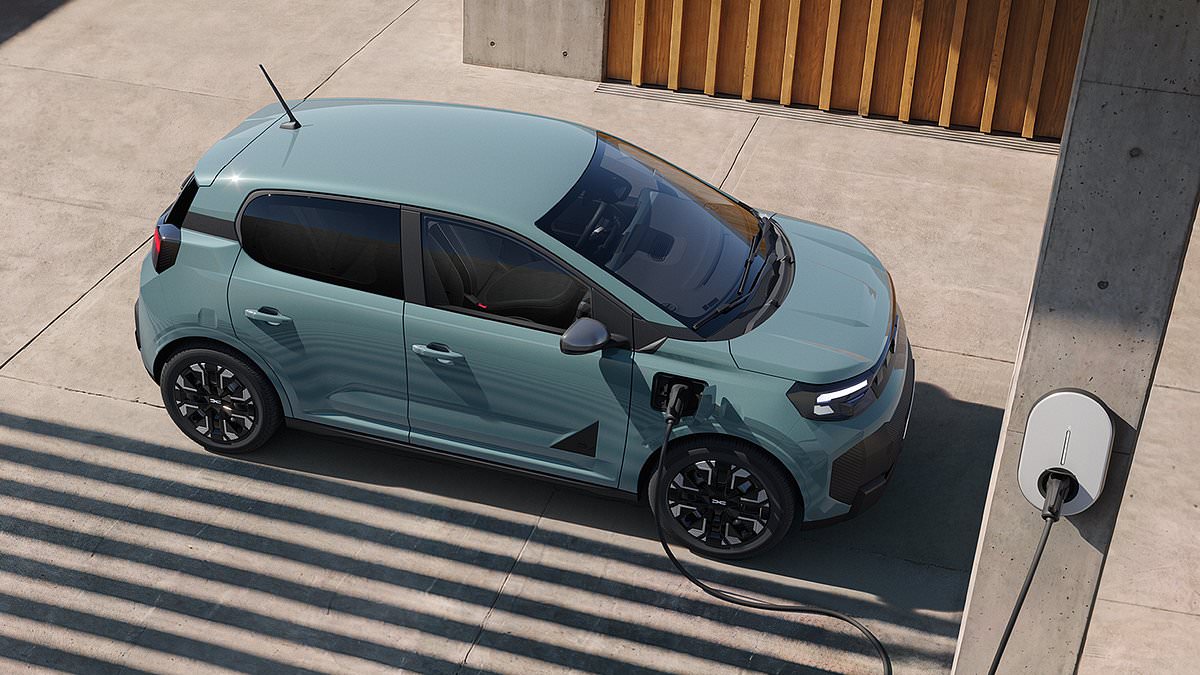
The new Dacia Spring has been completely redesigned inside and out, with buyers promised more cabin space, greater practicality, improved technology and up to 155 miles of range.The compact EV also adopts a chunkier, more rugged exterior design intended to give it stronger showroom appeal.However, motorists hoping the Spring will retain its bargain-basement status could be in for a shock.While the current model is Britain's cheapest car on sale at £11,990, the all-new Spring, which will be built in Slovenia, is expected to start from around £18,000 when it arrives, representing a 50 per cent price increase.That would place it in direct competition with rivals such as the Renault Twingo EV and BYD Dolphin Surf.The revamped Spring forms part of Dacia's wider Electric Mobility 2030 strategy, which will see the brand launch four new all-electric models.Since arriving in 2021, more than 210,000 Spring EVs have been sold across over 40 countries.Now, five years on, here's everything you need to know about the overhauled four-seater EV that's set to arrive soon.Not the cheapest new car anymore: Electric Dacia Spring unveiled with boxier looks and a 50% price hike While the current model (pictured) is Britain's cheapest new car on sale at £11,990, its successor is expected to start from around £18,000Spring gets biggerDacia is owned by Renault Group and will make use of the French manufacturer's latest EV architecture, with the new Spring based on Renault's RG-EV Small platform.The new underpinnings bring significantly different proportions, making the Spring 18cm wider and 15cm longer than before.The result is a car that looks more substantial and robust while offering noticeably more interior space.The Spring will also become the first Dacia model to benefit from Renault's latest development programmes, which have been designed to slash vehicle development times to just two years, helping reduce costs and speed up production. The new Spring is built on the latest Renault architecture. As such, it is 18cm wider and 15cm longer than the first-generation model The larger platform creates a Spring that's more substantial and robust than before while offering noticeably more interior space Many of the design features of the original Spring EV will be carried over, like the panel below the rear window with the Dacia branding across itJoin the discussionIs a big price hike on a budget electric car fair if it offers more space and tech?What's your view?Exterior design overhaulWhile the new Spring remains instantly recognisable, its styling has undergone a major transformation.The second-generation model features a shorter, higher bonnet, more pronounced wheel arches and cleaner, more compact surfacing. A contrasting black strip running between the roof and body adds to the tougher appearance.Large black protective panels integrated into the front and rear bumpers, gloss-black trim elements and a distinctive new light signature help create a far more mature look.The LED lighting uses a 'floating effect' that sees the lower section reflect the upper portion, giving the front and rear lamps a unique appearance. A new 7-inch digital instrument display comes as standard, while a 10.1-inch central touchscreen features wireless Apple CarPlay and Android Auto connectivity The Spring remains the only electric car in its class to offer a frunk, providing an additional 18 litres of storage space that's ideal for charging cables Dacia now claims the Spring has the largest boot of any car in its segment Luggage capacity stands at up to 337 litres. This removable two-piece boot floor allows owners to create separate storage compartments for securing or concealing items Interior and boot space gainsDacia now claims the Spring has the roomiest cabin in its class, along with one of the segment's largest boots.Luggage capacity stands at up to 337 litres, while a removable two-piece boot floor allows owners to create separate storage compartments for securing or concealing items.Fold the rear seats flat and capacity increases to 1,283 litres. The 50:50 split-folding rear bench also improves flexibility when carrying longer loads.The Spring remains the only electric car in its class to offer a frunk, providing an additional 18 litres of storage space that's ideal for charging cables and smaller items.Technology has also received a significant upgrade.A new 7-inch digital instrument display comes as standard, while a 10.1-inch central touchscreen features wireless Apple CarPlay and Android Auto connectivity. Dacia claims a maximum driving range of 155 miles from a full charge. That's 8 miles short of the Renault Twingo Connected to a 7kW home wallbox, charging from 15-80% takes just two hours and 55 minutes. Plug into a 50kW DC rapid charger and the same recharge takes just 28 minutesRange, charging and urban drivabilityPower comes from an 80hp electric motor producing 175Nm of torque.The Spring completes the 0-62mph sprint in 12.1 seconds and has a top speed of 80mph, highlighting its focus on urban and suburban driving.Dacia claims a maximum driving range of 155 miles.According to data collected from existing owners, first-generation Spring drivers cover an average of just 13 miles per day at an average speed of 13mph, meaning most customers would only need to recharge the car once a week.Manoeuvrability remains a key selling point, with a turning circle of just 4.95m helping drivers navigate congested city streets and tight parking spaces.A 6.6kW AC onboard charger is fitted as standard.Using a domestic socket, the battery can be topped up from 15 to 80 per cent in around nine hours, allowing owners to recharge overnight without dedicated home charging equipment.Connected to a 7kW home wallbox, that same charge takes just two hours and 55 minutes.Buyers can also opt for the Charge Pack, which adds 11kW AC charging and 50kW DC rapid-charging capability.Using an 11kW three-phase home charger or a 22kW public charger cuts the 15-to-80 per cent charging time to one hour and 55 minutes.Plug into a 50kW DC rapid charger and the same recharge takes just 28 minutes. Dacia is keeping the line-up straightforward, with just two trim levels available: Expression and Journey Dacia has also gone to considerable lengths to improve sustainability, adopting a lithium iron phosphate battery and moving production to Europe. The Spring is likely to qualify for a £3,750 government grantTrims, pricing and grantsDacia is keeping the line-up straightforward, with just two trim levels available: Expression and Journey.Expression includes a Media Control infotainment system with USB-C connectivity, fabric upholstery, rear parking sensors, an electric handbrake and 15-inch Mura steel wheels.Journey builds on that specification with 16-inch Drava steel wheels with wheel embellishers, hands-free entry, a reversing camera, the Media Nav Live infotainment system, integrated navigation, connected services, additional USB-C ports and TEP/fabric upholstery.As previously mentioned, the new Dacia Spring is expected to cost from around £18,000 before any government incentives are applied.The manufacturer has also gone to considerable lengths to improve sustainability, adopting a lithium iron phosphate battery and moving production to Europe.As a result, the Spring could qualify for either the full £3,750 Electric Car Grant or the lower £1,500 award, depending on the final criteria.If eligible for the maximum subsidy, the new Spring's effective price could fall to as little as £14,250.Even if this is the case, the Leapmotor T03 - starting from £12,995 - will be cheaper. Dacia's petrol Sandero is the least expensive new combustion-engine car, starting from £14,765 currently. Full UK pricing and specification details are expected to be announced soon. CARS & MOTORING: ON TEST
New Dacia Spring EV unveiled with boxier looks... but Britain's cheapest new car is set for a 50% price hike
Full Article
Original Source
Read the full article at Dailymail →KhanList aggregates and links to publicly available news content. We do not host full articles from third-party sources. Always verify important information with original sources.