
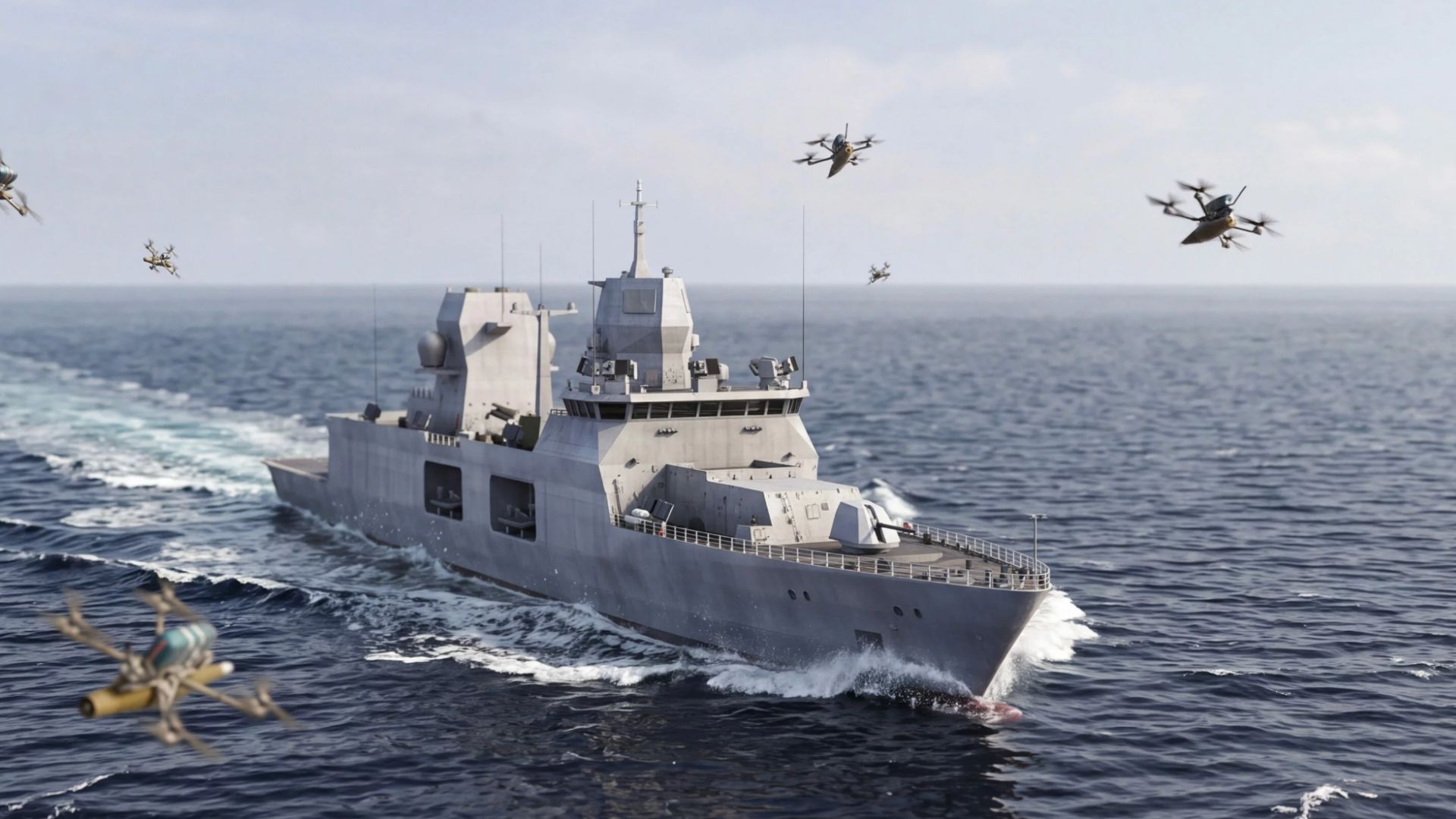
German company Mehler Protection is set to unveil a new ship-mounted counter-drone system at SMM 2026, designed to protect naval vessels from threats that penetrate conventional air defenses. Called SCILT NAVAL, the system targets FPV drones, loitering munitions and other unmanned aircraft operating close to ships. It is intended to provide a last line of defense when crews have little time to respond, particularly near ports, around marine infrastructure and in confined waters. Closing a gap in naval defenses The growing use of inexpensive drones has created a significant challenge for naval forces. Even well-equipped vessels can be threatened by multiple unmanned aircraft approaching simultaneously, especially when the drones fly close to the surface or attack from short distances. Long-range air defense systems can engage aircraft and missiles before they reach a vessel. However, their effectiveness may be limited when targets appear at close range or operate in environments where reaction time and maneuvering space are restricted. SCILT NAVAL was developed to address this gap. It can be deployed during operations near ports, aboard vessels navigating narrow waterways, around floating infrastructure, and during missions involving amphibious forces. The system is also designed for use on different types of vessels, including smaller craft that may not carry extensive air defense equipment. According to Mehler Protection, it can engage individual targets as well as multiple drones during coordinated attacks. Three-stage response to drone attacks SCILT NAVAL combines its detection equipment and effectors in one onboard system. Its sensors identify approaching aircraft and provide information that helps operators assess and respond to potential threats. The system divides its response into three stages: detection, warning, and engagement. It uses commercially available shotgun calibers to strike drones at close range, with different ammunition types available for different operational requirements. Possible options include ammunition designed for varied levels of impact, including armor-piercing configurations. Compared with earlier versions of the technology, the naval system offers greater range and an automatic reloading capability. Human operators will remain responsible for engagement decisions in the initial configuration. Mehler Protection said greater automation could be introduced as relevant regulations, certifications and operational procedures develop. SCILT NAVAL can also be connected to a ship’s existing command-and-control infrastructure. If integration is not possible, it can operate independently using its own sensors and response components. Control units can be installed at several locations aboard a vessel, allowing crew members to monitor threats and access the system without relying on a single operating station. System undergoes 48 maritime tests Mehler Protection developed the naval defense system over 18 months and subjected it to 48 tests before its planned unveiling. The testing program assessed factors including information transmission, ammunition behavior, and the system’s ability to withstand operational conditions at sea. Engineers also examined its performance when exposed to saltwater, vibrations, and other stresses encountered aboard naval vessels. Further trials evaluated the effectors and helped establish the appropriate engagement range for different targets. The findings were then used to refine the system’s configuration. SCILT NAVAL expands Mehler Protection’s portfolio of protective systems for land, air, and maritime applications.Get the latest in engineering, tech, space & science - delivered daily to your inbox.Atharva is a full-time content writer with a post-graduate degree in media & amp; entertainment and a graduate degree in electronics & telecommunications. He has written in the sports and technology domains respectively. In his leisure time, Atharva loves learning about digital marketing and watching soccer matches. His main goal behind joining Interesting Engineering is to learn more about how the recent technological advancements are helping human beings on both societal and individual levels in their daily lives.
New counter-drone system passes 48 tests to protect ships from close attacks
Full Article
Original Source
Read the full article at Interestingengineering →KhanList aggregates and links to publicly available news content. We do not host full articles from third-party sources. Always verify important information with original sources.