
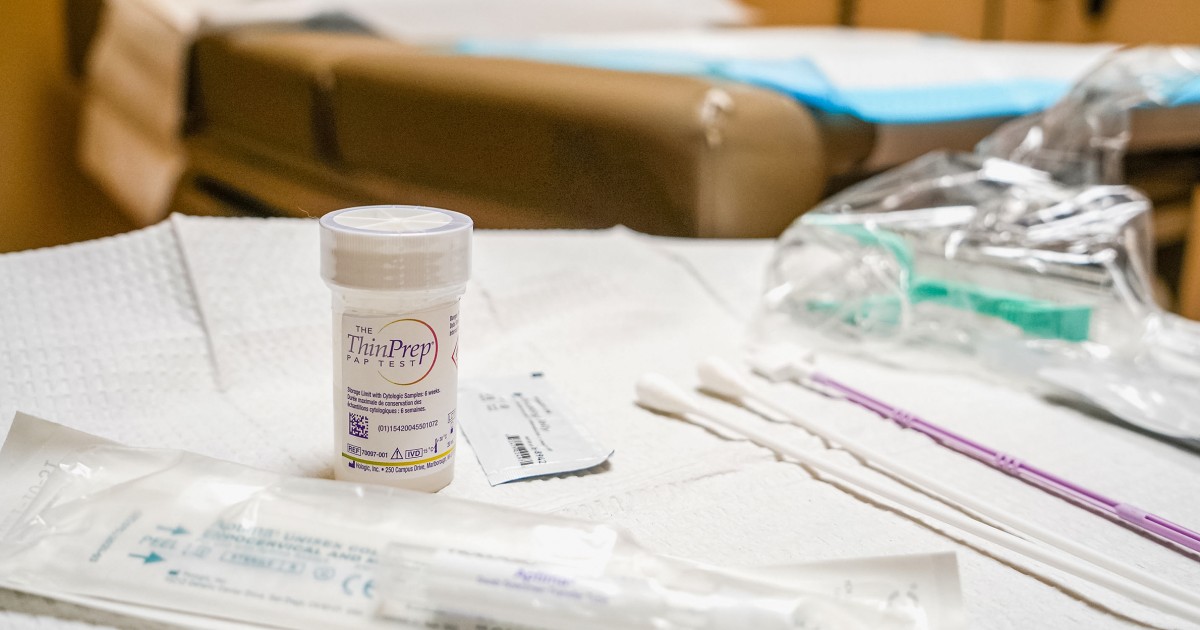
For the first time, federal gudiance is poised to steer women ages 30 to 65 toward an HPV test rather than the traditional Pap smear. Women can also opt for a self-administered HPV test, a major change from the U.S. Preventive Services Task Force that could affect how millions of women are screened for cervical cancer.Cervical cancer is one of the most preventable cancers, although recent research suggests that the United States is backsliding in efforts to detect the disease early. Human papillomavirus, the virus behind virtually all cervical cancers, is the most common sexually transmitted infection. The recommendation, which isn’t yet final, came Friday when panel members voted behind closed doors at the conclusion of a two-day meeting, according to a person familiar with the vote. The person asked to speak on the condition of anonymity because they were not authorized to speak publicly.The recommendation from the task force — an outside group made up mostly of primary care physicians — carries real weight. Under the Affordable Care Act, most private insurers generally have to cover services the panel recommends at no cost to patients.A spokesperson for the task force did not respond to a request for comment.Under the task force’s previous recommendations, women ages 30 to 65 could choose among three options: a Pap test every three years, an HPV test every five years or both every five years.The task force continues to recommend that women ages 21 to 29 get a Pap test every three years.Dr. Sangini Sheth, an associate professor of obstetrics, gynecology and reproductive sciences at Yale School of Medicine, said the self-collection option could increase women’s access to screening.“The self-collection is great for people who might have a hard time tolerating a speculum exam, and it also broadens our ability to offer screening in different scenarios, through mobile health clinics, maybe through a freestanding lab or in medical specialty offices where traditionally pelvic exams aren’t being done,” she said.Robert Smith, a cancer epidemiologist and senior vice president of early cancer detection science for the American Cancer Society, said, “Collecting a specimen is pretty easily accomplished and it really has equivalent accuracy with a physician-collected specimen.”For decades, a Pap test, which looks for abnormal or precancerous cells on the cervix, has been the main way doctors screen for cervical cancer. An HPV test instead looks for high-risk strains of HPV, often visible before cell abnormalities develop, which allows women to go longer between tests.A 2018 study published in the Journal of the American Medical Association found that HPV tests detect precancerous changes to the cervix earlier and more accurately than Pap tests do. The study included more than 19,000 women.Smith said some women put off Pap tests because they’re uncomfortable or find the exam invasive, especially when it’s done by a male doctor. Self-collected HPV tests — which use a simple vaginal swab rather than a speculum — are generally more comfortable.“We expect [the self-collecting test] to increase screening,” he added.Many women get both tests together, but most of the benefit comes from the HPV test, Sheth said. The Pap test alone misses a significant share of abnormalities, she said, catching roughly 50% to 70% of them. Women who skip HPV tests are far more likely to have an HPV-related problem go undetected.“There’s really not a downside to not having that Pap,” she said. “It is superior to cost-testing,” Smith said, referring to the HPV test. Task force recommendations are typically final once they’re published, and it’s not clear when that will happen. It’s also unclear whether Health Secretary Robert F. Kennedy Jr. will need to sign off or seek to make changes after the Supreme Court ruled last year that he has authority over the panel. In that case, brought by a Christian-owned business that objected to covering an HIV prevention drug, the court upheld the panel’s authority because the health secretary can remove its members and review their recommendations.In September, Kennedy reshaped the panel, naming eight new members, some of whom own stock in companies that make drugs and other products affected by the group’s decisions, according to documents reviewed by The New York Times. NBC News has not independently reviewed the documents. Thursday’s meeting was the committee’s first in more than a year.A spokesperson for the Department of Health and Human Services did not immediately respond to a request for comment.Smith said the task force’s recommendation brings it closer to the American Cancer Society’s guidelines, which began prioritizing HPV testing in 2020.There are still some differences: The cancer society recommends starting screening at 25 with the HPV test, while the task force recommends starting at 21 with Pap tests and switching to HPV testing at 30. And for women who collect their own samples, the cancer society recommends testing every three years, not five, because it wants more long-term data before recommending a longer gap, Smith said.The task force on Thursday also clarified which women should stop screening at age 65: only if they’ve had several negative results in a row over the past decade. Women who haven’t should keep getting screened, the panel said.In a statement, a spokesperson for the American College of Obstetricians and Gynecologists, said the group is “monitoring the USPSTF process to amend cervical cancer screening recommendations and will evaluate the final proposed changes when available.”
New cervical cancer guidance to favor HPV screening over traditional Pap tests
Full Article
Original Source
Read the full article at Nbcnews →KhanList aggregates and links to publicly available news content. We do not host full articles from third-party sources. Always verify important information with original sources.