
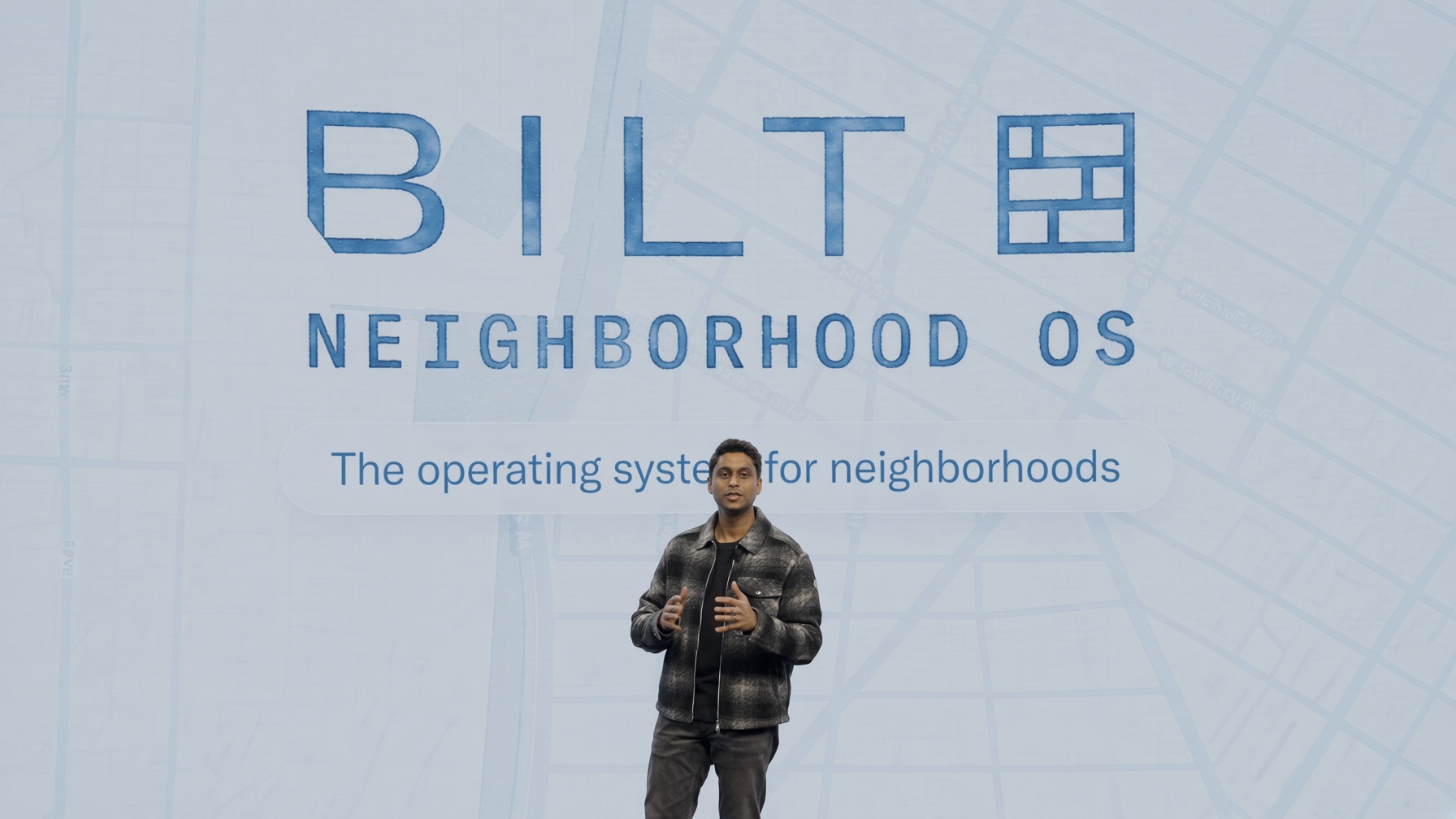
Bilt wants the building you live in, the hotel program you belong to, and the team you root for to get you recognized and rewarded at businesses around you. Its new Neighborhood OS and membership platform bring together merchants, housing communities, Hyatt, Marriott and professional sports teams in a much bigger play than earning points on rent. The ambition is to become the company that helps businesses find their next customer, gives that customer a reason to do business, and makes the experience good enough that they come back. I’ve been writing about Bilt’s distribution advantage since 2021. They figured out how to reach customers everyone else wanted but failed to reach – through their homes. They’ve since built what I consider the most valuable points currency and the best rewards for my everyday credit card spending. Now they’re opening up the technology and merchant network behind those rewards for other companies to use. There are two pieces to the announcement: Tools for merchants. Neighborhood OS connects the reservation, payment, point of sale and loyalty systems a business already uses. The goal is to help it recognize customers, deliver benefits, bring in new business and encourage repeat visits. Loyalty programs for other organizations. Bilt is making its membership platform available under other companies’ brands. A sports team, hotel company or residential community can build a new membership program, or extend its existing one, with benefits at businesses around it. The partners include the Phoenix Suns, Houston Rockets, Houston Texans and Sacramento Kings; Marriott and Hyatt; and real estate companies including Related and Presidio Bay. Broader integrations and new membership experiences will roll out in phases beginning in 2027. Bilt CEO Ankur Jain describes a $6.6 trillion opportunity in annual U.S. retail and food services spending that takes place in person. That’s the size of the market they’re aiming at. Small goals! “Your neighborhood is your most important amenity.” — Ankur Jain, introducing Bilt Neighborhood OS What originally interested me in Bilt was the way they acquired customers. An airline already has people who want its miles sitting on its planes. A new, independent rewards program has to find consumers, persuade them to join, and give them a reason to stick around. That’s tough, but Bilt had a truly original angle in reaching people through their homes, rewarding them for paying rent. Bilt helped solve billing and resident relationship problems for landlords, and found a way to become focal for customers. As I wrote earlier this year, move-in is an especially valuable moment: someone is choosing a new coffee shop, gym, dry cleaner and place to order dinner. Their habits are up for grabs. The company says it has signed one in four U.S. apartment buildings and expects to process more than $100 billion in housing payments this year. Their customers are far broader than the small minority of Bilt members with one of their credit cards. They’re equally happy for you to participate with whatever cards you already carry. We’ve seen attempts to create a common rewards program across different merchants before. American Express launched Plenti in 2015 with companies including AT&T, ExxonMobil, Macy’s and Rite Aid. It shut down in July 2018. Bilt’s chairman Ken Chenault was running American Express when Plenti launched. Plenti had enormous merchants with plenty of customers, but struggled to create was a compelling new relationship that made those customers change where they spent. The tech wasn’t very good, they didn’t broaden out merchants, and the value proposition was more modest. Coalition programs have a much longer history abroad. Canada’s Air Miles built a huge membership, although its financial troubles led to BMO acquiring it in 2023. Britain’s Nectar has 24 million active users. The U.S. still hasn’t produced a modern coalition on the scale Plenti promised. Bilt, though, offers a better way to reach customers and a more leveraged rewards system. A small discount is worth its face value. Points that can become a great hotel stay or an international business class award can be worth a lot more to the member than they cost to deliver. And Bilt’s partnerships work together to provide better experiences (e.g. a discount, together with a free Lyft ride to the restaurant, and a comped dessert). And their scale gives local merchants a much more compelling rewards program than they could have on their own. A customer might never visit one restaurant often enough to care about its standalone program. But their rewards can pool with others in the community to create something customers value. And they can reach the customers of those other local businesses, too. That restaurant can identify someone as a customer to solicit and a potentially valuable client to treat especially well. So for merchants: Find customers who can become regulars. A restaurant with empty tables on Tuesday can reach people in nearby buildings who are deciding where to eat. Spend the reward budget where it helps. An offer can be aimed at a first visit, a quiet evening or someone who hasn’t returned recently without giving away half the bill to everyone on a Saturday night when the restaurant is already full. Connect the visit to the relationship. Reservations, purchases and loyalty information can help the business recognize a customer, remember preferences and follow up. A good owner does this for the regulars they know, but the software can help scale it for more people. Offer something customers value more than it costs. A complimentary appetizer, a preferred table when available, or access to an otherwise empty fitness class can make a customer feel appreciated without requiring an equivalent cash discount. There’s a second distribution advantage here. Bilt is working with Verifone, Fiserv, Adyen and OpenTable. Those companies already have relationships with merchants and systems inside their businesses. Connecting to that installed base makes expansion much easier than persuading every restaurant to replace its payment terminal and reservation software. Bilt’s tech is better than what others have tried in the past. Here’s Bilt’s illustration of the merchant experience: The artificial intelligence component isn’t just buzz marketing. They can handle requests and coordinate actions across systems that otherwise require staff to do the work manually. Being able to identify the audience, make an offer, apply it correctly and help the merchant understand what happened is more useful. And Bilt says 91% of actions are completed without manual intervention. I’m not sure if that’s really good, or if a 9% failure rate is unacceptably high at scale. But it’ll clearly improve quickly. Bilt’s merchant sales page lists a $495 monthly Neighborhood OS subscription and an optional $195 monthly Neighborhood Marketplace subscription, or $690 for both. It lists a $1,500 onboarding fee waived through December 31, 2026. Bilt says members generated more than $12 billion in rewarded commerce at local merchants over the last year. A hotel company has a relationship with a guest while they’re traveling, but the guest spends money at restaurants and shops outside the hotel. A sports team has fans all year, including days when there’s no game. Those are valuable relationships with plenty of spending happening outside the company’s own business. Sports fans. The Phoenix Suns and Phoenix Mercury plan to launch in spring 2027 inside their existing app including concession offers, the ability to purchase seat upgrades when inventory opens, and neighborhood benefits connected to team wins. A fan concierge could help with a ride after the game or a restaurant offer nearby. Hotel loyalty. Hyatt and Bilt say they’re expanding incentives and exclusive offers at Hyatt properties, and exploring ways to reward World of Hyatt members through neighborhood experiences. Marriott is also named as a partner. Delivery and dining. Grubhub’s partnership is designed to connect delivery and restaurant visits. A restaurant could encourage someone who orders at home to come in for dinner, or give a diner a reason to order delivery later, through connected campaigns. Bilt announced a $300 million acquisition of LAVA last week, bringing relationships with 56 professional sports franchises and more than 300 technology adapters. That buys both access to fan communities and connections to the systems those teams use. Bilt calls its consumer pass Neighborhood Pass and has an identity system that lets businesses recognize eligible customers across systems without exchanging raw customer data. Getting the benefit applied correctly is a big part of the value. Nobody wants to explain a promotion to a waiter who’s never heard of it. In contrast, one senior executive who sought my counsel on whether to work with Plenti a decade ago concluded it was a non-starter that customers were going to have to submit individual receipts to the program for credit. I already get value from Bilt that goes well beyond a points balance. I’ve redeemed Bilt Cash this year for two BLADE flights, Blacklane and hotel discounts, and use benefits with Lyft, Grubhub and Walgreens. The opportunity here is to make useful benefits available across many more of the places people already spend time. Bilt already earns merchant commissions for sending spending to partners. Subscription fees add another revenue stream. Aggregating many small businesses gives it something valuable to offer a national hotel company, bank or sports sponsor. Bringing those companies’ customers and budgets to local merchants makes joining more attractive. They raised $250 million at a $10.75 billion valuation in July 2025. That provides resources to build and buy the technology, sign partners and support expansion. I think they have a real shot, but what they are doing is really hard. But each piece they successfully build makes subsequent pieces more valuable. A restaurant makes the network more useful to residents nearby. Those residents make it more attractive to the next merchant. A competitor has to assemble both sides in the same places. Two sided markets are hard! Bilt, which launched publicly just five years ago, has built this incredibly quickly. Topics on this page
New Bilt Deals With Hyatt, Marriott And Sports Team Reveal Bigger Bet On Rewards Across Your Whole Neighborhood
Full Article
Original Source
Read the full article at Viewfromthewing →KhanList aggregates and links to publicly available news content. We do not host full articles from third-party sources. Always verify important information with original sources.