
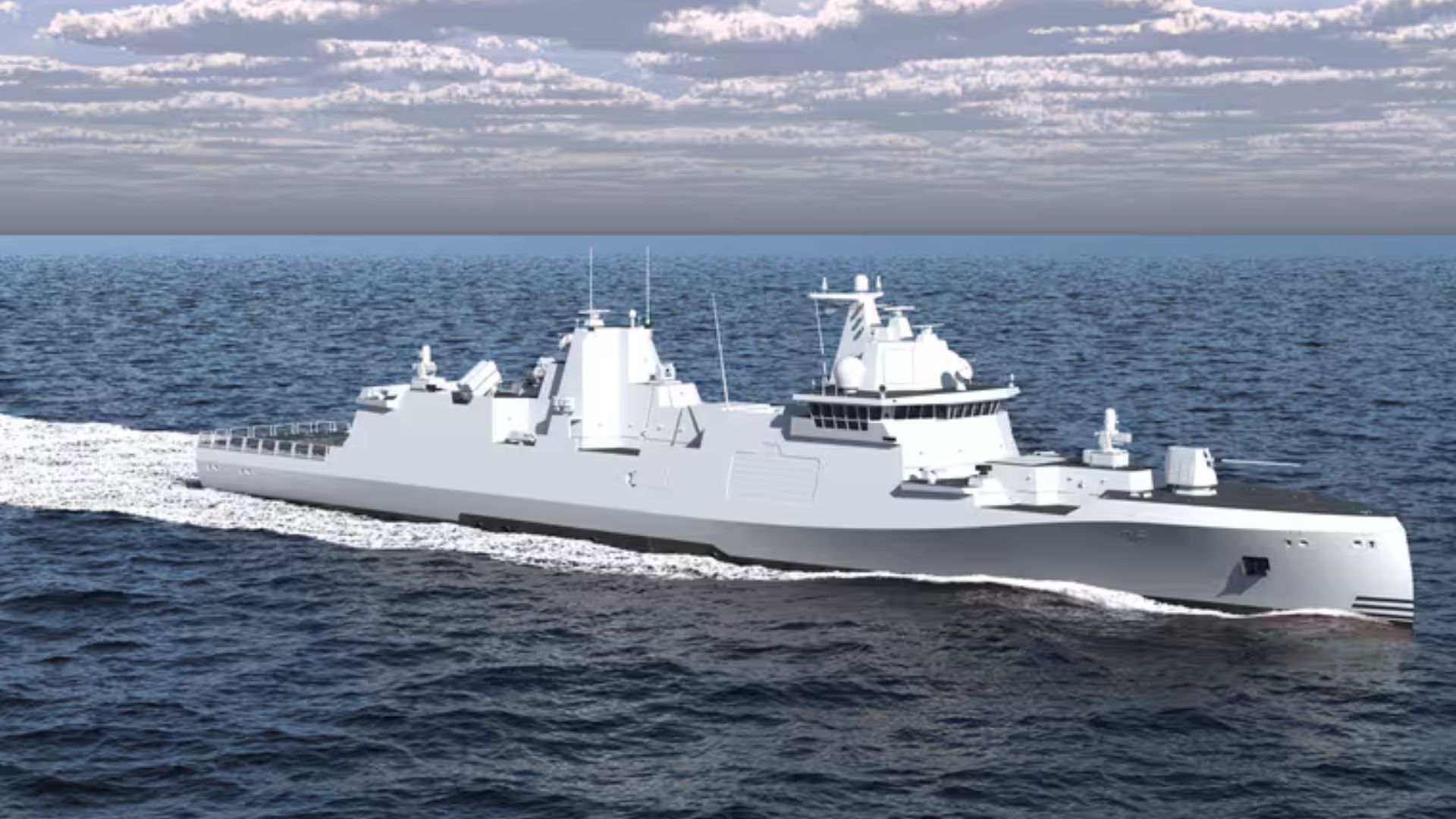
On Monday, German defense company Rheinmetall introduced the GMF 140, a new guided missile frigate for NATO and allied naval forces. The 460-foot (140-meter) ship, weighing over 6,000 tons, is built to handle modern threats in the air, at sea, and underwater, and can support long-range strike missions. The company said the vessel is aimed at export markets and will first be offered as part of a procurement program in North America. Rheinmetall believes the frigate will appeal to countries upgrading their fleets to address growing security challenges in Europe, the North Atlantic, and the Indo-Pacific. Designed for high-threat naval missions The GMF 140 is meant for use in contested waters where ships may face threats from aircraft, missiles, submarines, and other vessels. According to Rheinmetall, the frigate brings together air and missile defense, anti-submarine warfare, and long-range strike abilities, all while needing a smaller crew. The ship is built for open-ocean missions but can also handle expeditionary operations, coastal tasks, and joint missions with other navies. Its digital systems are meant to boost survivability and make it easier to work with allied forces. According to the company, the frigate has been developed specifically to meet NATO interoperability requirements, making it suitable for joint operations with partner navies. Advanced combat systems and missile defense One of the main features of the GMF 140 is its planned use of US-made radar systems that can spot, track, and target regular aircraft, hypersonic weapons, and ballistic missiles. Rheinmetall also plans to install the AEGIS Combat System, which is widely used by the US Navy and its allies. The warship is designed to carry 64 strike-length Vertical Launch System (VLS) cells capable of firing a broad range of air defense, ballistic missile defense, and land-attack missiles. Rheinmetall said this combination gives the frigate a level of battlespace awareness and fire-control capability typically associated with much larger surface combatants. The company added that the vessel can also be equipped with alternative combat management systems, including the Lockheed Martin CMS330 Combat Management System. This open and scalable system supports fleet-wide operations and can integrate both European and US sensors and weapons. Built to counter submarine threats Rheinmetall said the GMF 140 was designed from the keel up as a multi-domain combat ship with a strong focus on anti-submarine warfare. The frigate features a low-signature hull and integrated acoustic management to reduce detectability underwater. It also includes hull-mounted and towed sonar systems for submarine detection and tracking. The ship can carry maritime helicopters from the U.S. or Europe, as well as unmanned systems that help with surveillance and anti-submarine missions. Focus on allied export markets Rheinmetall said the GMF 140 was developed for NATO and allied countries that want an affordable, compatible, and modern warship. The company expects the frigate to compete in international programs as countries update their naval fleets. With integrated air and missile defense, anti-submarine warfare capabilities, and long-range strike options, the GMF 140 is positioned as one of the most capable frigates in its size class. Rheinmetall plans to begin its international campaign in North America before expanding its offer to other allied navies looking for ships that can operate alongside leading naval forces. Recommended ArticlesGet the latest in engineering, tech, space & science - delivered daily to your inbox.A versatile writer, Sujita has worked with Mashable Middle East and News Daily 24. When she isn't writing, you can find her glued to the latest web series and movies.
New 6,000-ton warship with 64 missile launch cells aims to counter hypersonic threats
Full Article
Original Source
Read the full article at Interestingengineering →KhanList aggregates and links to publicly available news content. We do not host full articles from third-party sources. Always verify important information with original sources.