
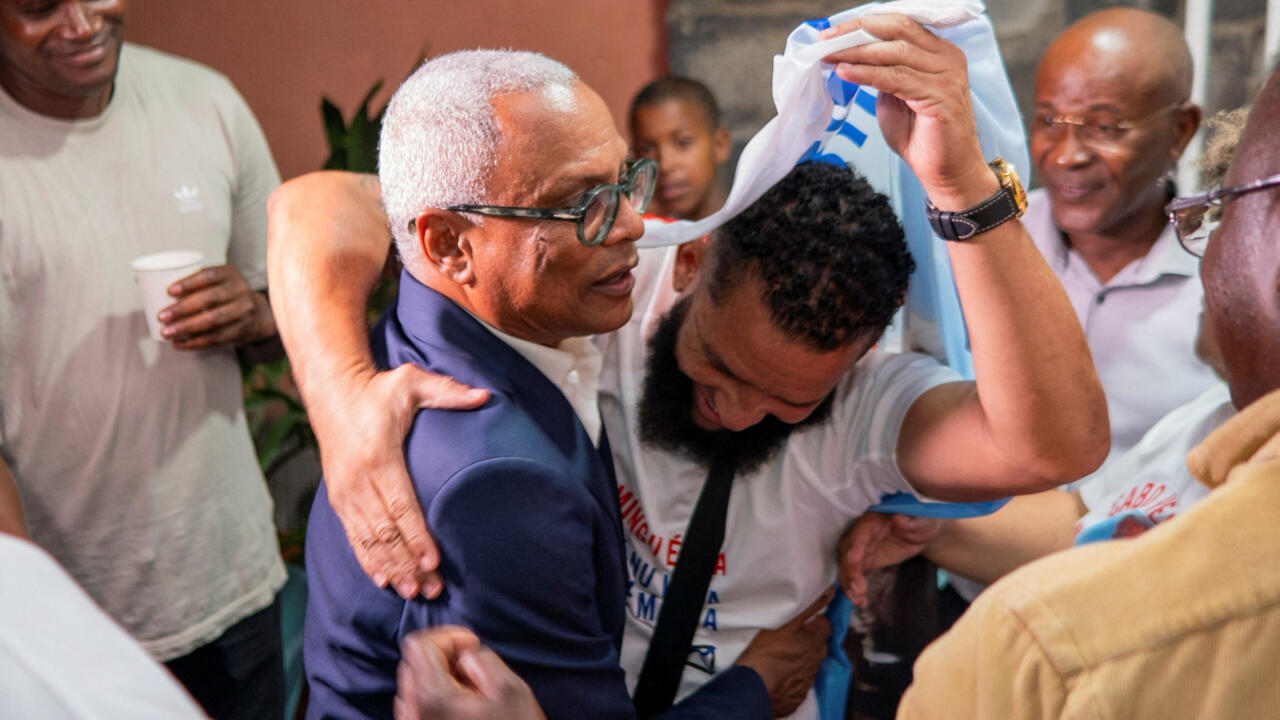
José Maria Neves has won a second five-year term as Cape Verde's president, according to provisional results from Sunday's election. Issued on: 16/11/2026 - 09:24 2 min Reading time The African Party for the Independence of Cape Verde candidate won 63.8 percent of the vote after ballots were counted at most of the 1,300 polling stations at home and abroad. The same results showed that his main challenger, Joana Rosa, received 31.6 percent of the vote. The four other candidates claimed less than 1 percent each. Rosa concedes defeat Rosa, 61, from the centre-right Movement for Democracy party, conceded defeat and said she had congratulated Neves. "When I embarked on this journey, I knew I had to be prepared for any outcome. I also said throughout the campaign that, as the first woman in Cape Verde's history to run for president, my candidacy would help pave the way for greater equality in our society," she said. As part of his victory celebrations, Neves pledged to work for Cape Verdeans on the island as well as abroad. "You can count on me to promote freedom, democracy and the rule of law, and to inspire the Cape Verdean nation towards inclusive and sustainable growth," he said. The national electoral commission is expected to announce official results this week. 'High abstention rate' Turnout appeared to be low on Sunday, with less than one-third of the 419,000 eligible voters participating, according to the results announced on state-owned television. Neves said the high abstention may have been caused by the movement of Cape Verdeans between the islands. "We therefore need to update the electoral registers," he added. "At the same time, we should modernise the electoral system through the introduction of electronic voting." At least 63 migrants feared dead after boat found off Cape Verde Cape Verde, a former Portuguese colony situated more than 600km west of mainland Africa, is home to around 500,000 people, with a larger number of Cape Verdeans living overseas, mainly in the United Staes and Portugal. Hybrid presidential-parliamentary model Cape Verde operates under a hybrid presidential-parliamentary model. The prime minister heads the government while the president retains significant powers including veto authority over legislation. During the election campaign, the main candidates promised to implement measures to improve air and sea travel between the 10 islands in the archipelago and also to build accommodation for tourists. They also vowed to address other concerns such as the increased cost of living, fuel prices and youth unemployment. Since the end of the Covid-19 pandemic many young Cape Verdeans, including graduates and those with professional training, have emigrated and continue to move abroad, causing a labour shortage. (with newswires)
Neves wins second term as Cape Verde's president: provisional results
Full Article
Original Source
Read the full article at Rfi →KhanList aggregates and links to publicly available news content. We do not host full articles from third-party sources. Always verify important information with original sources.