
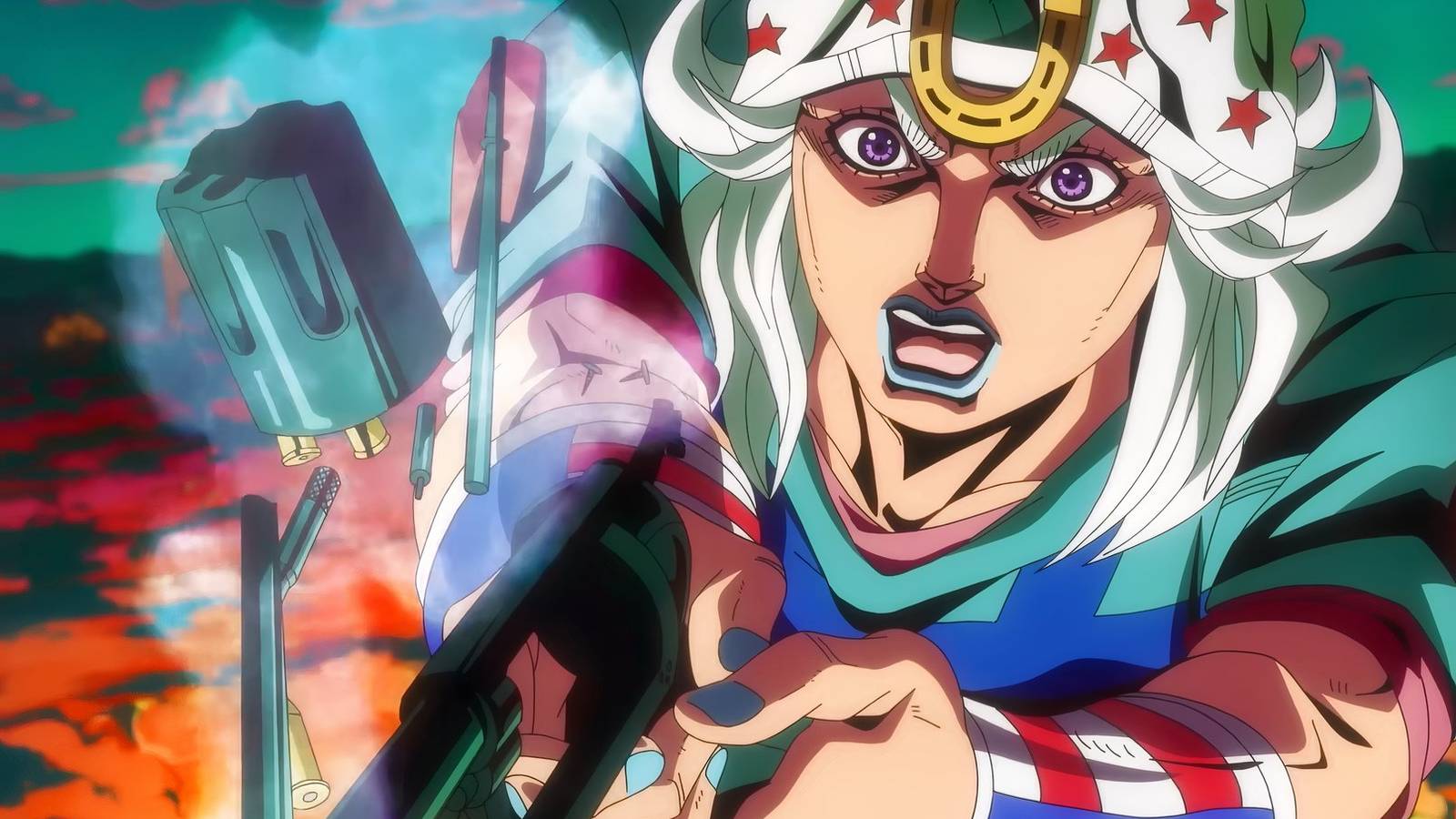
Published Oct 2, 2026, 1:00 PM EDT Steel Ball Run won't be featured in many playlists JoJo's Bizarre Adventure's new season misses the mark in one key aspect Image: STEEL BALL RUN JoJo's Bizarre Adventure Since the animated adaptation of Hirohiko Araki's manga JoJo's Bizarre Adventure premiered in 2012, the series has quickly risen to cult status. A few elements contributed to turning JoJo into a modern cultural icon: the proliferation of memes, the "JoJo posing," the fashionable characters, the playful take on gender stereotypes, and, last but not least, a kick-ass soundtrack. From classic tracks like "Roundabout" by Yes, which plays over the ending credits of the original series, to original songs that have become iconic like "Il Vento d'Oro" by Yugo Kanno, it's safe to say that when a new season comes out, JoJo fans are just as excited to discover what songs will feature in the anime's soundtrack. Unfortunately, Steel Ball Run, the latest season of the anime, currently streaming on Netflix, fell way short of expectations in terms of its music. While the opening theme, "Spin" by Japanese funk-rock band Kroi, captures the Western atmosphere of the anime through a quick guitar riff and the use of trumpets, the ending that debuted with episode 2, "Dead or Alive" by Yuki Chiba, a Japanese rapper formerly known as Kohh, has sparked a big controversy online. Steel Ball Run's ending song sparks big debate among fans Until now, every ending used by the JoJo's Bizarre Adventure anime featured a Western song: "Roundabout," the Bangles' "Walk Like an Egyptian," Pat Metheny Group’s “Last Train Home,” Savage Garden’s “I Want You,” Jodeci’s “Freek’n You,” Enigma’s “Modern Crusaders,” and Duffy’s “Distant Dreamer.” This tradition began with input from Hiroiko Araki, who, while consulting on the anime, suggested songs he was listening to as he created each part of the manga. Warner Bros. Japan producer Hiroyuki Omori, who oversaw the JoJo anime's production, loved the manga and respected its creator enough to persuade his company to license those songs, despite their considerable cost. The gambit paid off. The "Roundabout" ending used for part 1 (Phantom Blood) and part 2 (Battle Tendency) of the anime, with the song playing as the "to be continued" arrow appeared, transitioned beyond anime and became a pop culture phenomenon, helping popularize JoJo even further. It's thus understandable that, after hearing the repetitive beats of "Dead or Alive," JoJo fans got quite upset. But the full story behind this change in policy is even sadder. The producer responsible for JoJo's music died in 2024 Image: David Production Unfortunately, Hiroyuki Omori passed away in 2024. Fans are pointing out that, without Omori, the anime risks losing its identity, and the music could be only the first step. This goes beyond "Dead or Alive" being a good or bad song, which is up to everyone's personal taste to decide. The issue is that the choice of a contemporary Japanese hip-hop song clashes with the expectations that Western fans in particular have regarding JoJo's music. But there's also a less pleasant side to the debate. In a YouTube show for the Anime Music Journal channel, music producer Akihiro Tomita, music writer Ryuichi Sumikawa, and anime writer Hisashi Maeda discussed the controversy surrounding the new ending. Sumikawa explained that up until part 6 of the anime, Stone Ocean, Warner Bros. Japan was in charge of music production, but starting with Steel Ball Run that responsibility shifted to Warner Music Japan. In 2025, Yuki Chiba signed a big deal with Warner Music Japan that focused on "accelerating his global career," which was bound to include an anime collaboration due to the company's increasing efforts in anime music, according to Sumikawa. Thus, Warner Music Japan preferred giving an international spotlight to one of its biggest artists rather than licensing more Western music for Steel Ball Run. An understandable business decision, but one that perhaps underestimated how dedicated the international JoJo fanbase is. After the two-part premiere of Steel Ball Run aired in March 2026 and Netflix did not share any news about when or how the series would continue airing, massive fan uproar pushed the company to announce a weekly release schedule for the anime's second stage. Perhaps, if the debate around "Dead or Alive" continues, Steel Ball Run could be getting a new ending too. Steel Ball Run is streaming on Netflix.
Netflix's Biggest Anime of 2026 Breaks a 14-Year-Old Tradition, and Fans Are Furious
Full Article
Original Source
Read the full article at Polygon →KhanList aggregates and links to publicly available news content. We do not host full articles from third-party sources. Always verify important information with original sources.