
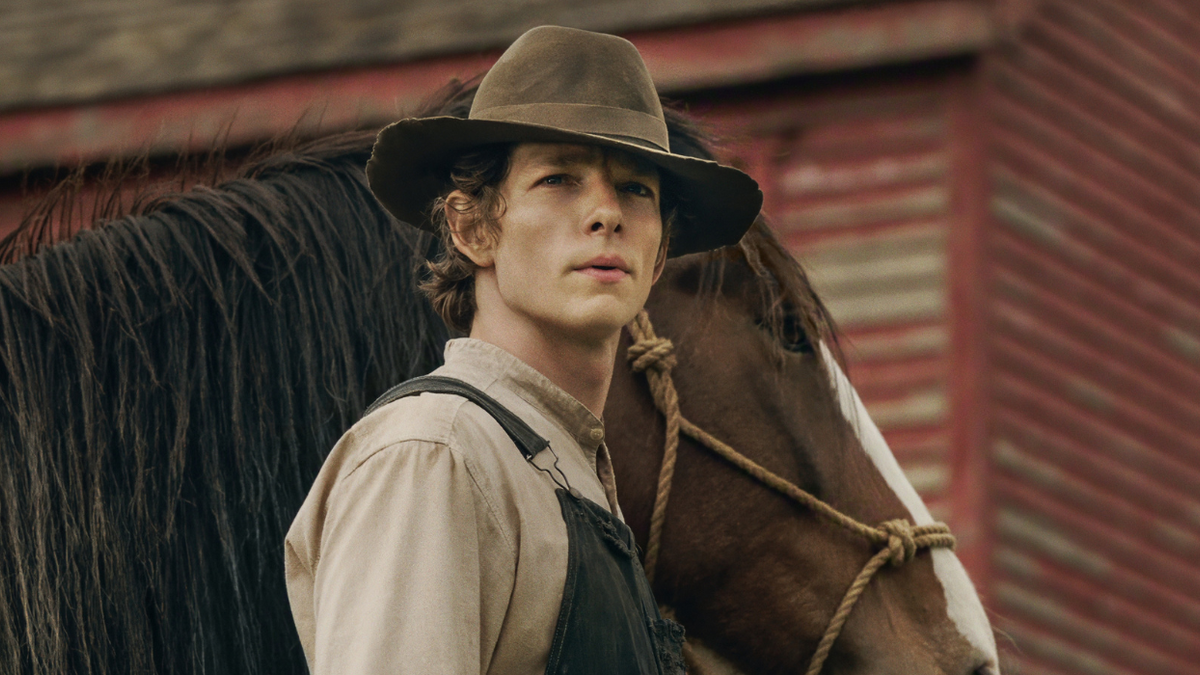
Image via. Netflix Published Nov 26, 2026, 6:58 PM EST Kelcie Mattson is a Senior Features author at Collider. Based in the Midwest, she also contributes Lists, reviews, and television recaps. A lifelong fan of niche sci-fi, high fantasy, Gothic horror, elaborate action, and witty detective fiction, becoming a pop culture devotee was inevitable once the Disney Renaissance, Turner Classic Movies, BBC period dramas, and her local library piqued her imagination. Rarely seen without a book in one hand and a cup of coffee in the other, Kelcie explores media history (especially older, foreign, and independent films) as much as possible. You'll also find her enjoying video games, amateur photography, geeking out over all music genres, admiring birds from her porch, trying to overcome her meager baking skills, and attending fan conventions with her Trekkie family. Sign in to your Collider account To say Taylor Sheridan dominates a sizable chunk of the television market is an understatement. He has carved out several niches for himself, none more prominent than the Western. His ever-expanding Yellowstone universe has helped give the long-lasting genre a widespread contemporary renaissance, especially on the small screen. With that said, Sheridan's repeated weaknesses weigh down even his strongest works; the Western's distinct aesthetic sheen emerges unscathed, but his propensity for tiresome character stereotypes and shock-value extremes often leads to muddled themes and missed opportunities instead of rigorously nuanced, affecting melodrama. For an alternative that honors and enriches almost every definitive Western hallmark (ambition, self-determination, compromising moral quandaries, dysfunctional relationship strife, lush geography glinting with sun-tinted orange), look no further than a period piece miniseries that has flourished with Netflix audiences since its premiere last month. Spanning from the end of the American Civil War to the beginning of World War I, and from a tiny Connecticut farmhouse to the wide terrain of California's Salinas Valley, East of Eden is an intergenerational family saga of tragedy and triumph, hope and despair, fate versus free will, community and independence, and what it means to exist as a human. Co-creators Zoe Kazan and Jeb Stuart, directors Garth Davis and Laure de Clermont-Tonnerre, and the show's executive producer and top-billed star, Florence Pugh, steer a classic story already rife with artistic and emotional resonance into the prestige television realm. What Is 'East of Eden' About? East of Eden's roots stretch back to author John Steinbeck's 1952 book of the same name. A staple of high school English classes (and the basis for the 1955 movie that turned James Dean into a superstar), it's frequently cited as one of the Great American Novels. Steinbeck allegedly pulled from his personal family history as well as Biblical allegories, from the title referencing the Garden of Eden to the cyclical violence, jealousy, and betrayal that occurs between parents, children, and two pairs of Cain-and-Abel siblings. Semi-estranged brothers Adam (Christopher Abbott) and Charles Trask (Mike Faist) bear deep psychological scars from their abusive father, Cyrus (Tracy Letts); in turn, Adam and his runaway wife, Cathy Ames (Pugh), pass their respective, incompatible wounds onto their twin boys, Cal (Joseph Zada) and Aron (Joe Anders). In terms of scope, detail, and introspection, Kazan and her East of Eden team deliver a true epic. A ghostly quality haunts the edges of every frame, yet the series sings with a vibrant immediacy that feels within our grasp rather than not-so ancient history. Its heart is beating and bruised, its fingernails lined with dirt. There's such breadth to this rendition of turn-of-the-century American culture; the enormous landscapes are filled with equal parts hostility and promise, while the people who dot said terrain universally gasp for air as they try to keep their heads above water. 'East of Eden's Sweeping Historical Drama Is Anchored by Timeless Themes In today's climate, an agonizing reckoning with all the fleeting temptations and broken promises that surround the so-called American Dream would be visceral enough to warrant revisiting a 74-year-old text. A narrative elevation occurs once Netflix's East of Eden incorporates the irreconcilable experiences, tragedies, and warring impulses that shape our identities. It's a soulful meditation on the old-fashioned debates about nature versus nurture, specifically whether children are universally doomed to perpetuate their parents' sins. Both true to its source and an expansion on it, the series circles around humanity's ability to grow and change — a responsibility that's achingly bittersweet, empowering, and constantly terrifying. If our active decisions accumulate throughout our lifetime and have a ripple effect on future generations like so many stones tossed into a pond, then healing, peace, and redemption can overcome generational trauma. And if we can be more than the sum of our parts, that concept takes different shapes for, and requires different actions from, each character. Collider Exclusive · 8 Questions · 2 Minutes Which Western Icon Are You Most Like? No Name · Doc Holliday · Wyatt Earp · Mattie Ross Pick your name, your gun, your horse and how you spend a night in town, and we will tell you which legend of the Old West you would have been. Four icons are waiting at the end of this: the stranger who never gives his name, the gambler who would die for a friend, the lawman who never wanted the badge, and the girl nobody has ever talked out of anything. 🚬No Name(Dollars Trilogy) 🃏Doc Holliday(Tombstone) ⭐Wyatt Earp(Tombstone) 🐎Mattie Ross(True Grit) FIND YOUR ICON → 01 The town is about to learn your name. What do they call you? In a Western, what people call you is already half the character. AThey never do find it out, so the stranger will have to do. BA nickname I picked up at a card table and never shook off. CMarshal, and most people say it with a bit of respect. DMy full name, and I will correct anybody who tries to shorten it. NEXT QUESTION → 02 What are you carrying? Everything out here is character, right down to what is sitting on your hip. AOne revolver I have had for years and have never once talked about. BA pistol, a knife and a deck of cards, and the cards do most of the damage. CA shotgun, because it tends to end arguments rather than start them. DMy father's gun, which is far too big for me, and I am carrying it anyway. NEXT QUESTION → 03 What are you riding? A hero and their horse is one of the oldest relationships in cinema. ASomething plain that nobody in town would look at twice. BWhatever I won last night, which may not be strictly mine yet. CA big steady horse that will not spook when things get loud. DA pony I overpaid for and named myself, and I will hear nothing against him. NEXT QUESTION → 04 You have got one evening in town. How does it go? The saloon is where these films quietly tell you who somebody really is. AOne drink at the far end of the bar with my back to the wall. BAt the card table, holding court, up forty dollars and climbing. CA quick drink, then a walk round town to see that everything is quiet. DUpstairs with the ledger, working out exactly what tomorrow is going to cost. NEXT QUESTION → 05 A stranger offers you money for a job that sounds like trouble. Somebody always turns up with a full purse and a bad idea. AI ask how much, and then I ask for a good deal more than that. BI say yes before he has finished, mostly because it sounds like a story. CI ask him who gets hurt if I turn him down. DI ask for the terms in writing before anybody shakes on anything. NEXT QUESTION → 06 Somebody is waiting for you in the street. What does the town see? Two people, an empty road, and everybody else watching from behind the shutters. ASomebody walking out very slowly who has not said a single word. BSomebody grinning, which everyone watching finds deeply unnerving. CSomebody making one last attempt to talk the other man down. DSomebody far too young to be out there, walking out regardless. NEXT QUESTION → 07 What is the one thing you will not do out here? The code is about the only thing west of the river that actually holds. AExplain myself to somebody who has not earned an explanation. BRide off and leave a friend standing out there on his own. CLet a whole town pay for a fight it had nothing to do with. DLet a grown man tell me I am too young to be standing here. NEXT QUESTION → 08 The job is finished. Where does the story leave you? Eight questions in, this is the one that decides your icon. AOn a ridge somewhere, riding away, without saying goodbye to anybody. BSomewhere warm and worn out, having enjoyed very nearly all of it. CHome, with the badge on the table and the whole thing behind me. DOlder, changed by it, and telling this story for the rest of my life. REVEAL MY ICON → The Dust Has Settled Your Western Icon Is…Four icons and four completely different ways of walking into trouble. This is the one you would have been out there, why it fits, and what it would have cost you. The Man With No NameYou have never explained yourself and you have never needed to, because people work out fairly quickly that you are the most capable person in the room without you ever having to mention it. Eastwood built the character out of everything he refused to do, stripping away the backstory, the speeches and every bit of reassurance until only the competence was left. You keep your own counsel, and while other people occasionally find that unnerving, you have never felt any real need to fix it for them. The Dollars films work because he genuinely is in it for himself right up until the moment he is not, and he never explains that part either. You would be gone before anybody got a chance to thank you. Doc HollidayYou are the funniest person in most rooms and the most loyal person in all of them, and you would be genuinely insulted if somebody suggested those two things were in any tension. Doc has no real reason to be in this fight beyond the fact that his friend is in it, which is the only reason he has ever needed for anything. You lead with wit, and it does a very effective job of hiding how seriously you take the handful of people you actually care about. Val Kilmer's performance is the most quoted in the entire genre because the jokes keep getting sharper as the situation gets worse. You would spend everything you had on this and still describe it as a good week. Wyatt EarpYou never wanted this job, and you took it anyway because the alternative was standing there watching somebody less careful do it badly, which is the most Western reason there has ever been. Earp is the reluctant authority figure, a man who came to town specifically to be left alone and somehow ended up answerable for all of it. You are protective by instinct, so when something goes wrong your first thought is who is exposed rather than who is to blame. These films understand that keeping order costs far more than breaking it, and that the person holding the line almost never gets thanked. You would do the whole thing again, and you would complain about it the entire time. Mattie RossNobody has ever successfully talked you out of something you had already decided was right, and a long line of grown adults has found that out the hard way. Mattie is the most relentless character in the Western canon and she manages it through argument, paperwork and flat refusal rather than a fast draw. You have no patience for being managed, so you negotiate, you check the details and you turn up exactly when you said you would. True Grit is the rare Western where the moral centre is the youngest person on screen and every adult around her has to catch up. You would get what you came for, and the film is honest about what that takes out of you. ↻ RETAKE THE QUIZ Already one of the most exemplary performers of her generation, Pugh's leading turn is her finest yet. East of Eden's gravity and energy bend around Cathy like the enticing, deadly black hole she is. Enigmatic and practically shivering with lurking awareness and predatory intent, Cathy moves through the world according to her understanding of it. She's driven by an elemental, at-all-costs need for survival and autonomy — a life relieved of the chains or claims laid upon her identity and freedom, after being routinely abused by domineering, petty, and small-minded men. Her capacity for indiscriminate murder, manipulation, and mayhem is seemingly bottomless. Yet she's incapable of being categorized as entirely a maiden, mother, or monster. By examining her situation and ruthless responses not from afar, but at close range and with unblinking clarity, the show comprehends all her vile dimensionality. Joining Pugh is an awards-worthy cast in their finest form, from Abbot's almost too-gentle Adam, Faist's self-loathing Charles, Zada's ashamed Cal, and Samuel Hamilton (Ciarán Hinds), the Trasks' kindly yet underused Irish-born neighbor. Lee (Hoon Lee), Cal and Aron's surrogate parent, emerges as the series' most striking revelation by far; he represents East of Eden's moral center, but his tenderness, dignity, isolation, and Chinese-American identity are profoundly human, the furthest thing from an empty symbol. A pristine feat of adaptation and contemporary Westerns, East of Eden is also a contender for the richest television experience of the year.
Netflix Perfected the Taylor Sheridan Formula With This 7-Part Western Miniseries
Full Article
Original Source
Read the full article at Collider →KhanList aggregates and links to publicly available news content. We do not host full articles from third-party sources. Always verify important information with original sources.