
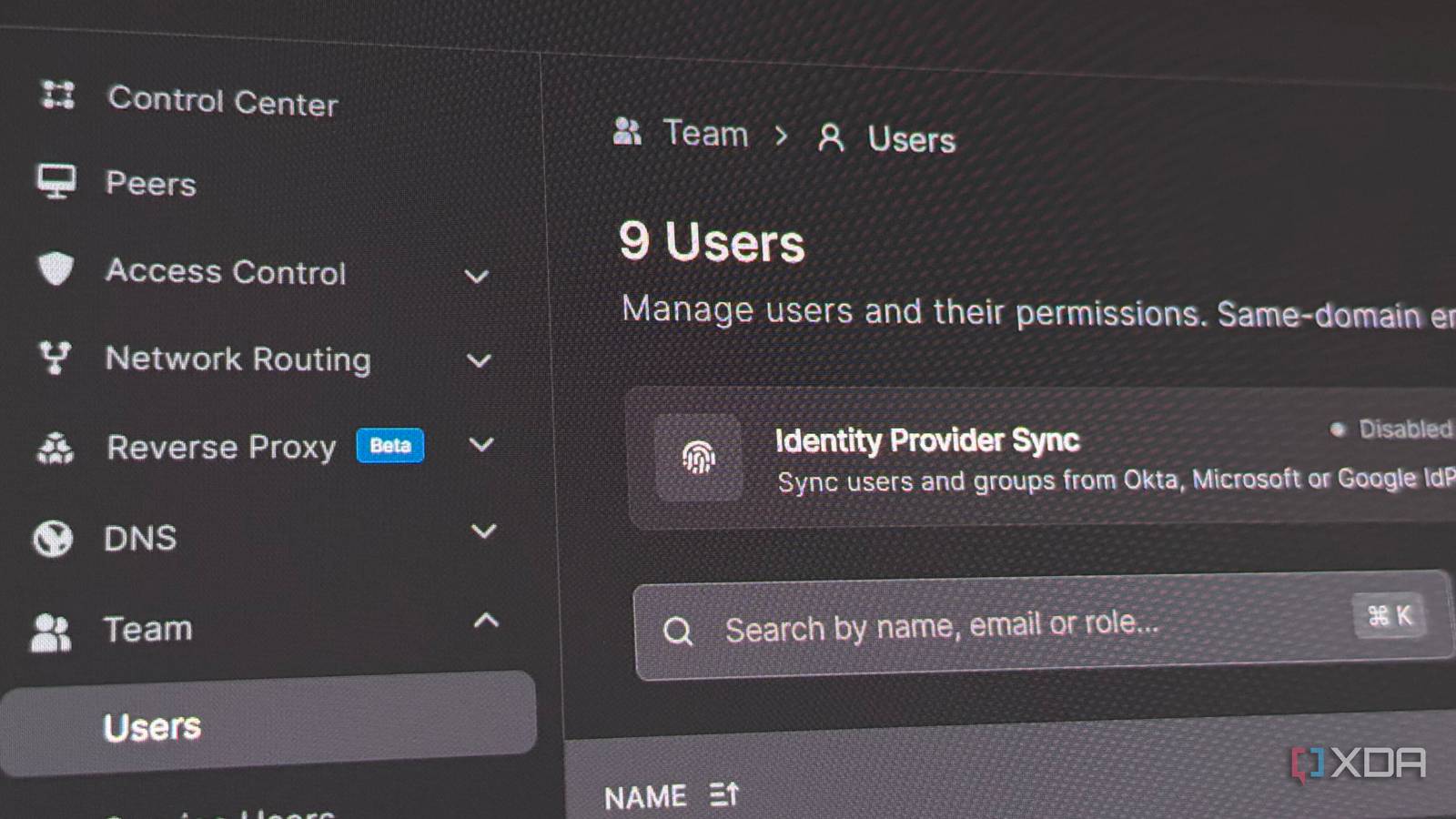
Published Sep 2, 2026, 8:00 AM EDT His love of PCs and their components was born out of trying to squeeze every ounce of performance out of the family computer. Tinkering with his own build at age 10 turned into building PCs for friends and family, fostering a passion that would ultimately take shape as a career path. Besides being the first call for tech support for those close to him, Ty is a computer science student, with his focus being cloud computing and networking. He also competed in semi-pro Counter-Strike for 8 years, making him intimately familiar with everything to do with peripherals. Tailscale recently made its free tier a lot more generous this year, with the user cap going up to 6 and the hundred-device cap being axed completely. I had been using it for easy remote access for my family far before the limit change, and right after, everyone decided that they wanted access to my media server around the same time. I quickly reached 6 users, and while I was tempted to just start paying Tailscale for more space, I decided to make use of the infrastructure I was already paying for with self-hosted NetBird, and I saved myself from paying a hefty monthly fee in the process. The limit that got me was the user one, not the machines Tailscale's free plan is actually quite generous, and NetBird's is worse on paper Tailscale's free plan is actually fantastic considering it costs you absolutely nothing. Since the price change, user devices are unlimited on every tier, meaning one person's laptop, phone, desktop, tablet, and other devices only take up one slot instead of 5 or more. With that said, I don't think I was ever going to come close to the previous 100 device limit, even with family and friends hopping on with their devices. Every relative or friends that wanted access did need an account though, and that's where the 6-person limit feels pretty constrictive. It's great if you're not offering access to everyone you know, and it's even more generous than NetBird's free plan. NetBird supports only 5 users and up to 100 devices total, and that's why the initial switch might seem like a backwards move, but the self-hosted variety is where NetBird really earns its keep. Self-hosted NetBird is the best of all worlds Open-source and free, with an asterisk When you go to the NetBird website and sign up normally, you're using the cloud-based solution, which is akin to Tailscale. There is another option for using NetBird that is less-talked about, and it removes all the limits of the free version while also costing nothing to use. The open-source Community Edition is what I currently run, and it's not a hollowed-out version, either. Peer management, access policies, DNS, network routes and single sign-on are all there, and the self-hosted edition includes SSO and MFA that sit behind a paid subscription on the cloud side. Recent releases fold management, signal, and relay into one container, and also feature a fully-functional Traefik reverse proxy for your services, which simplified things considerably given that my home connection sits behind CGNAT. The asterisk is the fact that the control plane is hosted on a VPS that I rent on a yearly rate. It's the absolute minimum spec, and it only comes out to just over $4 CAD a month, which for you Americans is just under 3 dollars. This isn't a completely free swap if you're currently using Tailscale behind CGNAT and want to switch to something self-hosted, but the fact that I was already renting it for use as a WireGuard VPN relay meant that putting a control plane on it was a no-brainer. It's also way cheaper than paying Tailscale $8 USD per user, per month. Headscale would've been the slot-in replacement Self-hosted Tailscale that performs similarly Headscale exists precisely for people in my situation, and it has a key advantage, being that it replaces only the coordination server, so official Tailscale clients can continue to be used exactly as they did. This means my family wouldn't have to install anything new or learn a new app, which matters when you're helping those who are less tech-inclined. It has a lot of continuity with the official Tailscale product, being that one of the maintainers of the community project is actively employed by them, but it's not an official project, and that's where the friction in moving to NetBird made a bit more sense. I'd rather run an officially supported server It's also on a VPS I was already renting Headscale is maintained by community members primarily, and it's not an official part of the Tailscale product, and that alone was enough for me to use NetBird instead. It also doesn't officially support deployment via Docker or behind a reverse proxy, which is a bit of an awkward fit in my home lab, where everything is effectively a container. It's not a bad solution and plenty of people use it effectively, even in the same VPS-hosted configuration that NetBird is currently in for me, but the fact that it's not official means, like many other open-source community-maintained projects, that the maintainers can simply stop maintaining it. The self-hosted NetBird solution is an official part of the NetBird product, and therefore, it gets the same official support as the cloud-based solution. A self-hosted remote access solution that doesn't break the bank While Tailscale's free plan has received a pretty significant upgrade, it still wasn't going to accommodate the user space I needed for my home lab. It's pretty generous for solo use, but once you add family and a couple of friends, the six-user limit starts to creep up on you fast. A VPS costs me less than the price of a coffee every month, and with that, I can host an officially supported NetBird control plane, which gives me all the features of the paid cloud service while actually saving me money in the process.
NetBird replaced Tailscale when I hit the 6-user limit, and it costs me $3 a month instead of $25
Full Article
Original Source
Read the full article at Xda-developers →KhanList aggregates and links to publicly available news content. We do not host full articles from third-party sources. Always verify important information with original sources.