
Welcome to Power Players, The i Paper’s opinion series in which our writers and experts take an in-depth look at the key figures in American politics as the US reshapes itself and the world. • The ‘swamp creature’ eclipsing JD Vance in the race to succeed Trump• The ‘pro-white nationalist’ whose power over Trump grows every day• Trump’s military cheerleader who is learning about war the hard way• The high-flying lawyer who turned tradwife for JD Vance• The female firebrand ready to reshape Trump’s America• Tucker Carlson: the hardline Maga kingmaker who turned on Trump• The anti-woke bulldog driving Trump’s fight against progress• The Antichrist-obsessed billionaire who eased JD Vance into the White House On the morning of 11 February, President Donald Trump arrived in the White House Situation Room for a major briefing. He brought all of his top team with him, including Secretary of State Marco Rubio, War Secretary Pete Hegseth, and Chief of Staff Susie Wiles. Clearly, this was a significant meeting. But the person giving the briefing wasn’t a senior US general or intelligence chief. Instead, it was a foreign leader: Israeli Prime Minister Benjamin Netanyahu. According to The New York Times, it was at this briefing that Netanyahu set out the case for the US and Israel launching joint strikes against Iran, promising Trump that swift and decisive strikes could decapitate Iranian leadership, take out its ballistic missile programme, and maybe even lead to a public uprising which could topple the regime that has run Iran since 1979. The briefing was a success. Just weeks later, the US and Israel launched the first strikes of what was supposed to be a brief conflict – but which now, months later, has become a quagmire with an escalating death toll and a mounting global economic cost. But the very fact of Netanyahu having the access to give such a briefing, in the Situation Room, might itself mark a high point of his influence in US politics. Israel has always relied on a close and deep alliance with the USA, but Netanyahu has taken this to extremes – making himself one of DC’s most influential figures, but at the risk of his own future and that of his nation. Ever since its founding, Israel’s security position has been precarious – the world’s only Jewish nation surrounded by countries which tried to invade it in its very earliest days. Its continued existence has long depended on billions of dollars in military aid and diplomatic support from the USA, and this has been readily supplied by Democratic and Republican presidents. Traditionally, support for Israel was a bipartisan issue in American politics, but this is no longer the case. Asked whether they sympathise more with the Israelis or Palestinians by YouGov last month, only 10 per cent of Democrats said the Israelis, versus 58 per cent of Republicans. More than two-thirds of Democrats believe Netanyahu has committed war crimes in Gaza, and that the US should enforce an ICC arrest warrant against him. Fewer than one in four Republicans agree with either statement. What was once a bipartisan issue has now become yet another deeply polarised one – but Netanyahu himself played a large role in making things this way. Its roots lie in Barack Obama’s Iran nuclear deal, intended to stop the country enriching uranium or pursuing any form of weapons programme. Netanyahu vocally opposed this deal, and mobilised Republicans against it, culminating in his decision to address a joint session of Congress at their invitation – directly involving himself in partisan, domestic, US politics, in open disagreement with the sitting president’s policy. From this point on, Netanyahu guaranteed he would be seen as a divisive figure in US politics – at least until the horrifying attacks of October 7, 2023. The US knows what it’s like to be the victim of a terror attack that simultaneously shocks the world and also draws its attention. In the aftermath of 9/11, the world’s sympathies were with America. Every ally offered their solidarity and support in making a response. The USA’s politicians know that this becomes more complex over time. There was significant international support for the USA’s invasion of Afghanistan in the immediate aftermath of the attacks. But even by the 2003 invasion of Iraq, that coalition had splintered, and as both wars appeared to backfire, George W Bush became a global hate figure and support for the US around the globe plummeted. Netanyahu appears to have speedrun that process, retaliating against Gaza to such an extent that even long-standing allies have condemned his government, and him personally. But beyond that, Netanyahu appeared to deepen his alienation from Democrats and his polarisation within the US. Joe Biden, the US president at the time of the October 7 attacks and their immediate aftermath, spent significant political capital supporting Israel and Netanyahu through its response – overseeing tens of billions of dollars of additional military aid to Israel, visiting the nation, and supporting it at the UN. Biden did all of this while coming under substantial political pressure from within his own party and its voters to take a stronger stance against mounting allegations and evidence of possible war crimes and an out-of-control civilian death toll – but Netanyahu all the same made no secret of his preference for a Trump victory in the 2024 election. This certainly succeeded in winning influence for Netanyahu with Trump, who takes a with-me-or-against-me view of the world. Netanyahu has enjoyed an incredibly close relationship with the US President, and has often been able to set the terms of the Gaza conflict. But the disaster of the Iran conflict has exposed the fractures in the Maga coalition when it comes to Israel. Some of the far-right fringes who had generally supported Trump were always antisemitic, and had been waiting for an opportunity to try to pry the movement away from Israel. Others, who believe “America First” should mean an end to US involvement in overseas wars, are furious that Trump has involved the country in a fresh conflict. As the November midterms approach and a new presidential election cycle begins for 2028, support for Israel is fractured in the Republican base, and greatly diminished among Democrats. Among the widespread and legitimate concerns about Israel’s actions, and about Netanyahu’s conduct specifically, is a rising tide of antisemitism in America that is endangering the country’s Jews. Whereas once the Israeli leader might have sought to unify US politicians to tackle that menace, Netanyahu has become such a polarising figure that he can only fan those flames. Netanyahu built his influence with Trump and his administration so assiduously that he helped lead the America First President into a new overseas war. The danger for him – and for Israel – is that he will now tumble, Icarus-like, into political irrelevance.
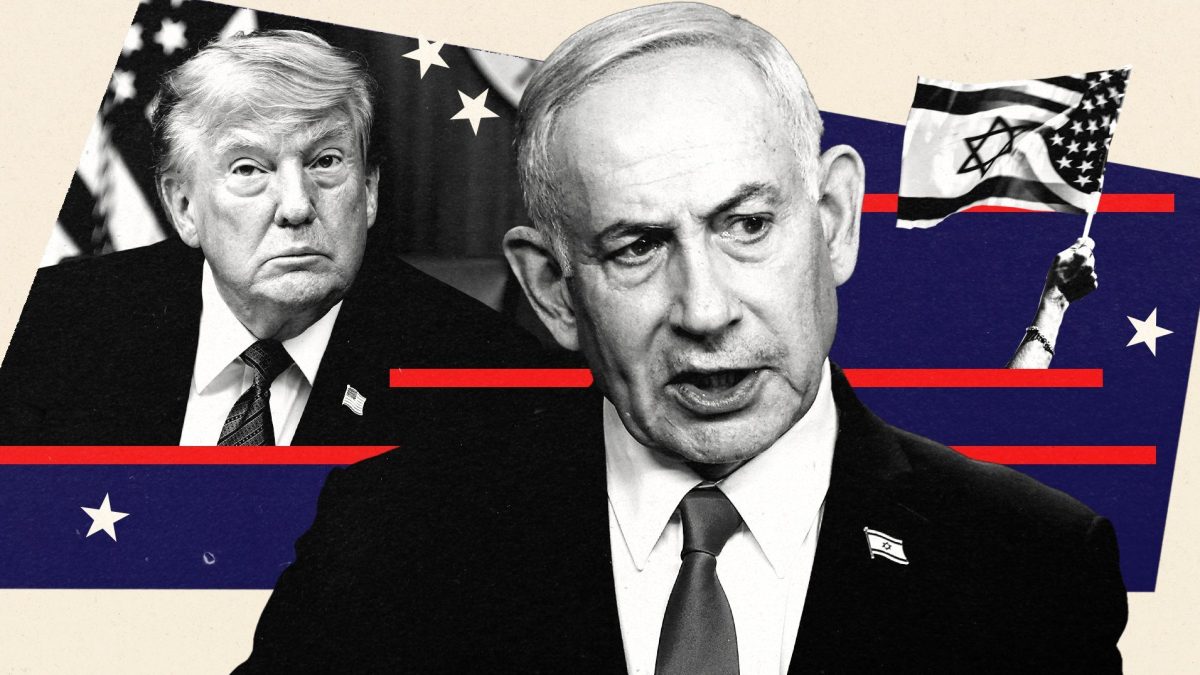
Netanyahu’s to blame for his American nightmare – and it spells his doom
Full Article
Original Source
Read the full article at Inews →KhanList aggregates and links to publicly available news content. We do not host full articles from third-party sources. Always verify important information with original sources.