
That reputation will be put to the test next month when Israel holds its elections for the Knesset, where the premier’s bloc is jostling with an opposition bloc led by Gadi Eisenkot, a former military chief of staff. Netanyahu is plagued by accusations of blame for the Oct. 7, 2023, attacks; opposition to his judicial reforms; unpopular ideological allies within his coalition; and a seemingly never-ending corruption trial. The smaller parties of his coalition have threatened to go elsewhere, and the U.S. government is publicly distancing itself from Israel.The Oct. 27 ballot box is shaping up to be a referendum on the prime minister, who has been fighting a knockdown, drag-out war to convince the public he is still needed. “The knives are out for Bibi,” Jonathan Schanzer, the executive director at the Foundation for Defense of Democracies, told the Washington Examiner, using the prime minister’s common nickname. “He is the longest-serving prime minister in Israel’s history, and there is a sense of frustration that he remains in that role for as long as he has — it’s been essentially two decades.“It’s a tight one for him. It’s tighter than I think anything that he’s experienced since the 2021 election that unseated him for a year, and I think it’s a reflection of the razor-thin margins.”Unlike the two-party system of the United States, the Knesset is composed of a wide field of parties representing various factions’ granular interests. These parties are usually forced to build Frankenstein-esque governments that combine parties totally at odds with one another on key issues.Netanyahu’s old coalition loaded with baggage Netanyahu is the leader of the Likud party, the most powerful right-wing party that emphasizes nationalism and hawkish defense policy, which struck a deal with a smattering of other right-wing groups to establish their most recent government.This included Zionist settler parties such as Jewish Power, led by Itamar Ben-Gvir, and the Religious Zionist party, led by Bezalel Smotrich. These parties aggressively advocate settler expansion into the West Bank to seize control over the Palestinian territories — a project that is deeply unpopular abroad and politically volatile domestically. Smotrich said Friday that he would like to expand the Israeli settlement movement into the north and south of the country in a “settlement revolution.”“It’s time to bring the revolution in Judea and Samaria to the Galilee and the Negev, in order to save the State of Israel from the next October 7,” the Religious Zionist leader wrote on social media.Netanyahu has also previously banked on support from the ultra-Orthodox parties Shas and United Torah Judaism, which advocate special accommodations for Torah students.Ultra-Orthodox communities, traditionally exempt from the nation’s compulsory military service, have made maintaining that privilege the central issue of their voter base. However, approximately 84% of Israeli voters are opposed to ultra-Orthodox exemptions. The push to force these religious communities into conscription has become so great, even from within the last government, that Shas and UTJ withdrew their allegiance and stood independent from Netanyahu’s Cabinet.Ultra-Orthodox Jewish men scuffle with police during a protest against military recruitment and call for the release of detained draft resisters on Wednesday, June 17, 2026, outside a military prison near Kfar Yona, Israel. (AP Photo/Ariel Schalit) Domestic issues such as the policing of settlers in the West Bank and the conscription of ultra-Orthodox are key areas for differentiation between candidates, as foreign policy remains largely a distinction without a difference amid the ongoing demilitarization of Gaza and defense against Iran.Oct. 7 blame game, corruption trials, and cooling US relations Netanyahu has been dogged by accusations that he is indirectly responsible for the Oct. 7 terrorist attacks.An opinion poll released this month by the Israel Democracy Institute found that a significant majority of Israeli voters consider the events of Oct. 7 to be “very central or fairly central element in their decision on who to vote for.”Schanzer told the Washington Examiner that if the election is a referendum on Netanyahu, it is, on a deeper level, ultimately a referendum on his handling of Oct. 7.“On the one hand, he was the prime minister when the Oct. 7 slaughter took place, and it was arguably the greatest failure in Israeli intelligence and military history, and he was at the helm, and he has not taken responsibility for it in any real way,” Schanzer said. “On the other hand, since that time, he has battled back, and Israel now has the advantage in all seven of the fronts where it had been fighting.”A report published this month by Haaretz, citing the newly released book Kidnapped: 843 Days of Abandonment by Israeli journalists Shlomi Eldar and Ruth Yuval, claims that Yahya Sinwar, then the leader of Hamas, instructed Emirati President Sheikh Mohamed bin Zayed al Nahyan to warn Netanyahu of an impending attack. Bin Zayed allegedly passed this message to the Israeli premier in late September 2023.That report, which Netanyahu denied, was seized by critics as the latest piece of evidence that the Likud-led government’s irresponsibility led to the massacre. The prime minister and his Likud party then demanded an investigation into Haaretz and the reporter who wrote the piece for “blatant foreign interference in Israel’s elections.”But Netanyahu and his family have also thrown accusations about Oct. 7 at his opponents, which have at times blown up in their faces.Yair Golan, the chairman of the left-wing Democrats party, announced this month that he has filed a $843,000 defamation lawsuit against Sara Netanyahu after the prime minister’s wife implied that he intentionally withheld information from her husband about the terrorist attacks as they unfolded.The prime minister has also been embroiled in a corruption trial since 2020 on charges related to fraud, bribery, and breach of trust — split into three separate cases.Case 1000 alleges that Netanyahu and his family illicitly received copious amounts of luxury goods from businessmen in foreign countries. Case 2000 alleges that the prime minister breached the public trust by discussing a tit-for-tat agreement with media mogul Arnon Mozes in which he would advance media regulations favorable to the publisher in exchange for better coverage. Case 4000, similar to Case 2000, alleges Netanyahu offered regulatory favors to telecom titan Shaul Elovitch in exchange for politically advantageous editorial decisions.The prime minister has dismissed it all as a “witch hunt,” and President Donald Trump defended his ally in 2025 when addressing the corruption trials, joking, “Cigars and champagne, who the hell cares about that?”But the relationship between Washington and Jerusalem seems to have soured since last year, or at least gotten a little more uncomfortable.Public perception of Israel among American voters has plummeted in recent years, with a Pew Research Center study in April reporting a whopping 60% of U.S. adults have an unfavorable view of the country. It is a 20-point difference from American views in 2022.Conflicting interests and a perceived asymmetry in commitment have led the Trump administration to rein in the U.S.’s usual uncompromising support for Israel, with Vice President JD Vance clarifying the White House’s thought process this week during a conference organized by the All-In Podcast.“Donald Trump is the one president of the last 40 years who’s been willing to say ‘You know what, yeah, Bibi’s a good partner, but also Bibi and I have a different opinion on this,’ or ‘Bibi’s wrong about this,’ or maybe ‘Bibi’s right about this from the perspective of Israel, but the American people need us to go in a different direction,'” Vance said at the event.“[We have] a lot of important relationships, a lot of important partnerships in NATO, but that doesn’t mean we’re going to completely make our European foreign policy subservient to NATO, in the same way that we cannot let our Middle Eastern foreign policy be subservient to the state of Israel,” Vance continued.The comments sent shockwaves through the Israeli political sphere, causing outrage and concern about the future posture of the U.S. as Israel’s closest ally.Vice President JD Vance, left, and Israeli Prime Minister Benjamin Netanyahu, right, meet on Wednesday, Oct. 22, 2025, at the Prime Minister’s Office in Jerusalem. (Nathan Howard/The New York Times via AP, Pool) “The impact of this change in public opinion is real,” a report published this week from British think tank Chatham House stated. “Israelis know something has changed but do not believe that any of the candidates running for office can change the situation. More importantly, almost none of the candidates claim they can.”Scattered, bickering opposition If Netanyahu returns to office, it may be because of the disunity among his opponents. The opposition, an assortment of parties ranging from right-wing to left-wing, lacks a clearly defined figurehead and shares little in common on what changes need to be made for Israel to succeed.Gadi Eisenkot, who leads the centrist Yashar party, is the front-runner to replace Netanyahu. Positioning himself as the janitor necessary to clean up Netanyahu’s mess, he has aggressively sought to muscle other, smaller opposition party leaders out of the fight for top office.“Anyone counting on becoming prime minister with eight seats doesn’t understand what has happened in the state of Israel,” Eisenkot said in a Thursday interview, referring to his fellow anti-Netanyahu party leaders. “This old politics of ‘we’ll pull tricks and decide who will be prime minister’ — that’s something that can’t be accepted.”But the party leaders Eisenkot was explicitly urging to step aside, Yisrael Beytenu party chief Avigdor Liberman and former Israeli Prime Minister Naftali Bennett of the Together party, have been slow to get in line behind the Yashar candidate.Liberman is a former Netanyahu ally who has fallen out with the prime minister and positioned himself as a right-wing alternative. Many see him as a potential compromise candidate.Bennett sees the coming election as his chance to redeem his short-lived 2021 premiership and is slightly ahead of Netanyahu in opinion polls, with Together projected to be the third-largest party. Both are dwarfed by Yashar’s base of support, but the nature of government coalition-building always presents the tantalizing opportunity for smaller parties to emerge as unexpected kingmakers.Additionally, there is Golan and the left-wing Democrats. His small party is unlikely to have a path to the top and has instead positioned itself to wait in the wings and exert as much influence as it can in a future coalition.Golan has even urged his fellow opposition leaders to cease grandstanding for top office and commit to backing whoever is found to be most viable to replace Netanyahu after the October election.“You know that we will all recommend the same candidate for prime minister,” the Democrats leader wrote on social media. “I’ve already stepped aside; now it’s your turn.”Current polling shows Netanyahu’s and Eisenkot’s blocs neck-and-neck to come out on top — but few have come up with a path for either to form a government without bringing one of the Knesset’s Arab parties into the fold.Gadi Eisenkot, former Israeli military chief of staff and leader of the centrist Yashar party, lifts a thumb during his party’s candidate-list election campaign event on Monday, Sept. 7, 2026, in Rosh HaAyin, Israel. (AP Photo/Ariel Schalit) Cooperation with Arab parties was always politically taboo in Israel, but that sense has only become more prominent since the Oct. 7 attacks. Likud has promised to demand that the Central Elections Committee ban both Arab parties from standing in the coming election, but similar attempts to quash the parties have previously been ruled against.Ra’am, an Arab Muslim party officially known as the United Arab List, claims that Eisenkot has promised to carve out a place for them in government if he wins. Eisenkot and his party have denied that this discussion took place.“Throughout the entire meeting, as well as during the meal that took place afterward and was also documented, Eisenkot did not refer at all to the structure or composition of the next government,” Yashar claimed. “Any other publication on the matter is a complete lie.”It was Bennett who made history in 2021 by welcoming Ra’am into his government, the first and only time such an accommodation was made for an Arab party. That government amounted to a fragile alliance without ideological overlap and collapsed by 2022.Eisenkot has floated working with the ultra-Orthodox Shas and the Religious Zionism party to form a government if necessary and has not ruled out joining Likud if Netanyahu removes himself.“The polls are going to continue to change, the center of gravity is going to continue to change as well, and voting in Israel is like 3-D chess,” Schanzer told the Washington Examiner. “You don’t just vote for the party that you like the most — you need to vote for the party that you think would be the one that can successfully govern a coalition that would represent your interests.”UN WATCHDOG ACCUSES PALESTINIAN RELIEF AGENCY OF SHAMMING REFORMS PRESCRIBED FOLLOWING OCT. 7If neither bloc can wrangle together a 61-seat majority after the election next month, it could trigger a situation in which Netanyahu remains as a caretaker prime minister, the Knesset dissolves, and Israeli voters head back to the ballot box for another election.The prime minister is quite familiar with this scenario. During the political crisis from 2019 to 2022, Israel held five elections in four years due to repeated deadlocks preventing a majority government. After three failed results and Bennett’s short-lived coalition collapsed, Netanyahu rode back into power in 2022.
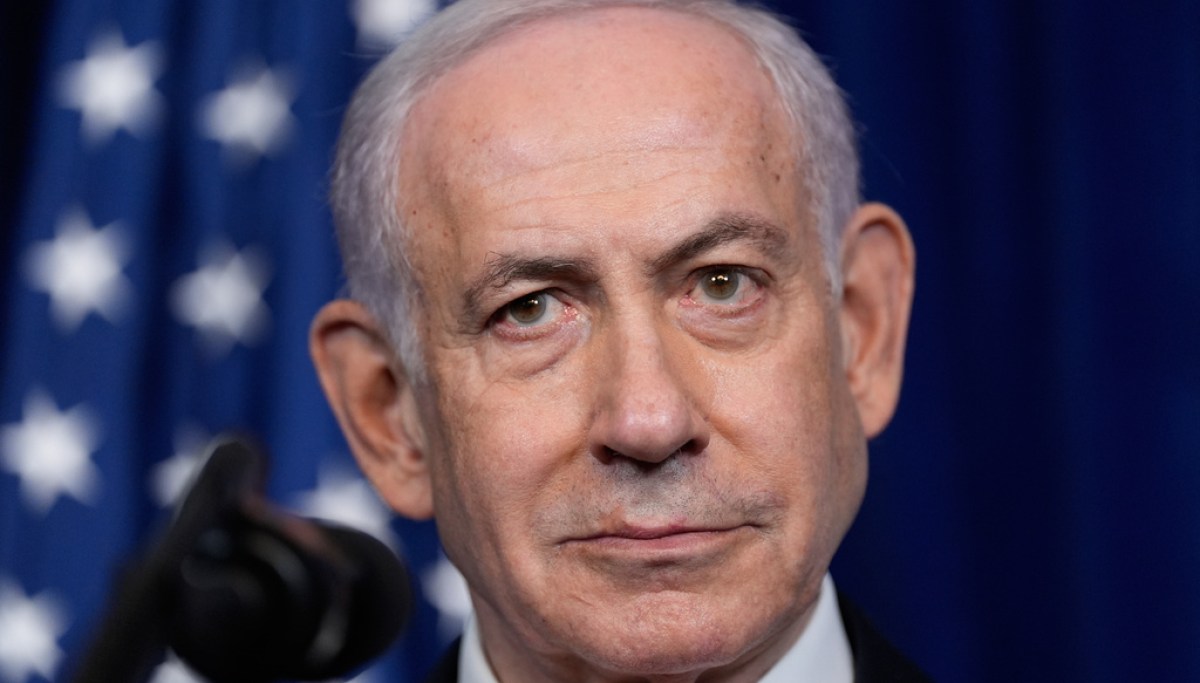
Netanyahu’s last stand: Can ‘the magician’ pull one final trick?
Full Article
Original Source
Read the full article at Washingtonexaminer →KhanList aggregates and links to publicly available news content. We do not host full articles from third-party sources. Always verify important information with original sources.