
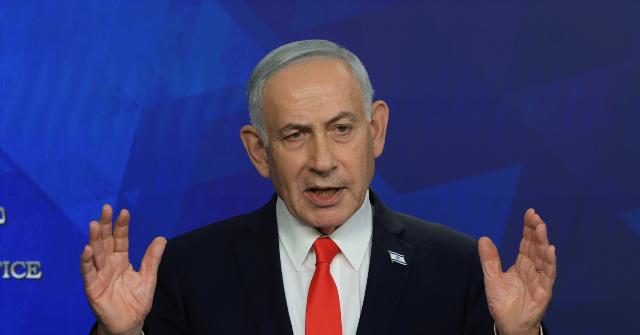
Israeli Prime Minister Benjamin Netanyahu declared Wednesday that his corruption trial had collapsed after judges urged prosecutors to drop the most serious case against him and questioned the criminal basis of another, dealing a devastating blow to a prosecution that has roiled Israeli politics for nearly a decade. The dramatic judicial intervention, described by senior Israeli ministers as an “earthquake,” comes amid efforts to form a new government following last month’s parliamentary election and has reignited demands for accountability over a prosecution that helped plunge the Jewish state into years of political paralysis. Attorney General Gali Baharav-Miara appeared for the first time Wednesday before the three-judge Jerusalem District Court panel overseeing Netanyahu’s trial, which called for a fundamental reassessment of the prosecution’s case following the completion of the prime minister’s testimony. “In our view, the public interest requires a rethink,” presiding Judge Rivka Friedman-Feldman said. The investigations, which dates back to 2016, culminated in Netanyahu’s indictment in 2019 and the opening of his trial in May 2020. He faces charges of fraud and breach of trust in three separate cases, as well as bribery in the most serious of them, and has consistently denied any wrongdoing. That case, known as Case 4000, centers on allegations that Netanyahu advanced regulatory decisions benefiting telecommunications giant Bezeq and its then-controlling shareholder, Shaul Elovitch, in exchange for favorable coverage on the Walla news website, which Elovitch also controlled. The judges questioned the reliability of testimony central to the allegations concerning the regulatory decisions, as well as whether the Walla news website had shown unusual responsiveness to coverage requests and whether Netanyahu was aware of the alleged preferential treatment. “Regarding this count, we assess that the prospects of conviction are low, to a degree that justifies reconsidering the matter,” the judges wrote. While the panel had previously warned prosecutors about the difficulties of securing a bribery conviction, Wednesday’s recommendation went considerably further, casting doubt on the broader case against the prime minister. The judges also questioned whether the conduct alleged in Case 2000, involving discussions between Netanyahu and newspaper publisher Arnon Mozes about favorable coverage in exchange for potential measures against a rival publication, constituted a criminal offense. Regarding Case 1000, which involves gifts from wealthy businessmen and allegations that Netanyahu acted to advance the interests of one of them, the panel proposed a procedural route to conclude the case and reach a decision, noting that most of the relevant evidence was already before the court. While the judges stressed that their assessments did not constitute a verdict, Baharav-Miara defended the prosecution, saying the court’s comments would be examined and identifying a verdict or a negotiated agreement as possible means of concluding the proceedings. Addressing the nation Wednesday evening, Netanyahu declared vindication of the position he has maintained since the investigations began. “Today, something dramatic happened. Today, the trial fell apart,” he said. “Ten years ago, I said, ‘There will be nothing because there was nothing.’ But it took ten years for this truth to be revealed to everyone.” The prime minister recounted the personal toll of the proceedings on his family and associates, denouncing what he described as a decade of character assassination, false leaks, biased testimony, and coercive interrogations aimed at securing testimony against him. “Who will give us back those 10 years?” he asked. Netanyahu argued that the consequences extended far beyond his family and associates, accusing his political opponents of exploiting the criminal proceedings to delegitimize him and divide the country. “This thing tore the people apart, and condemned them to repeated elections — because of these boycotts, because of the unfounded allegations against me,” he said. Israel held five parliamentary elections between 2019 and 2022 amid unprecedented political deadlock, as the question of whether parties would serve in a government headed by Netanyahu increasingly overshadowed traditional ideological differences. The prosecution also became a focal point of the broader confrontation over Israel’s judicial system, deepening political divisions and fueling disputes over the balance of power between the judiciary and the country’s elected leadership. Those political fault lines persisted through the October 27 election, which once again left Israel facing a coalition deadlock, with Netanyahu’s principal rivals resisting joining a government under his leadership. With Netanyahu still serving as caretaker prime minister, the Knesset advanced legislation Wednesday seeking to prevent an indicted lawmaker from becoming prime minister, even as judges were questioning the viability of the most serious charges against him. “It’s a tool for political elimination,” Netanyahu said of the legislation, comparing it to mechanisms used to disqualify political candidates in Iran and North Korea. “Citizens of Israel, this trial must end immediately.” The court’s intervention prompted demands from Netanyahu’s allies not only to terminate the proceedings but also to investigate those responsible for pursuing them. Finance Minister Bezalel Smotrich described the development as “an earthquake measuring 4,000 on the Richter scale,” a reference to the most serious case against Netanyahu. “The judges are confirming what we have been arguing for the past 10 years,” he said. Communications Minister Shlomo Karhi called for an independent external inquiry into the conduct of investigators and prosecutors, while Foreign Minister Gideon Sa’ar identified two potential avenues for ending the trial: the prosecution withdrawing the charges or the court dismissing them on grounds of abuse of process. Defense Minister Israel Katz called on Israeli President Isaac Herzog to intervene, arguing that the proceedings had divided Israeli society and exacted a heavy price from the nation. “This is the moment for courageous leadership that will allow Israel to unite and focus on the major security challenges that lie ahead,” Katz said. The appeal echoes repeated calls by President Donald Trump for Herzog to pardon Netanyahu, whose prosecution the American president has likened to his own legal battles. Netanyahu himself underscored that parallel Wednesday, sharing a Hebrew-language version of a graphic Trump originally posted in 2019, conveying the message that his opponents were targeting not only him but also his supporters, and that he was standing in their way. Trump has been pressing for an end to Netanyahu’s prosecution since June 2025, describing the proceedings as a “witch hunt” and repeatedly urging Herzog to exercise his pardon authority. In an April interview with Axios, Trump dismissed the allegations as involving “wine and cigars,” arguing that the proceedings were distracting Netanyahu from confronting the Iranian threat. “Bibi is a wartime prime minister. He can’t have this hanging over his head,” Trump said, adding that Herzog would become a “national hero” by granting him a pardon. Trump’s support extended to last month’s election, in which he publicly endorsed Netanyahu twice, emphasizing their partnership in confronting Iran and the importance of completing that mission. Netanyahu concluded his address Wednesday by extending an offer of reconciliation despite what he described as a decade of persecution, stressing that national unity was essential to confronting the immediate security threats facing Israel. “We must unite to secure the future of Israel — no less than that, and immediately,” he said. “My hand is extended for unity.” Joshua Klein is a reporter for Breitbart News. Email him at jklein@breitbart.com. Follow him on Twitter @JoshuaKlein.
Netanyahu Declares Trial Has ‘Fallen Apart’ — Judges Deal Devastating Blow to Decade-Long Prosecution
Full Article
Original Source
Read the full article at Breitbart →KhanList aggregates and links to publicly available news content. We do not host full articles from third-party sources. Always verify important information with original sources.