
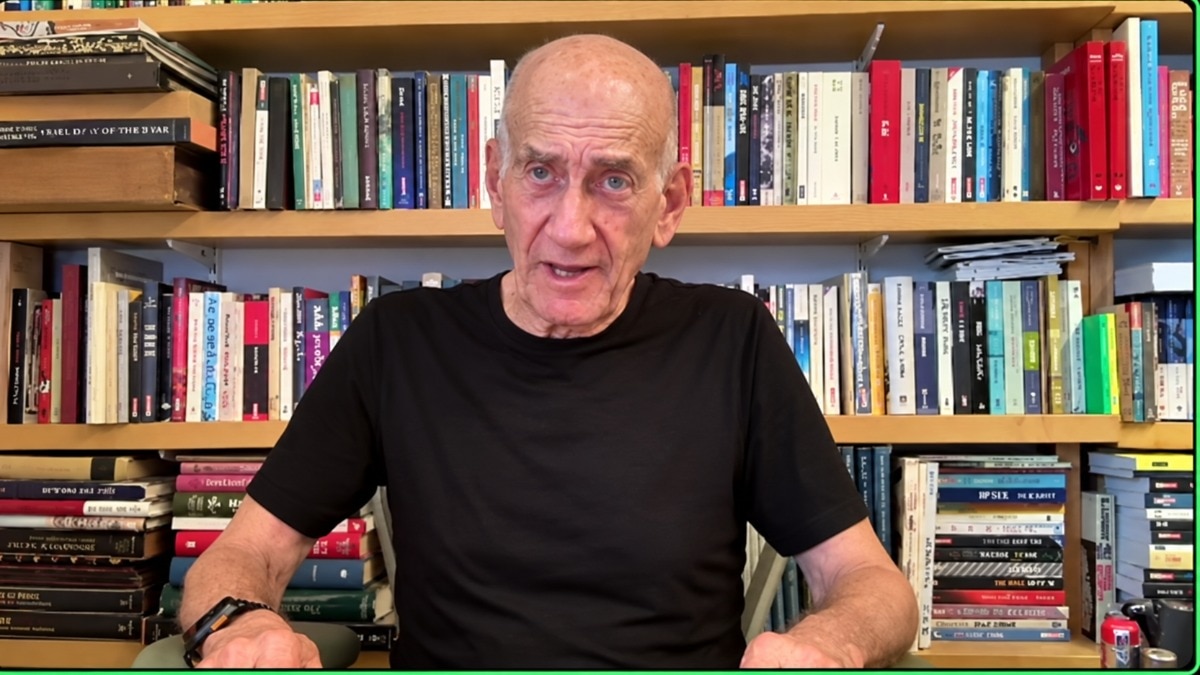
With Israeli Prime Minister Benjamin Netanyahu's right-wing bloc falling short of a parliamentary majority, former Prime Minister Ehud Olmert on Thursday said that the election verdict reflected a clear vote of no-confidence in the incumbent government. He argued that the Likud party emerging as the largest party did not amount to a mandate for Netanyahu to remain in power.In an exclusive interview with India Today TV, Olmert pointed out that much of Likud's electoral gains came from parties within its own political bloc rather than from a broader expansion of support."The majority of the voters in Israel voted no-confidence to the government of Netanyahu," Olmert said."The Likud Party is indeed the largest party, but most of the gains of Likud, perhaps all of the gains of Likud, come from the partners of Likud in the same political bloc," he added. With counting completed on Thursday night, the Netanyahu-led bloc has won 53 seats, short of the 61 required for a parliamentary majority. The opposition bloc, led by Gadi Eisenkot, secured 48 seats, while Arab parties won 19 seats.Olmert, a former member of the right-wing Likud party who co-founded the centrist Kadima party in 2005, said Netanyahu would struggle to form a government if he continued to rely on his existing allies, including Itamar Ben-Gvir, Bezalel Smotrich and ultra-Orthodox parties. "Netanyahu will not be able to form a government with the change, a bloc of change, if he keeps Ben-Gvir and Smotrich and the ultra-Orthodox parties in his camp," Olmert said.He argued that Netanyahu would have to abandon some of his longest-standing political partners to secure an alternative governing arrangement, but expressed doubt that the prime minister would be willing to do so."So he has to drop them, his loyal partners for so many years. I don't think that he's capable of doing it," Olmert said.He also expressed hope that Gadi Eisenkot would be able to form the next government.Olmert dismissed allegations questioning the legitimacy of the election, arguing that such claims had emerged because Netanyahu's camp lacked a majority."Now that they don't have a majority, they question the legitimacy of the elections," Olmert said, adding that he did not believe there was credible evidence to substantiate the allegations."I don't think that there is any serious evidence that proves this," he said.His remarks came amid a fractured electoral verdict in which, according to Olmert, the Likud party's position as the largest party did not necessarily reflect majority support for Netanyahu's continuation in office.Olmert also criticised US President Donald Trump's endorsement of Netanyahu, describing it as the only direct and somewhat aggressive intervention in Israel's electoral process."The only direct, somewhat aggressive intervention in the electoral process in Israel was made by the friend of the prime minister, President Trump," he said.Drawing comparisons with other elections, Olmert pointed to Trump's endorsements of Brazil's Jair Bolsonaro and Hungary's Viktor Orbn, both of whom he said lost."The president endorsed Bolsonaro in Brazil, and he lost. He endorsed Orbn in Hungary, and Orbn lost. And he endorsed Netanyahu, and it looks like Netanyahu also lost," Olmert said.OLMERT BACKS GOVERNMENT WITH ARAB PARTIESOlmert said Arab political parties should be considered legitimate partners in forming Israel's next government, arguing that their participation would be an important step towards broader political representation."Yes, I support forming a government with the Arab parties. I think that Arab parties are legitimate partners," he said."And it's about time that the Arabs who are currently part of the Israeli people will also be part of the government. This is the opportunity, and I hope it will not be missed," he added.Acknowledging that cooperation between mainstream political parties and Arab parties could be politically difficult, Olmert said leadership required a willingness to make difficult decisions when circumstances demanded it."But leadership is measured sometimes by its ability to take decisions when it's difficult," he said."It's a tough decision, but I think it's inescapable. There can be no other option but to join in with, at least part of the Arab parties that is willing and ready and prepared to join the Israeli government," Olmert added.He said Arab parties would be prepared to recommend Eisenkot and would do everything possible to bring down Netanyahu's government.According to Olmert, their recommendations could prove crucial in determining who would be tasked with forming the next government.Olmert also raised concerns about the possibility of Netanyahu attempting to remain in office as caretaker prime minister if he could not secure the numbers needed to form a new government."If it depends on Netanyahu, he will be willing to continue in one form or another as a caretaker, forever," Olmert said.However, he argued that the Israeli president would be required by law to appoint the elected member of the Knesset who received the most recommendations to form a government.Olmert said Eisenkot could emerge as the choice if he secured the backing of the Arab parties and obtained 67 recommendations.He said the Arab parties had already indicated that they would recommend Eisenkot and were committed to efforts to bring down Netanyahu's government."And so the president will have no room for any discretion. He will just have to do what he is obliged to do by law," Olmert said.NEXT GOVERNMENT'S PRIORITIESOlmert said Israel's next government would have to address several pressing issues, including stopping Netanyahu's proposed judicial reforms, protecting democratic institutions, ending Jewish terror in the West Bank and pursuing a political solution to the Palestinian issue.He said one of the priorities should be to halt the judicial changes that Netanyahu and his partners had sought to introduce.The next government, he argued, must protect the Supreme Court of Justice, preserve the status of the attorney general and ensure that democratic institutions function effectively.Olmert also called for immediate and decisive action against Jewish terror in the West Bank."The government has to stop, immediately and aggressively, without any hesitation, the Jewish terror which is taking place in the West Bank," he said.He further called for a serious attempt to open dialogue with the Palestinian Authority, arguing that negotiations were essential to resolving the longstanding conflict.Olmert, who said he had campaigned in every possible way to remove Netanyahu from power, maintained that a change of government should be accompanied by a shift in Israel's approach to domestic governance and the Palestinian issue.'THERE MUST BE DIALOGUE WITH PALESTINIANS'Olmert said there was no alternative to dialogue with the Palestinian Authority and argued that pursuing negotiations was in Israel's own interest."There must be a dialogue. There is no alternative," he said."I am absolutely confident that there are many Palestinians that are anxious to get into a dialogue with Israel," he added.Olmert said Israel needed to make an exceptional effort to establish dialogue with the Palestinians to resolve what he described as a historic problem."We care for the interest of Israel. It's in the interest of Israel to establish a dialogue with the Palestinians in order to solve this historic problem," he said."It will improve everything in our lives, and that's why we have to make an exceptional effort towards it," he added.His remarks placed renewed engagement with the Palestinian Authority among the key tasks facing Israel's next government, alongside protecting democratic institutions and addressing violence in the West Bank.'RENEWED IRAN STRIKES CAN BE AVOIDED'Asked about the possibility of renewed military action against Iran, Olmert said he hoped such a development would not occur and expressed uncertainty over what Trump might decide."I hope not," he said when asked about the possibility of another military operation.Olmert added that he doubted anyone could reliably predict Trump's actions, expressing hope that a way could be found to address the Iran issue without a comprehensive military operation."I hope that they will find a way to deal with the issue of Iran in ways which will not necessitate a comprehensive military operation," he said.For Olmert, the election verdict represents more than a contest over which party emerged largest. He argued that the decisive question was whether Netanyahu could assemble a viable governing majority without relying on his existing allies, a challenge he believes the Prime Minister will struggle to overcome.- Ends
Netanyahu can't form govt, voters gave him no-confidence vote: Ex-Israel PM Olmert
Full Article
Original Source
Read the full article at Indiatoday →KhanList aggregates and links to publicly available news content. We do not host full articles from third-party sources. Always verify important information with original sources.