
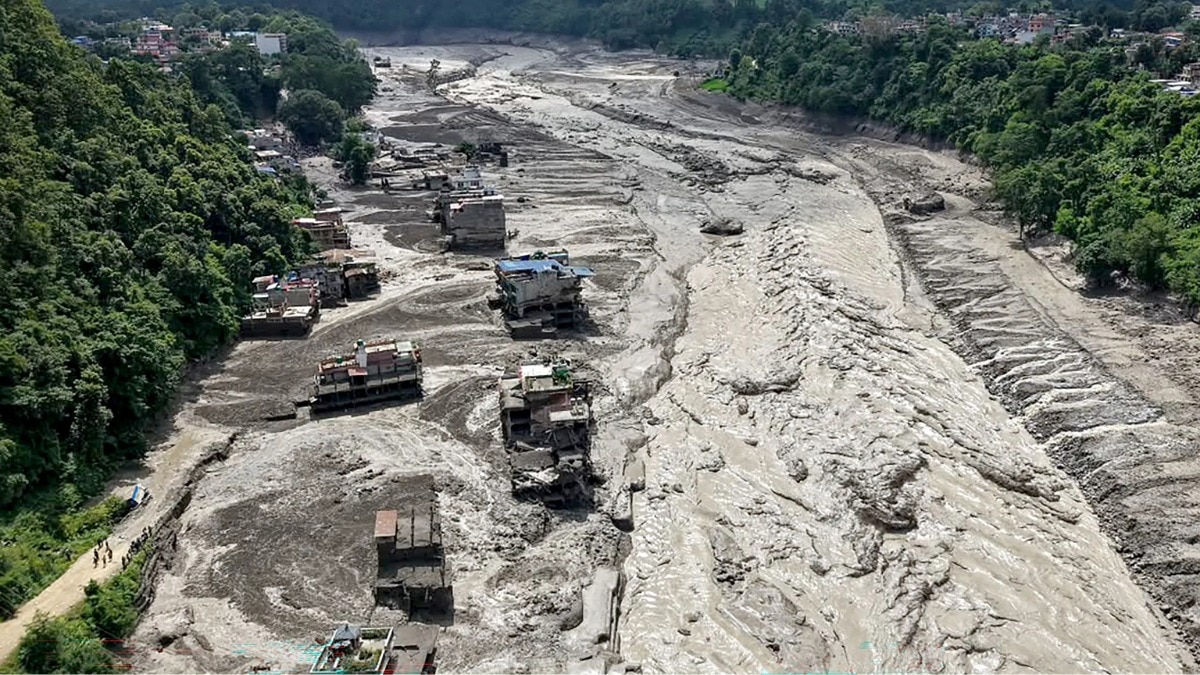
At least 579 people have died and nearly 2,500 remain missing on both sides of the Nepal-Tibet border after flash floods swept through central Nepal on Wednesday, triggered by an ice-rock avalanche following a glacial collapse near the border.More than 90,000 people are estimated to have been affected by the disaster, the Red Cross said.Nepal is facing a major humanitarian crisis after devastating flash floods swept through Rasuwa and other parts of central Nepal on Wednesday, triggered by an ice-rock avalanche following a glacial collapse near the border. The disaster has killed nearly 600 people, left almost 2,500 missing and destroyed roads, bridges, settlements and hydropower infrastructure.The disaster has also raised fears of another flash flood. Nepal's disaster authorities warned on Friday that water mixed with mud was rising again at the site of the earlier flooding in the Bhotekoshi River area. People and rescue workers in the Bhotekoshi and Trishuli areas were urged to remain alert and move to safer locations if necessary.Catch Nepal floods live updates hereThe disaster has also become a cross-border emergency. Tibet was hit by floods as well, with hundreds reported missing, including foreign nationals. India has been involved in rescuing tourists and providing relief material, while Nepal has sought help from India and China to rebuild destroyed bridges. NEPAL FLASH FLOODS: LATEST UPDATESNepal’s flood disaster has killed at least 579 people and left nearly 2,500 missing, according to the latest Nepal Police update cited on Friday, as search and rescue operations continued in Rasuwa and other parts of central Nepal that were among the worst hit by Wednesday’s flash floods. The toll rose sharply from earlier estimates of 469, 538 and 547 as bodies were recovered and reports from remote areas verified, while the Red Cross said more than 90,000 people had been affected. Extensive damage to roads and bridges has hampered rescue efforts across the rugged Himalayan terrain. Nepal issued a fresh floods warning after water mixed with mud began rising again at the site of Wednesday’s devastating flash floods, raising fears of another surge downstream, while Nepal Police said a water dam on the Tibetan side had reportedly burst again. Authorities urged rescue teams and people living near the Bhotekoshi and Trishuli rivers to remain alert, as satellite imagery showed a newly formed barrier lake growing larger with no visible outlet. Chinese authorities have warned that around 2 million cubic metres of water has accumulated there, with another 3 million cubic metres potentially flowing in over three days. China said that preliminary assessments by Chinese and Nepalese experts indicated that the flash floods may have been triggered by the collapse of a high-altitude glacier in Nepal, with scientists examining whether a massive ice-and-rock avalanche fell into the Lhende River and temporarily blocked its flow. The natural barrier may have later breached, sending a surge of water and debris downstream into the Bhotekoshi and Trishuli river systems. New dramatic visuals have emerged of a green-painted house standing amid raging floodwaters in Nepal as nearby buildings were swept away by the torrent. The video shows muddy waters surging through the area at high speed, carrying debris and structures in their path, while the house remained largely intact. At least three family members were seen inside as the waters closed in, raising concerns about their safety. A subsequent video shared on social media later confirmed that the family had survived and was safe. The disaster also crossed into China’s Tibet Autonomous Region, where flash floods struck Gyirong County near the Nepal border on Wednesday, killing five people and leaving 558 missing, Chinese authorities said. The floods tore through villages and valleys, damaging power stations, roads, bridges and communication networks along the Kathmandu-Lhasa route, a popular corridor for trekkers and pilgrims. Of those missing, 260 were identified as foreign nationals, including many Hindu pilgrims from India travelling to Mount Kailash and Lake Mansarovar. China has also warned about another potential flood threat from a barrier lake formed near the confluence of the Chhochen Khola and Purepu Tsangpo rivers. The Ministry of External Affairs (MEA) said 320 Indians and 100 people of Indian origin remained out of contact amid the flood crisis. The immediate concern is the rescue of around 100 people trapped for nearly two days at the Trishuli hydropower project. The MEA said contact had been established with around 400 Indians on the Tibetan side, all of whom were safe, while 96 Indians stranded near the Tibetan border had crossed into Nepal. India has also sent two consignments of relief material to Nepal. Meanwhile, ten bodies were found in three places in the northern Indian state of Uttar Pradesh in rivers that flow down from Nepal. Around 933 workers across 13 hydropower projects in Nepal were reported missing after devastating floods in the Bhotekoshi River, according to the Independent Power Producers’ Association, Nepal (IPPAN). Of them, 254 have been rescued, while several others remain out of contact, with concerns that some workers may be trapped inside tunnels. The Upper Trishuli-1 project alone has 576 workers whose whereabouts remain unknown, out of around 1,350 employees. Rescue efforts have been hampered by damaged roads, disrupted communications and difficulties in deploying helicopters at project sites. Nepal has denied reports that it refused foreign assistance after international rescue teams were reportedly barred from joining operations. Foreign Minister Shisir Khanal said the government initially prioritised its own security forces, including the Nepal Army, Nepal Police and Armed Police, citing their familiarity with the country’s rugged terrain and local conditions. He said deploying foreign teams unfamiliar with the terrain could create coordination and technical challenges. Khanal stressed that Nepal had not rejected international assistance and would seek specialised expertise for complex rescue operations when required. The loss of bridges has emerged as a major challenge to Nepal’s rescue and recovery efforts, with more than three dozen bridges swept away by flash floods, cutting transport links and isolating communities. Nepal has sought assistance from India and China to construct 42 Bailey bridges, which can be assembled quickly with limited heavy machinery, making them suited to disaster-hit areas. The damage has also disrupted the delivery of food, medical supplies and other relief material. Damage to hydropower infrastructure has added to the crisis, turning the disaster into a wider reconstruction challenge. Nepal has deployed 7,451 security personnel for search and rescue operations, as per the Nepal Tourism Board, including 2,391 from the Nepal Army, alongside the Nepal Police and Armed Police Force. The large-scale mobilisation reflects the challenges posed by Nepal’s rugged Himalayan terrain, while the renewed threat of flooding has further increased risks for rescue teams searching for missing people. - EndsPublished By: Shipra ParasharPublished On: Aug 28, 2026 23:54 IST
Nepal toll nears 600, search for 2,500 missing continues as 2nd flood threat looms
Full Article
Original Source
Read the full article at Indiatoday →KhanList aggregates and links to publicly available news content. We do not host full articles from third-party sources. Always verify important information with original sources.