
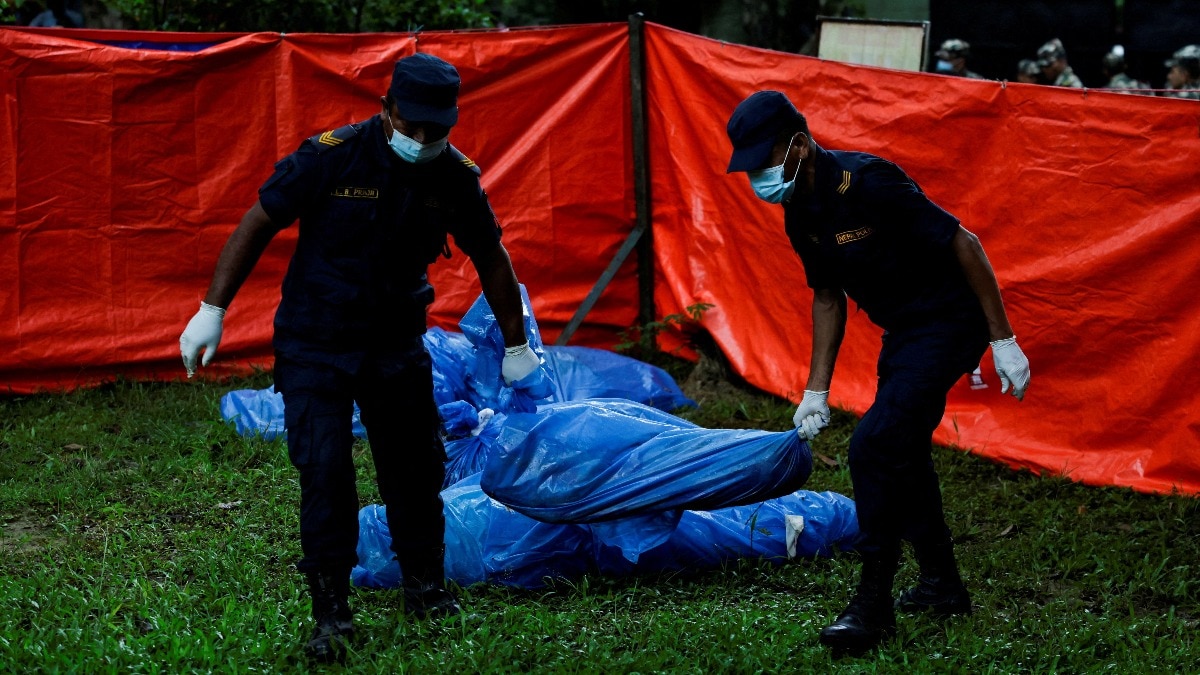
Nepal has begun burying unidentified flood victims after mortuaries and temporary holding centres ran out of space and the bodies began decomposing. Authorities are collecting DNA samples, photographs and other identifying evidence before burial, so families can still identify their loved ones later, The Kathmandu Post reported.Only 20 of the 734 bodies recovered had been identified by relatives by Saturday evening, as authorities raced to preserve evidence and find space for decomposing remains. The move comes as the death toll from the devastating flash floods reached 734 on Sunday, with bodies recovered across eight districts.Chitwan has recorded the highest number of deaths, with 259 bodies recovered, followed by Nawalparasi East with 184, Nawalparasi West with 82, Gorkha with 58, Nuwakot with 52, Dhading with 50, Tanahun with 36 and Rasuwa with 13. About 2,500 others remain missing.The disaster, triggered by a glacier collapse near the Nepal-Tibet border, sent torrents of water, mud, rock and debris down the Bhote Koshi and Trishuli river systems on Wednesday. The floods swept away houses, roads, bridges and infrastructure projects. The deluge also sent bodies to as far as Bihar and Uttar Pradesh. WHY ARE AUTHORITIES BURYING BODIES?In Chitwan, authorities had recovered over 200 bodies, but only four had been identified. The remaining bodies were being kept at hospitals and temporary holding centres as decomposition made visual identification increasingly difficult, according to The Kathmandu Post.Health experts warned that further decomposition and the foul odour from the remains could increase the risk of infections and outbreaks. Mortuary capacity was also overwhelmed. Hospitals in Chitwan could accommodate only a small fraction of the bodies, forcing authorities to seek emergency burial sites. A member of the Nepal Army wearing a PPE kit prepares to transfer a flood victim's body from a mortuary van to a temporary holding centre where the bodies of victims are kept in Nepal's Chitwan. (Photo: Reuters) The Chitwan District Security Committee therefore decided to bury the unidentified and unclaimed bodies at an open site in Devghat, Bharatpur Metropolitan City, under Nepal's Unidentified and Unclaimed Bodies Management (First Amendment) Directive, 2026.Prime Minister Balendra Shah said only bodies that could not be identified would be managed by the government, while bodies identified by families would be handed over to relatives.HOW WILL VICTIMS BE IDENTIFIED LATER?Before burial, forensic teams will collect DNA samples and assign each body a permanent identification or reference number. Photographs, physical descriptions, clothing, jewellery, identity documents and other belongings will also be preserved under the same tracking number.Authorities will also maintain records of inquests, autopsies, DNA profiles, burial dates and the exact location of each grave. These records can later be matched with missing-person reports and DNA samples from relatives, The Kathmandu Post reported.The emergency procedure allows authorities to bury unidentified remains when storage capacity is exhausted, while preserving enough forensic evidence to establish identity later.Nepal Police has also published details of unidentified and unclaimed flood victims online. In a post on X, it said people can scan a QR code or visit its official database to view information about bodies recovered in Rasuwa district.A 40-member medical team, including seven forensic pathologists and seven dental surgeons, has been involved in the identification effort. DNA samples have already been collected from bodies at temporary holding facilities.SITUATION IN OTHER PLACESThe problem of managing bodies extends beyond Chitwan. Authorities in Nawalparasi East, another flood-hit area, have had to transfer bodies to facilities outside Chitwan district, including Pokhara and Palpa, while other remains have been moved to hospitals in Rupandehi and Kapilvastu.Officials in Kathmandu have also begun identifying possible burial sites as the government prepares for the possibility that more unidentified remains will be recovered, The Kathmandu Post reported.Nepal is therefore trying to balance two urgent needs: preventing a public-health crisis caused by decomposing remains and ensuring that families do not lose the chance to identify their missing relatives.By preserving DNA and detailed records, authorities hope families will still be able to establish the identity of victims even after their remains have been buried.- EndsPublished By: Prateek ChakrabortyPublished On: Aug 30, 2026 14:14 IST
Nepal is burying unidentified bodies, to identify them later. Here's why and how
Full Article
Original Source
Read the full article at Indiatoday →KhanList aggregates and links to publicly available news content. We do not host full articles from third-party sources. Always verify important information with original sources.