
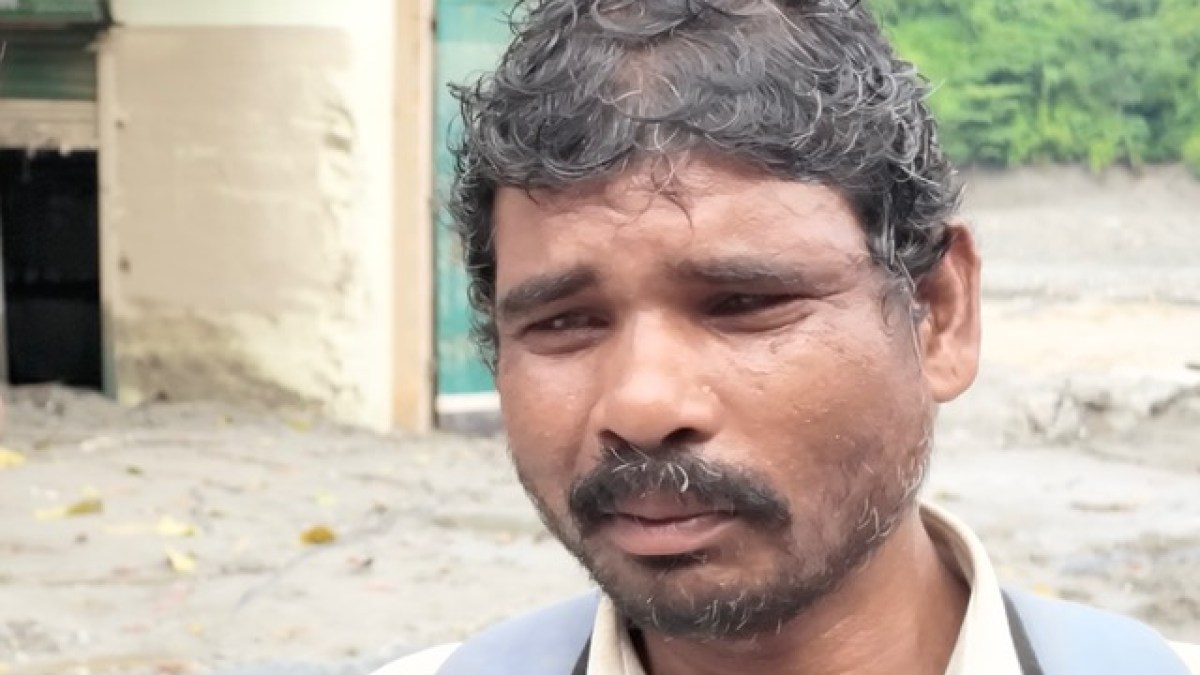
Kathmandu/Nuwakot, Nepal — Talka Sada’s eyes are exhausted, the wrinkles on his face deep with worry. His heels hurt after walking long miles across Nepal’s mountains. He’s hungry and angry, but as his mood shifts between hope and helplessness, his focus remains on his mission: a desperate search for his son.Sada, who is in his 50s, is from Saptari, a district in Nepal’s Terai region — the plains that stretch across southern Nepal, south of the Shivalik Hills and north of the porous border with India.People from this part of the Himalayan nation are known as Madhesis, a distinct ethnolinguistic population with a diverse regional, cultural and caste identity. Vinod, his only son — Sada also has three daughters — has been missing since the devastating flash floods of August 26 destroyed homes, schools, bridges, power plants and everything in their path in large parts of northern Nepal.Sada last spoke to 19-year-old Vinod a day before the floods that grew from the Bhotekoshi river. Vinod had come to the Rasuwa district, the region worst affected by the floods, a month earlier to work as a labourer at a hydropower plant. He would mix cement and take on other odd jobs. Four other young men who worked with him — all between 17 and 19 years old — are also missing since the floods.“I can’t tell you how much my wife is howling. I am in deep pain myself and I do not know what to do,” Sada says as he wipes his tears.Talka Sada, right, and his brother are searching for Sada’s son, who has been missing since the August 25 floods that devastated large parts of northern Nepal [Smita Sharma/ Al Jazeera]Search, trek, search againDressed in a faded white shirt and black pants, the father wears an orange polythene bag as a raincoat. He carries a grey backpack on his shoulders. With him is his brother, Sada’s companion on a long and increasingly frustrating journey.Sada shows a dirty handkerchief in his pocket with notes amounting to less than 2,000 Nepali rupees (about $13) crumpled in it. It’s money he borrowed to be able to crisscross Nepal’s flood-affected areas in search of his son.“I borrowed money to come all the way from Saptari to here. I have to pay an interest of 20 rupees on every 100 rupees I have borrowed,” he says. The brothers used some of that money to take a bus from Saptari to the national capital, Kathmandu. That 292km (181-mile) journey takes nine hours because of Nepal’s hilly terrain.In Kathmandu, Sada and his brother went from hospital to hospital to look for Vinod among survivors or in the list of those declared dead — many of the flood victims were flown into Kathmandu from the northern parts of Nepal.Outside mortuaries, the photographs displayed are often difficult to recognise. Most bodies being retrieved are decomposed or dismembered. There was no sign of Vinod — nor his name or photo at the hospitals.So, Sada started walking towards Nuwakot (nearly 60km away from Kathmandu), closer to the location of the hydropower plant where his son was believed to be working.After a gruelling, hours-long walk through broken roads, they reached Trishuli, a town on the way whose market now lies covered with debris, mud and slush.“Last night when we reached here, a lodge charged us 1,500 Nepali rupees to stay the night. They gave us only one small serving of rice that did not even satisfy our hunger,” says Sada. “Now if we have to stay here another night, all my remaining money will finish and I will be left with nothing to go back home.”Nepal army soldiers work during a search and rescue operation outside a tunnel near a hydropower project site, following deadly flash floods and mudslides, in Rasuwa district, Nepal, on September 1, 2026 [Nepal army/ Reuters]‘They are pushing us away’Sada and his brother say they just want access to mortuaries and army camps set up to help evacuate survivors and take bodies from the disaster zone, but claim that he has been turned away repeatedly.To the brothers, the response they’ve received to their pleas for help is a product of deep-seated ethnic and caste divisions within Nepal. Madhesis — as the people of the Terai are known — have long accused the hills-based Nepali elite of discriminating against them.Sada’s family is from the Musahar community, a particularly marginalised community that lives in the Terai and in the Indian states of Uttar Pradesh and Bihar.“We are poor. They think of us as Madheshis and Biharis. We cannot speak Nepali fluently — which is why they are just pushing us away and making us run from pillar to post,” Sada claims, as he sobs. “Even if it is a corpse, we have a right to see it. We have registered our names everywhere – police stations to military camps. But no one is helping us.”Nepali authorities, overwhelmed by the scale of the crisis — more than 1,000 people have been killed, and thousands are still missing — insist they are trying their best to reach and help all survivors.Nepal’s army personnel carry the bodies of flood victims during a search operation along the Narayani river at Bharatpur in Nepal’s Chitwan district on August 31, 2026 [Prakash Mathema/ AFP]Helplessness and angerThe brothers try dialling Vinod’s phone number for the umpteenth time, but get no response. “We can’t talk to him. We don’t hear his voice. So everyone is heartbroken back home,” says Sada. “My wife asked me to get our son back. So we are searching all hydropower plants, but where do I find him?”One minute, Sada is hoping for a miracle. “My son is young. He is a porter. He is daily wager. So he is agile. He could have surely walked, ran somewhere,” he wonders.The very next moment, though, the father’s voice rings with helplessness. “I have no hope,” he says. “If Vinod was alive, he surely would have called from somewhere, even if he went to drink water.”Yet giving up isn’t an option — not yet, at least.So, Sada and his brother prepare to continue their trek towards the power plant where Vinod worked. As they leave, the father issues a warning that rings with a sense of betrayal and anger.“We will have to burn down the police station if no one answers or helps us,” he shouts.
Nepal floods: Father borrows $13, walks for days to search for missing son
Full Article
Original Source
Read the full article at Aljazeera →KhanList aggregates and links to publicly available news content. We do not host full articles from third-party sources. Always verify important information with original sources.